



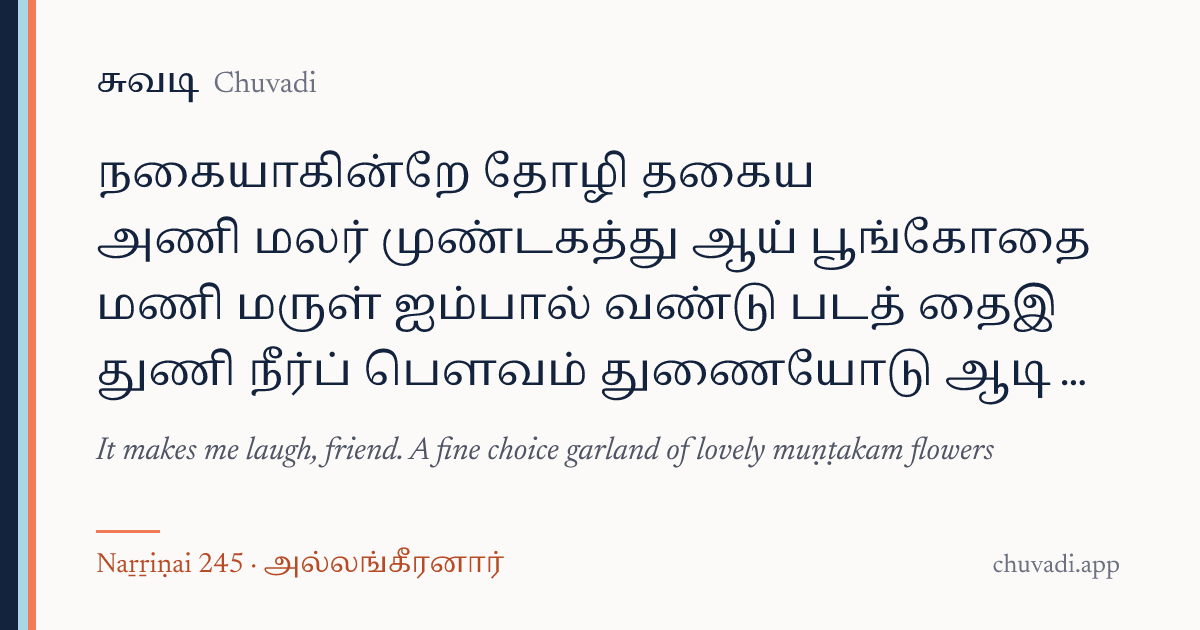

நற்றிணை 245
பாடல் · The poem
Tap a word to see where else it occurs.
பொருள் · Meaning in TamilAI
தோழி, எனக்குச் சிரிப்பு வருகிறது. அழகிய முண்டக மலர்களால் தொடுத்த சிறந்த பூமாலையை, வண்டுகள் மொய்க்கும்படி, நீலமணி போன்ற உன் கூந்தலில் சூடிக்கொண்டு, தெளிந்த நீருடைய கடலில் தோழியரோடு நீ விளையாடிக்கொண்டிருந்தாய். அப்போது, அணிகள் நிறைந்த நெடிய தேரின் குதிரைகளை நிறுத்தி, 'நுண்ணிய இடையும் அகன்ற அல்குலும் தெளிந்த இனிய சொல்லும் உடையவளே, பெறுவதற்கு அரிய என் இனிய உயிரைக் கவர்ந்துகொண்ட நீ யார்?' என்று அவன் கேட்டான். தான் நம்மை வருத்துவதை அவன் அறியவில்லை; நம்மால் தான் வருந்துவதாகவே சொன்னான். பின்னர் அக்கடற்கரைச் சோலையில், வண்டுகள் ஒலிக்கும் உன் ஒளிரும் நெற்றியைப் பார்த்துக்கொண்டு, பெருங்கடல் நாட்டுத் தலைவன் கைகூப்பி வணங்கி நின்றான்.
நெய்தல் திணை; தோழி கூற்று. தலைவனின் வேண்டுகோளுக்கு உடன்பட்ட தோழி, தலைவியின் மனத்தை அவன் பக்கம் திருப்பச் சொல்லியது. அணங்குதல் என்பது தெய்வம் வருத்துவது போல வருத்துதல்; வருத்துபவனே தான் வருந்துவதாகச் சொல்வதுதான் தோழிக்கு நகைப்பாக இருக்கிறது. கேலி போலத் தோன்றினாலும், அவன் எவ்வளவு பணிவோடு வேண்டினான் என்பதை நினைவூட்டி அவனுக்காகப் பரிந்து பேசுகிறாள்.
ஆங்கிலம் · English translationAI
Translation
- It makes me laugh, friend. A fine
- choice garland of lovely muṇṭakam flowers
- you had woven into your sapphire-dark braids so that bees came swarming,
- and you had played in the clear-watered sea with your companions;
- 'You with the slender flowing waist and the wide hips,
- with clear and sweet speech, who are you, you who
- have seized my dear life, so hard to come by?' he said,
- and, reining in the horses of his tall chariot heavy with ornament,
- not knowing that he is tormenting us, he spoke
- of how he was tormented by us; and in the seaside grove,
- gazing at your bright brow where the bees were humming,
- the lord of the shore of the great sea stood with folded hands.
What the poem says
The heroine's friend has agreed to help the hero and now tells the heroine about him, to win her over (colophon: the friend who has granted his request approaches the heroine).
She describes the first encounter as if it were a comedy. The heroine had braided muṇṭakam flowers, a shore plant, into her hair and was playing in the sea with her companions. A man of the coast came by in his fine chariot, reined in his horses and addressed her: who are you, you who have taken away my life? He stood there in the seaside grove with his hands folded as if before a goddess. What strikes the friend as funny is that he thinks he is the one who has been wounded, when in fact it is he who is tormenting them. The verb aṇaṅku, to afflict, is the word for the power of a goddess or spirit to harm, and the joke turns on who has possessed whom.
The tone is teasing, but the purpose is serious: by reminding the heroine how humbly the hero pleaded, the friend makes his case for him. The "us" of lines 9 and 10 is the usual way a friend speaks of the heroine and herself together.