



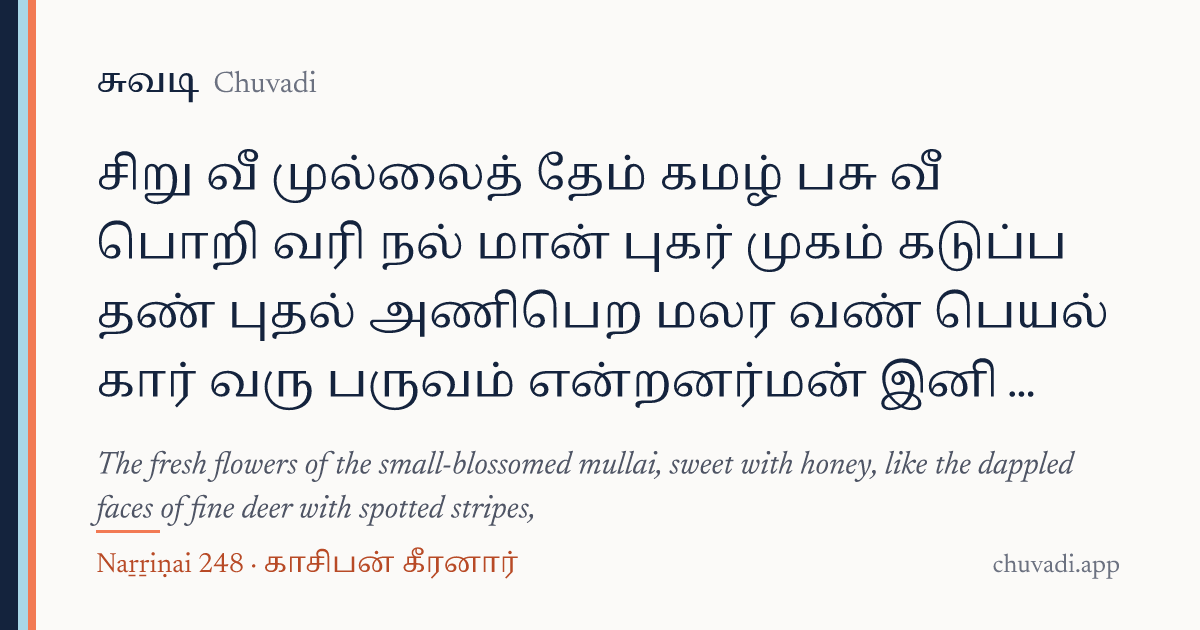

நற்றிணை 248
பாடல் · The poem
Tap a word to see where else it occurs.
பொருள் · Meaning in TamilAI
சிறிய மலர்களையுடைய முல்லையின் தேன் மணக்கும் புதிய பூக்கள், புள்ளிகளும் வரிகளும் கொண்ட நல்ல மானின் புள்ளிபட்ட முகத்தைப் போலக் குளிர்ந்த புதர்களை அழகுபடுத்தி மலரும்; வளமான மழை பெய்யும் கார்காலம் வரும்போது வருவேன் என்று அவர் சொன்னார். மழையே, இப்போது பெருந்துயரத்தால் ஒரு நெஞ்சம் நடுங்குவதைக் காண்பதற்காகவே, அன்பில்லாமல் பண்பற்ற செயல்களை நீ திரும்பத் திரும்பச் செய்கிறாய். உன் பொய்யான இடியின் அதிரும் முழக்கத்தை உண்மை என்று நம்பி ஆடும் மயில்களின் அறியாக் கூட்டம் போல, நானும் உன்னைக் கண்டு மயங்குவேனோ? நீ வாழ்க!
முல்லைத் திணை; தோழி கூற்று. கார்காலத்தைக் கண்டு ஆற்றாத தலைவியிடம், இது உண்மையான கார்காலம் அன்று என்று தோழி மழையை நோக்கிச் சொல்வது போல மறுக்கிறாள்; இதைப் பருவம் மறுத்தல் என்பர். பருவம் அல்லாத காலத்தில் வந்த மழையைக் கண்டு மயில்கள் ஏமாந்து ஆடுவதாகக் கூறுவதால், தலைவன் சொன்ன காலம் இன்னும் வரவில்லை என்று தலைவியைத் தேற்றுகிறாள். இறுதியில் மழையை வாழ்த்துவது நகைப்பான வாழ்த்து.
ஆங்கிலம் · English translationAI
Translation
- The fresh flowers of the small-blossomed mullai, sweet with honey,
- like the dappled faces of fine deer with spotted stripes,
- would bloom and grace the cool bushes: 'When the generous rains
- of the rainy season come,' he said. But now,
- just to watch a heart shake with great distress,
- you, having no love, keep doing unkind things:
- like the silly flock of peacocks that dance, taking your false thunder's
- roaring voice for true,
- shall I be fooled by you? Long life to you, O rain!
What the poem says
The friend speaks, but she addresses the rain cloud rather than the heroine. According to the colophon, the heroine has seen the signs of the rainy season and cannot bear it, since her husband promised to return by then and has not; so the friend, speaking to the rain, denies that this is the true season at all.
The hero had said he would come when the mullai bushes flowered and the rains came. The mullai buds, white flecks among green, are compared to the spotted faces of deer. Now the cloud is thundering and the flowers seem to be coming out, but the friend calls the thunder false: an unseasonal storm, sent without love only to make a waiting heart tremble. The peacocks, foolish things, take it for the real monsoon and dance; she will not be deceived as they are.
This is a familiar device of mullai poems, "denying the season" (paruvam maṟuttal), and the closing blessing on the rain is ironic. The friend's real audience is the heroine, whom she hopes to persuade that there is still time.