



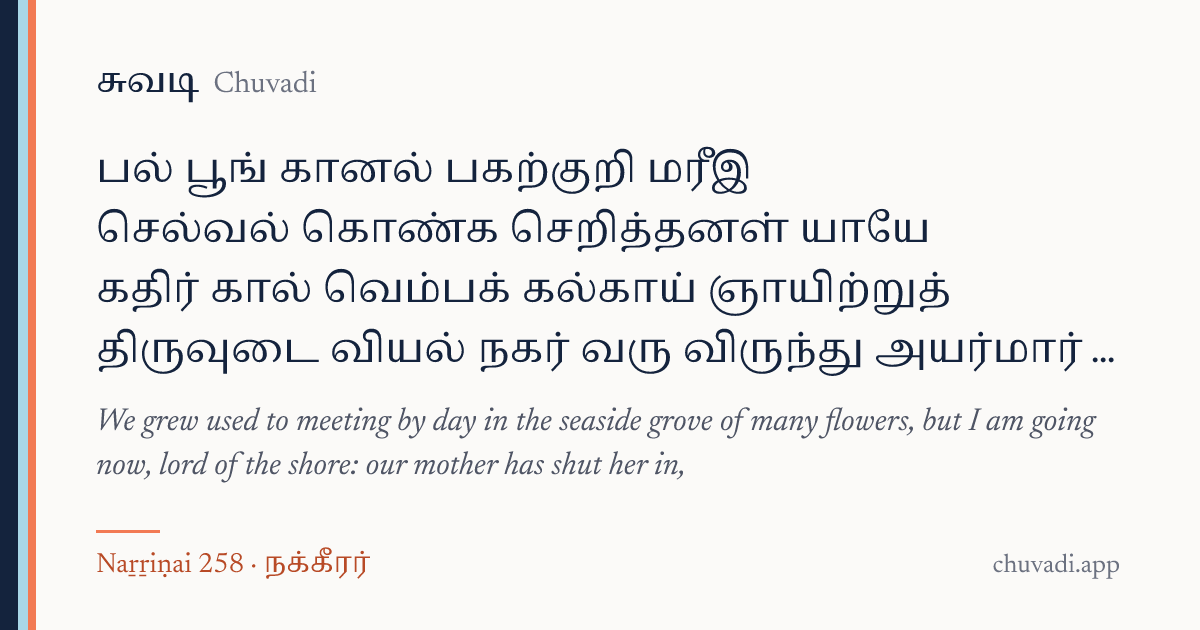

நற்றிணை 258
பாடல் · The poem
Tap a word to see where else it occurs.
பொருள் · Meaning in TamilAI
கொண்கனே, பல பூக்கள் நிறைந்த கடற்கரைச் சோலையில் பகலில் சந்தித்துப் பழகிவிட்டோம்; இனி நான் போகிறேன்; அன்னை அவளை வீட்டில் அடைத்துவிட்டாள். ஞாயிறு கதிர்களால் கொதித்துப் பாறைகளைக் காய வைக்கும் வேளையில், செல்வம் நிறைந்த அகன்ற மனைகளில், வரும் விருந்தினரை உபசரிப்பதற்காகச் சமைத்த பொன்வளையல் அணிந்த பெண்கள் புழக்கடையில் கொட்டிய, கொக்கின் நகம் போன்ற சோற்றை, காக்கை வயிறார உண்கிறது. மாலையானதும், அகன்ற கடைத்தெருவின் அசையும் நிழலில் குவித்து வைத்த பச்சை இறாலைக் கவர்ந்துகொண்டு, அக்காக்கை அசையும் மரக்கலத்தின் பாய்மரத்தில் உறங்குகிறது. அத்தகைய மருங்கூர்ப் பட்டினத்தைப் போன்ற அழகுடைய இவளுடைய நெருக்கமாக அணிந்த ஒளிரும் வளையல்கள் கழன்று ஓடுவதைக் கண்டுதான் அன்னை அடைத்தாள்.
நெய்தல் திணை; தோழி கூற்று. தலைவி வீட்டில் அடைக்கப்பட்டதைத் தலைவனுக்கு அறிவித்தது. மருங்கூர் என்பது ஒரு கடற்கரை நகரம்; அங்கே காக்கைகூட வயிறார உண்டு மகிழ்ந்து உறங்கும் வளம் தலைவியின் சிறப்பைக் காட்டுகிறது. வளையல் கழல்வது காதல் நோயால் மெலிந்ததன் அடையாளம்; பகல் சந்திப்பு முடிந்ததால் இனி மணமே வழி என்பது குறிப்பு.
ஆங்கிலம் · English translationAI
Translation
- We grew used to meeting by day in the seaside grove of many flowers,
- but I am going now, lord of the shore: our mother has shut her in,
- where, when the sun burns the rocks with its scorching rays,
- in the wide, wealthy mansions, to feast the guests who come,
- women with golden bangles throw out at the back door
- rice grains like a heron's claws, and having gorged on these, at nightfall,
- from the shrimps heaped in the swaying shade of the wide market
- the bright-eyed crow snatches one, and then
- it sleeps on the mast of a gently rocking ship:
- lovely as Maruṅkūr, that port town, is she, and her
- close-fitting, shining bangles were slipping off, and mother saw.
What the poem says
Nakkīrar's friend tells the hero that the heroine is now confined at home (colophon). The daytime meetings in the seaside grove are over.
Most of the poem is a long picture of Maruṅkūr, a prosperous port town, to which the heroine is compared. The details are strikingly domestic. In the great houses women cook for guests and throw the leftover rice, grains as white and slender as a heron's claws, out of the back door; a crow feeds on it, steals a fresh shrimp from the heaps drying in the market shade, and then goes to sleep on the mast of a ship. The crow's comfortable, well-fed life shows a town with plenty to spare. Maruṅkūr is not otherwise described in this poem, and nothing more should be assumed about it.
The point comes in the last line. The heroine's bangles have started to slip off her thinning wrists, the classic sign of lovesickness, and the mother has noticed and shut her in. Pure and well-off as she is, she now cannot come out: if the hero wants her, he must marry her.