



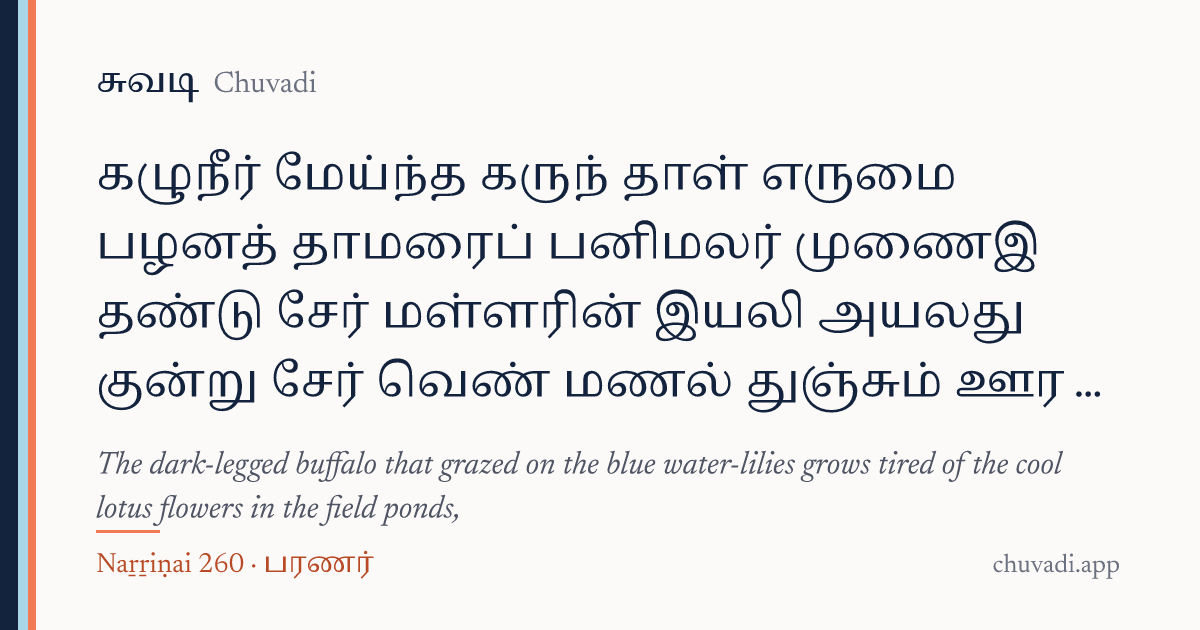

நற்றிணை 260
பாடல் · The poem
Tap a word to see where else it occurs.
பொருள் · Meaning in TamilAI
நீலக் கழுநீர் மலர்களை மேய்ந்த கரிய கால்களையுடைய எருமை, வயல் குளங்களில் உள்ள குளிர்ந்த தாமரை மலர்களை வெறுத்து, தடி ஏந்திய உழவர்களைப் போல நடந்து சென்று, அருகிலுள்ள குன்றுபோல் குவிந்த வெண்மணலில் உறங்கும் ஊரைச் சேர்ந்தவனே! என்னை விரும்புகிறவனைப் போல நீ என்னைத் தழுவுகிறாய். போர்முனையில் போர் எழுந்தபோது பகைவர்களை அழித்த சிவந்த வேலையுடைய வீரனின், நீர் நிறைந்த ஆற்றைத் தன் வாயிலில் கொண்ட இருப்பை என்ற ஊரைப் போன்றது என் தழைத்த அடர்ந்த கூந்தல். அதற்கு அழகு சேர்ப்பதற்காக நான் அணிந்த, மொட்டு அவிழும் மலர்மாலையை நீ வாடச் செய்தாய். அன்று நீ எனக்குப் பகைவனாக இருந்தாய்; அதை மறந்து என்னால் அமைதியாக இருக்க முடியாது.
மருதத் திணை; தலைவி கூற்று. பரத்தையிடம் சென்று வந்த தலைவன் தழுவ முயன்றபோது, ஊடல் தீராத தலைவி சொல்லியது. கழுநீரை மேய்ந்து தாமரையை வெறுத்துவிட்டு மணலில் உறங்கும் எருமை, பல பெண்களிடம் சென்று பின்னர் வீட்டில் வந்து ஓய்வெடுக்கும் தலைவனைக் குறிக்கும் உள்ளுறை. இருப்பையை ஆண்ட வீரனின் பெயர் இப்பாடலில் சொல்லப்படவில்லை. மாலை வாடியது அவன் வராமல் காக்க வைத்ததனால் என்று கொள்ளலாம்.
ஆங்கிலம் · English translationAI
Translation
- The dark-legged buffalo that grazed on the blue water-lilies
- grows tired of the cool lotus flowers in the field ponds,
- and, moving like farmhands who carry staves, nearby
- it sleeps on white sand heaped up like a hill: man of such a town,
- you embrace me as if you longed for me. As war rose on the border,
- the warrior with the red spear wore down his foes; his
- Iruppai, with the brimming river at its gate, is like my
- thick, abundant hair; the garland I wove to grace it,
- made of opening buds, you let it wither:
- you were my enemy, then, and I cannot forget and be at ease.
What the poem says
A marutam poem of sulking by Paraṇar. The hero has come back from the courtesans and is trying to embrace his wife; she refuses to give up her anger (colophon) and speaks to him.
The opening picture of his town is the uḷḷuṟai, the hidden comparison. A buffalo has fed on the water-lilies, grown bored with the lotuses of the ponds, and now lumbers off like a staff-carrying farmhand to sleep on a sandbank nearby. So the hero has grazed among many women and now comes to rest at home, as though that were enough.
The heroine's complaint centres on a garland. She had woven one of opening buds to adorn her hair, which she compares to Iruppai, the river town of a warrior with a red spear who crushed his enemies; the poem does not name him here. The garland withered, presumably because she wore it for him and he did not come. On that day he behaved like an enemy, and she cannot simply forget it now that he wants to embrace her. "As if you longed for me" in line 5 shows how little she trusts his affection.