




நற்றிணை 262
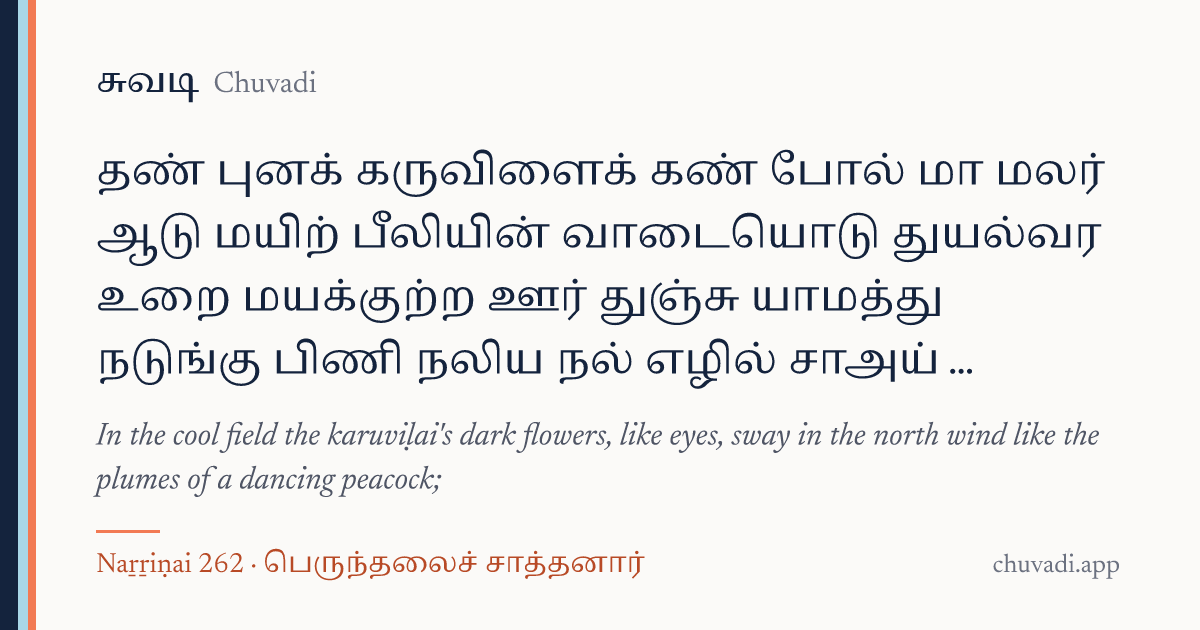
பாடல் · The poem
Tap a word to see where else it occurs.
பொருள் · Meaning in TamilAI
குளிர்ந்த புனத்தில் உள்ள கருவிளையின், கண்களைப் போன்ற கரிய மலர்கள், ஆடும் மயிலின் தோகையைப் போல வாடைக் காற்றில் அசைகின்றன. மழைத்துளிகள் கலந்து மயங்கிய, ஊர் உறங்கும் நள்ளிரவில், நடுங்கச் செய்யும் காதல் நோய் வருத்த, தன் நல்ல அழகு குன்றி, வருத்தம் மிகுந்த மனத்தோடு வெறுக்கத்தக்க துயரத்தில் அவள் உழல்வாள். மூங்கில் போன்ற தோள்களில் தேமல் அரும்பியவள்; திரண்ட கால்களையும், குவளை மணக்கும் கூந்தலையும், தேன் போன்ற சொல்லையும் உடையவள். இவளையும் விட்டுவிட்டு, முயற்சியை உறுதிப்படுத்துவதற்காகப் பிரிந்து போவேன் என்று என் நெஞ்சம் சொல்லுமானால், வறுமையால் வரும் இழிவு உண்மையில் பொறுக்க அரியதுதான் போலும்!
பாலைத் திணை; தலைவன் கூற்று. தலைவி பிரிவைத் தாங்கமாட்டாள் என்பதை அறிந்து தலைவன் பிரிவைக் கைவிட்டது. வாடைக் காற்றும் நள்ளிரவும் பிரிந்திருப்பவருக்குத் துன்பம் தருபவை. இறுதி அடிகள் நகைப்போடு கூடியவை: அவளைப் பிரிவதைவிட வறுமை பெரிய இழிவு அன்று என்பதே அவன் முடிவு.
ஆங்கிலம் · English translationAI
Translation
- In the cool field the karuviḷai's dark flowers, like eyes,
- sway in the north wind like the plumes of a dancing peacock;
- in the midnight hour when the town sleeps and the drizzle blurs the air,
- racked by a sickness that makes her tremble, her fine beauty fading,
- with a heart heavy with hurt, she endures a hateful sorrow:
- she with bamboo-smooth arms where beauty spots have budded, with shapely legs,
- with hair that smells of kuvaḷai, and honeyed speech;
- if, leaving even her, to give strength to my enterprise,
- my heart says, 'I will go away',
- then the shame of being poor must be hard to bear indeed.
What the poem says
The colophon says that the hero, seeing signs that his wife would not be able to bear his absence, gives up his plan to leave. The poem is his reflection, half addressed to his own heart.
He imagines what his going would mean. At midnight, in the drizzle of the cold season, with the karuviḷai flowers nodding in the north wind like a peacock's feathers, she would lie awake, trembling and wasted, her beauty fading. The flowers are compared to eyes, and their dark colour, like kuvaḷai in line 7, is the colour of her eyes and hair; even the landscape reminds him of her.
He then lists her charms, and draws a sharp conclusion. If his heart can still say "I will leave her" to pursue work and wealth, the disgrace of poverty must be very hard to endure. The line is ironic: by putting it this way he shows that nothing poverty could do to him is worse than leaving her, and so he stays. Lines 8 to 10 echo the close of poem 243, where the heroine ironically says wealth must be dearer than virtue.