



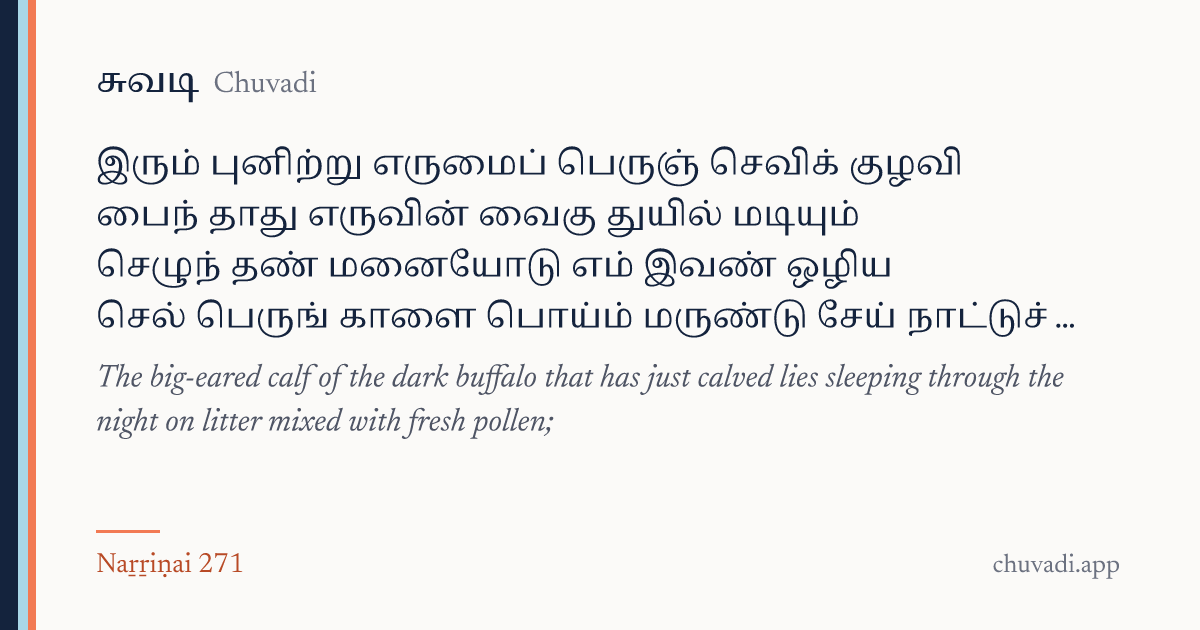

நற்றிணை 271
பாடல் · The poem
Tap a word to see where else it occurs.
பொருள் · Meaning in TamilAI
அண்மையில் ஈன்ற கரிய எருமையின் பெரிய காதுகளையுடைய கன்று, புதிய பூந்தாது கலந்த எருப்படுக்கையில் இரவு முழுதும் உறங்கிக் கிடக்கும் செழிப்பான குளிர்ந்த வீட்டையும், எங்களையும் இங்கேயே விட்டுவிட்டுப் போய்விட்டாள். பிரிந்து செல்லும் பெருமை மிக்க இளைஞனின் பொய்யான சொற்களில் மயங்கி, தொலைதூர நாட்டில், கடப்பதற்கு அரிய, சுவையான காய்களையுடைய நெல்லி மரச்சோலையில், கீழே உதிர்ந்து கிடக்கும் திரண்ட காய்களை அவனோடு சேர்ந்து தின்று, பூக்கள் உதிர்ந்த சுனையின் சிறிதளவு நீரைக் குடித்துக்கொண்டு, குவளை மலர் போன்ற மையுண்ட கண்களையுடைய என் மகள் சென்றுவிட்டாள். அவளை ஒத்த வயதுடைய, ஓலை வெட்டிப் பொய்தல் விளையாடும் அவள் தோழியர், மாலையில் விரிந்த நிலவொளியில் வீடு திரும்புவதைப் பின்னிருந்து பார்ப்பதைவிட, பெரிய கரிய தாழியால் என்னைக் கவிழ்த்து மூடட்டும். என்னைக் கொண்டு போகாத கூற்றமே, தாமதம் இல்லாமல் என் உயிர் போகட்டும்!
பாலைத் திணை; நற்றாய் கூற்று. உடன்போக்கில் மகள் சென்ற பின், வெறுமையான வீட்டில் மயங்கி நின்று தாய் சொல்லியது. தாயோடு அமைதியாக உறங்கும் எருமைக் கன்று, வீட்டை விட்டுப் போன மகளுக்கு எதிர்நிலையாக நிற்கிறது. மகள் இல்லாமல் அவள் தோழியர் திரும்பி வருவதைக் காண்பதே தாய்க்குத் தாங்க முடியாத துயரம். பொய்தல் என்பது சிறுமியர் விளையாட்டு; அதன் சரியான முறை தெரியவில்லை. இப்பாடலைப் பாடியவர் பெயர் கிடைக்கவில்லை.
ஆங்கிலம் · English translationAI
Translation
- The big-eared calf of the dark buffalo that has just calved
- lies sleeping through the night on litter mixed with fresh pollen;
- leaving the rich, cool house, and us left behind here,
- bewildered by the lies of the fine young man who was leaving, in a far country,
- in the hard-to-cross thickets of nelli trees with their tangy fruit,
- eating together with him the clustered fruit fallen at the edge,
- drinking a little water from springs strewn with flowers, she has gone,
- my daughter with kohl-lined eyes like kuvaḷai; and her equals,
- the friends of her pottal games who cut the palm-leaf strips,
- going home in the spreading moonlight of evening: rather than watch their backs,
- let the great dark burial urn be turned over me;
- let my life end without delay, you, Death, who will not take me!
What the poem says
The colophon says only "spoken in bewilderment at the house". The speaker is a mother whose daughter has eloped, and she speaks in the empty house. No poet's name is recorded for this poem.
The first lines set the rich, peaceful home the girl has left: a buffalo that has just calved, her big-eared calf asleep on bedding sprinkled with pollen, a cool and comfortable house. The calf sleeping safely beside its mother is a sharp contrast with the daughter who has gone.
The mother then imagines the girl on the road. Led by the young man's sweet talk, she is in some far country, sharing the sour-sweet fallen nelli fruit with him in thickets that are hard to pass, and drinking a few mouthfuls of water from springs scattered with flowers. Such details recur in pālai poems of elopement as the meagre fare of the journey.
What the mother cannot bear is the sight of her daughter's playmates, the girls of her age who played pottal with cut palm-leaf strips, walking home in the evening moonlight without her. Rather than see that, she would be buried under the great urn. Pottal (poytal) was a girls' game, but its exact rules are not known. The closing curse turns on Death itself for leaving her alive.