




நற்றிணை 274
பாடல் · The poem
Tap a word to see where else it occurs.
பொருள் · Meaning in TamilAI
நீண்ட வானம் மின்னி, சிறு துளிகள் பெய்யத் தொடங்கி, பெருமழை பொழிந்த பிளவுகள் உடைய குன்றுகளில், மான் கூட்டத்தின் பெண்மான் உரசுவதால், அணிகலன் அணிந்த பெண்ணின் பொன்னால் செய்த காசுமாலையைப் போன்ற ஒளிரும் பழங்களைக் குமிழ மரங்கள் உதிர்த்துப் பரப்பியிருக்கின்றன. அக்குமிழ மரங்கள் நெருங்கி நிற்கும் சிறிய பல பாலைவழிகள் அவை. 'அடர்ந்த கூந்தலை உடையவளே, எங்களோடு நீயும் வருகிறாயா?' என்று ஒரு சொல் சொல்லும் அளவுக்காவது அவருக்கு அன்பு இருந்ததா? இல்லை; நம்மை விட்டு மனம் மாறி, பெரிய புலி திரியும் சோலைகளையும், பெரும் பாறைகள் நிறைந்த இடங்களையும் உடைய பாலை வழியைக் கடந்து அவர் சென்றுவிட்டார்.
பாலைத் திணை; தோழி கூற்று. தலைவன் வருவதாகச் சொன்ன பருவம் வந்தும் அவன் வராதபோது சொல்லியது எனலாம்; கொளுவின் பொருள் தெளிவாக இல்லை. பிரிந்தது மட்டுமன்று, உடன் வருகிறாயா என்று கேட்கவும் இல்லையே என்பதே குறை. மூன்றாம் அடியின் தொடக்கப் பகுதியின் பொருள் உறுதியாகத் தெரியவில்லை.
ஆங்கிலம் · English translationAI
Translation
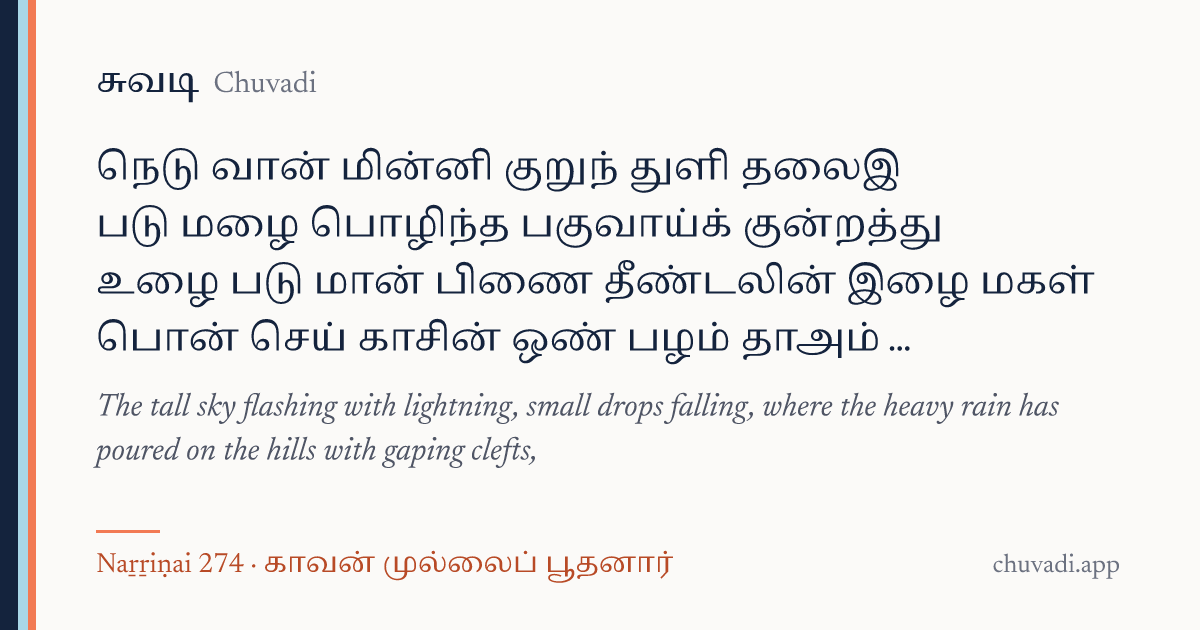
- The tall sky flashing with lightning, small drops falling,
- where the heavy rain has poured on the hills with gaping clefts,
- as the doe beside the stag brushes the trees, like a jewelled girl's
- coins wrought of gold, the bright fruits are spread on the ground
- of the kumiḻ trees crowding the many short paths of the wasteland:
- 'Will you come with us, you of the thick hair?' so much
- did he even have it in him to say? No, he turned away,
- and through groves where the great tiger prowls,
- over the wasteland of great boulders, he has gone.
What the poem says
The colophon is brief and hard to read: "the friend; the season has changed". The most likely situation is that the season the hero promised for his return has come and gone, and the friend speaks to the heroine (or the heroine to her friend) about the man who left.
The landscape is the wasteland after the first rains: lightning, a light drizzle, cleft hills, and paths crowded with kumiḻ trees whose bright yellow fruit, shaken down when a deer brushes past, lies scattered like the gold coins of a woman's necklace. This is the road he took, and it is pretty enough now that even a girl could walk it.
The complaint is that he did not so much as ask, "Will you come with me?" Instead he went off alone through tiger-haunted groves and rocky desert. The bitterness is not that he left, which men do, but that he did not think of taking her. The opening of line 3, about the doe "beside" the stag, is not fully certain, and the plural "they" of the Tamil is rendered here as "he".