




நற்றிணை 282
பாடல் · The poem
Tap a word to see where else it occurs.
பொருள் · Meaning in TamilAI
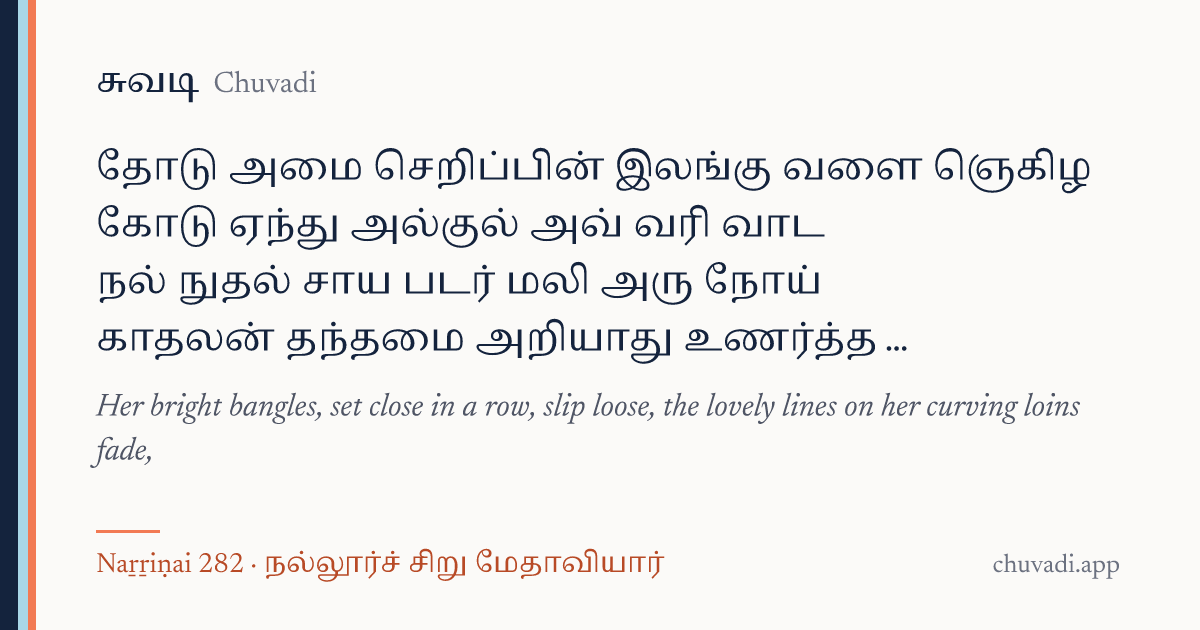
நெருக்கமாக அடுக்கி அணிந்த ஒளிரும் வளையல்கள் கழன்று விழுகின்றன; வளைவுகளை உடைய அல்குலின் அழகிய வரிகள் வாடுகின்றன; அழகிய நெற்றி ஒளி இழக்கிறது. துயரம் நிறைந்த இந்தக் கொடிய நோயைக் காதலன் தந்தான் என்பதை வீட்டார் அறியவில்லை. அதை விளக்கச் சொல்ல, தெய்வம் ஏறிய கழங்குகளை உடைய, முதிர்ந்த சொல்லுடைய வேலனுடைய வாய்ச்சொல்லால் இந்நோய் தணியுமானால் எவ்வளவு நல்லது! மலைச்சாரலில் கானவன் அகிலையும் சருகையும் எரிக்கும்போது எழும் மணமுள்ள புகை, அசையும் மேகத்தின் பனிமூட்டம் போல நாட்டை மறைக்கும். அத்தகைய நாட்டையுடைய மலைத்தலைவனோடு நமக்கு அமைந்த தொடர்பு இப்படி ஆயிற்றே!
குறிஞ்சித் திணை; தலைவன் வேலிப்புறத்தில் நின்று கேட்கும்படி, தலைவி வீட்டில் அடைத்து வைக்கப்பட்டதை அறிவித்து, மணம் செய்யுமாறு தோழி தூண்டியது. வேலனின் சொல்லால் நோய் தணியுமானால் நல்லது என்பது ஏளனம்; இது காதல் நோய், தலைவனால் மட்டுமே தீரும். புகையை மேகம் என்று மயங்குவதுபோல், காதல் நோயைத் தெய்வம் தந்த நோய் என்று வீட்டார் மயங்குகின்றனர் என்பது உள்ளுறையாகக் கொள்ளத்தக்கது.
ஆங்கிலம் · English translationAI
Translation
- Her bright bangles, set close in a row, slip loose,
- the lovely lines on her curving loins fade,
- her fair brow droops: this hard sickness full of longing
- they do not know her lover gave; and if, to explain it,
- the old, wise-tongued vēlaṉ with his possessed kaḻaṅku pebbles
- could ease it with his words, how good that would be. On the slopes
- the fragrant smoke as the forest man burns dry leaves and akil
- hides the land like the mist of drifting clouds:
- such is our bond with the lord of that mountain country.
What the poem says
The friend speaks to the heroine, but she knows the hero is listening outside the fence. The colophon says she lets him learn that the girl is now kept indoors (ceṟippu) and presses him to marry her. The household has noticed the slipping bangles, fading body and pale brow, and has called the vēlaṉ, the diviner of Murukaṉ, who reads kaḻaṅku pebbles to name the god who has seized her.
The particle in nanṟumaṉ ("how good that would be") carries a bitter irony: the diviner's words cannot cure a sickness that comes from love. Only the hero can.
The landscape makes the same point quietly. On his mountain, the smoke of burning akil and dry leaves looks just like the mist of drifting clouds, so that one thing is taken for another. In the same way the family mistakes love-sickness for possession, and the real bond stays hidden. The last line hangs alone, half complaint, half warning: this is what their secret tie has come to. The opening word ceṟippu ("close-set") is also the word for the girl's confinement, which may be a deliberate echo, though that is only a guess.