



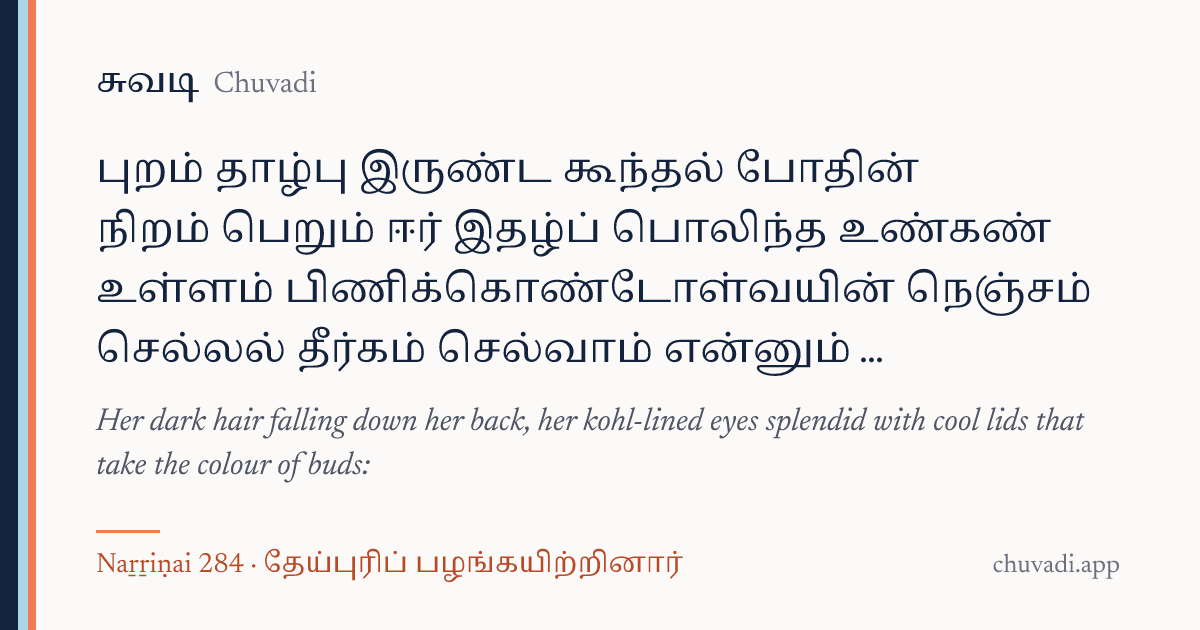

நற்றிணை 284
பாடல் · The poem
Tap a word to see where else it occurs.
பொருள் · Meaning in TamilAI
முதுகில் தாழ்ந்து விழும் கரிய கூந்தலும், மலர்மொட்டின் நிறம் பெற்ற குளிர்ந்த இமைகளோடு பொலிந்த மையுண்ட கண்களும் உடையவள் அவள். என் உள்ளத்தைக் கட்டிப்போட்ட அவளிடம், அவளுடைய துன்பத்தைத் தீர்ப்போம், போவோம் என்கிறது என் நெஞ்சம். மேற்கொண்ட வேலையை முடிக்காமல் துன்பம் உண்டாக்குவது அறியாமையோடு இழிவையும் தரும் என்று, நன்மையை எடைபோட்டுத் தயங்கி, என் அறிவு, கொஞ்சம் பொறு, மிகவும் விரையாதே என்கிறது. இவ்விரண்டுக்கும் இடையில், ஒளிரும் உயர்ந்த கொம்புகளையுடைய இரு களிறுகள் எதிரெதிராகப் பற்றி இழுக்கும், புரிகள் தேய்ந்த பழைய கயிற்றைப் போல, வருந்தும் என் உடம்பு அறுந்து அழிந்துவிடுமோ?
பாலைத் திணை; பொருள் தேடச் சென்ற வேலை முடியாத நிலையில், பிரிவைத் தாங்க முடியாத தலைவன் தனக்குள் சொல்லியது. நெஞ்சுக்கும் அறிவுக்கும் இடையே இழுபடும் உடம்பை, இரு யானைகள் இழுக்கும் பழங்கயிற்றுக்கு ஒப்பிடுகிறான். இந்த உவமையாலேயே புலவர் தேய்புரிப் பழங்கயிற்றினார் என்று பெயர் பெற்றார்.
ஆங்கிலம் · English translationAI
Translation
- Her dark hair falling down her back, her kohl-lined eyes
- splendid with cool lids that take the colour of buds:
- toward her, who has bound my mind fast, my heart
- says, "Let us end her sorrow; let us go."
- "To cause grief by leaving the work undone
- brings folly and disgrace as well," so saying,
- weighing what is wise, holding back, my reason
- says, "Wait a little; do not rush so." Between the two,
- held at either end by bull elephants with bright lifted tusks,
- like an old rope with frayed strands,
- will it snap, this suffering body of mine?
What the poem says
The hero speaks to himself. He has gone away to earn wealth, the work is not yet finished, and he cannot bear the separation. His heart and his reason argue. The heart pictures the woman, her dark hair down her back and her eyes like blossoms, and says, "Let us go home and end her grief." Reason answers that to abandon the task half done would be foolish and shameful, and tells him to wait.
The closing simile has given the poet her name: Tēypurip Paḻaṅkayiṟṟiṉār, "the poet of the old frayed rope". Two bull elephants pulling an old, worn rope in opposite directions is an image of a body about to give way. It is homely and violent at once, and the strength of the elephants makes the rope's weakness all the plainer.
The poem belongs to pālai, the tiṇai of separation, and to its common theme of the man torn between love and the duty to gain wealth. No place or person is named.