



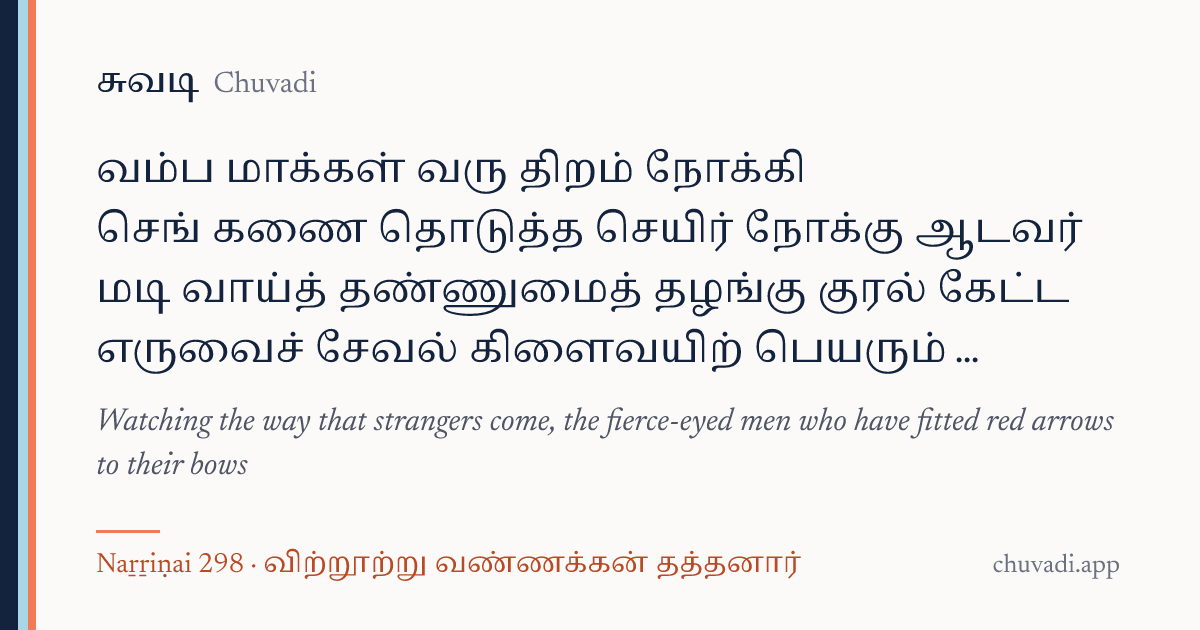

நற்றிணை 298
பாடல் · The poem
Tap a word to see where else it occurs.
பொருள் · Meaning in TamilAI
புதியவர்கள் வரும் வழியைக் கண்காணித்துச் சிவந்த அம்புகளை வில்லில் தொடுத்திருக்கும், சினம் நிறைந்த பார்வையுடைய ஆறலை கள்வர்கள், மடிந்த வாயுடைய தண்ணுமைப் பறையை முழக்குகின்றனர். அந்த முழங்கும் ஓசையைக் கேட்ட ஆண் கழுகு தன் சுற்றத்திடம் செல்கிறது. கடத்தற்கரிய சுரத்தின் கிளைவழிகளை உடைய, அச்சம் தரும் அகன்ற நிலத்தில் உள்ள பெரிய பல குன்றுகளை நினைத்தும், மீண்டும் கரும்பு வரைந்த இவளுடைய மூங்கில் போன்ற தோள்களைப் பார்த்தும், என் நெஞ்சே, நீ ஒரு பக்கமும் உறுதியாகப் பற்றவில்லை; நீ வாழ்க! நல்ல மாலையும் பொன்தேரும் உடைய செழியனின் கூடல் நகரில், ஒப்பில்லாதவை எனப் புகழப்படும் அரிய வெண்மொட்டுகள் பெரிய மலர்களாக மணக்கும் கூந்தலை உடையவள் இவள். பெரிய மலைகளைக் கடப்பதும், இவளைப் பார்த்திருப்பதும் ஒருசேர இயலுமோ?
பாலைத் திணை; தோழி பொருள் தேடச் செல்லுமாறு தூண்டியபின், தலைவியைக் கண்டு தளர்ந்த நெஞ்சைக் கடிந்து, தலைவன் பயணத்தைக் கைவிட்டது. செழியன் பாண்டிய மன்னன்; கூடல் மதுரை. ஒருமை செப்பிய என்ற சொற்றொடரின் பொருளும், கூடலுக்கும் கூந்தல் மலருக்கும் உள்ள தொடர்பும் தெளிவாக இல்லை; பாடம் சிதைந்திருக்கலாம்.
ஆங்கிலம் · English translationAI
Translation
- Watching the way that strangers come,
- the fierce-eyed men who have fitted red arrows to their bows
- beat their fold-mouthed drums; hearing that booming voice,
- the male vulture goes off to its kin, expecting a kill,
- in the forking paths of the hard wasteland, a wide and fearful country:
- thinking of those many great hills, and again of her,
- looking at her bamboo shoulders painted with sugarcane designs, to neither side
- do you hold, may you live, my heart! Of fine-garlanded
- Ceḻiyaṉ of the golden chariot, in his city of Kūṭal,
- the rare white buds, famed as without equal,
- in their large blossoms make her hair fragrant;
- can you hold the great mountains and that sight together?
What the poem says
The hero speaks to his own heart. The colophon explains that the friend has encouraged him to go and earn wealth; but on coming to the heroine, his heart weakens, he reproaches it and gives up the journey.
The first five lines are the road he would have to take: a wasteland of forking tracks where bandits with red arrows lie in wait for travellers, and their drum is the signal that brings vultures to the coming kill. Against this he sets the woman in front of him, her shoulders painted with sugarcane designs and her hair fragrant with flowers.
His heart cannot choose: it thinks of the hills, then looks at her, and holds to neither. The final question settles it: no one can embrace the far mountains and keep this sight too. Ceḻiyaṉ is a Pāṇṭiya king and Kūṭal his city, Maturai. Lines 10 and 11 are obscure. Orumai ceppiya, rendered "famed as without equal", may have some other sense, and the connection between Kūṭal and the flowers in her hair is not clear. The text here may be damaged.