




நற்றிணை 300
பாடல் · The poem
Tap a word to see where else it occurs.
பொருள் · Meaning in TamilAI
ஒளிரும் தொடி அணிந்த அரசமகள் சினந்தபோது அவள் எதிரே இளமையும் அழகும் உடைய தோழியர் கூட்டம் கைகூப்பித் தொழுவதுபோல, வலிய காற்று மோதுவதால் வளைந்து, ஆம்பல் மலர் தாமரைக்குத் தலைவணங்கும் குளிர்ந்த துறையுடைய ஊரில், ஒருவன் இவளுடைய சிறிய வளையல்களுக்கு விலையாகப் பெரிய தேரை அணிசெய்து எம் வீட்டு முன்வாயிலில் நிறுத்திவிட்டுச் சென்றான். நீயோ தேரோடு வந்து இங்கிருந்து போகாமல் நிற்கிறாய். நெய் வழிந்ததுபோல் பஞ்சு நீங்கிய நரம்புகளையுடைய யாழ் ஏந்திய பெரும் பாணர் சுற்றத்துக்குத் தலைவனும், பெரிய புண்களும் அழகிய தழும்புகளும் உடையவனுமான தழும்பனின் ஊணூரில் பிச்சைக்குச் சுற்றித் திரியும் பெரிய களிற்றைப் போல, எம் சமையலறையின் ஓலைத் தட்டியைத் தொட்டுவிட்டாய்; அங்கேயே நில்!
மருதத் திணை; தோழி தலைவனுக்கு வாயில் மறுத்தது, மணம் செய்யத் தூண்டியது என்கிறது கொளு. அயலார் தலைவியை மணம் பேசி வந்ததை முன்வைத்துப் பேசுவதால், தேரை நிறுத்திச் சென்றவன் வேறொருவன் என்று கொள்ளலாம். ஊணூர் தழும்பன் என்ற தலைவனுக்கு உரியது. நின்மே என்ற இறுதிச் சொல்லின் வடிவமும் பொருளும் உறுதியாகத் தெரியவில்லை.
ஆங்கிலம் · English translationAI
Translation
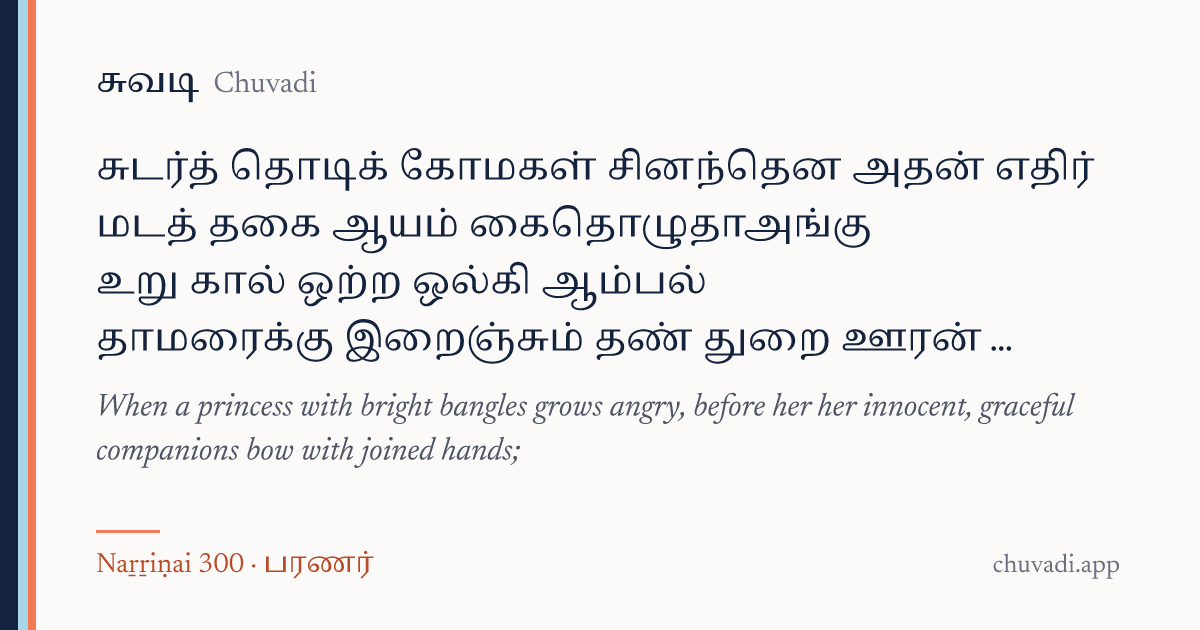
- When a princess with bright bangles grows angry, before her
- her innocent, graceful companions bow with joined hands;
- just so, pushed by a strong wind, bending, the āmpal
- bows down to the lotus, at the cool ford of this man's town.
- As the price for her small bangles, he fitted out a great chariot, and at our
- front gate he left it standing, and went away.
- And you, coming with your chariot, will not go away:
- whose strings, smoothed of fluff, look as if oil had run down them,
- the lord of the many kin of great bards, he of great wounds
- and handsome scars, Taḻumpaṉ, in his Ūṇūr,
- like the great tusker that goes round begging, at our
- kitchen's palm-leaf screen you have laid your hand; stand back!
What the poem says
The heroine's friend turns the hero away. The colophon is unusually long and not fully clear: it calls the poem a refusal of entry, or an urging to marry, and speaks of strangers (notumalāḷar) putting forward a marriage proposal of their own. On that reading, "he" in lines 5 and 6 is a rival suitor, who has left a great chariot at the family's gate as bride-price for the girl; "you" is the hero, who has come with his own chariot but has done nothing except hang about.
The opening is courtly: the āmpal lily, bent by the wind toward the lotus, looks like a band of girls bowing with joined palms before an angry princess. It suggests the deference the household now shows to the serious suitor.
The insult comes at the end. The hero is like the big elephant in Ūṇūr that goes round from house to house begging food and pokes at the palm-leaf screen of the kitchen. Ūṇūr belongs to Taḻumpaṉ, a chieftain praised as patron of bards and marked with battle-scars. The final word niṉmē is read as "stand back", but its form is uncertain.