



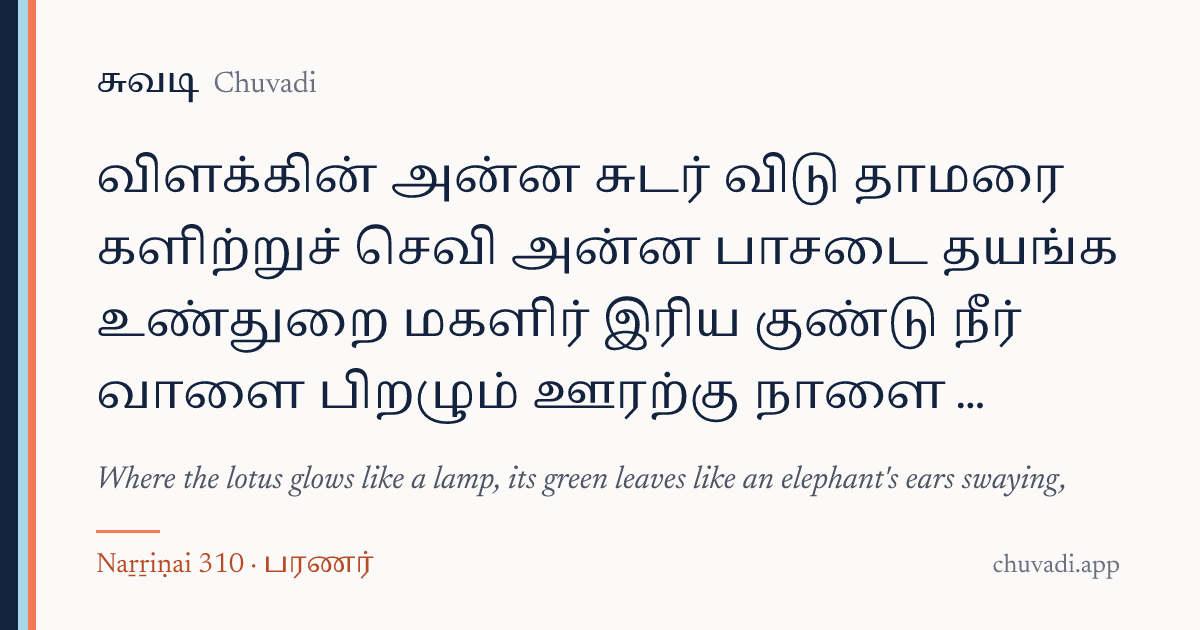

நற்றிணை 310
பாடல் · The poem
Tap a word to see where else it occurs.
பொருள் · Meaning in TamilAI
விளக்கைப் போல ஒளி வீசும் தாமரையும், யானையின் காதைப் போன்ற பசிய இலைகளும் அசைய, நீர் உண்ணும் துறையில் உள்ள பெண்கள் அஞ்சி ஓடும்படி ஆழமான நீரில் வாளைமீன் துள்ளிப் பிறழும் ஊரையுடையவனுக்கு, நாளை ஒரு மகளைக் கொடுக்க ஒப்புக்கொண்ட அறிவற்ற பெண்ணே! தேய்ந்துபோன நாவால் சொல்லும் உடைந்த சிறு சொற்களை, எண்ணிப் பார்க்காமல் உடன்படும் தாய்மார்களோடு சேர்ந்து, முழுமையாக நீ சொல்லமாட்டாயோ? நீ திறமைசாலிதான்! யானைகளைப் பரிசாகப் பெற்று வாழும் பாணனின் கையில் உள்ள, உரத்த ஓசையுடைய தண்ணுமைப் பறையைப் போல, உன் சொல் உள்ளே ஒன்றும் இல்லாத அழகிய போர்வை மட்டுமே.
மருதத் திணை; தலைவனுக்காகத் தூது வந்த விறலியைக் கண்ட பரத்தை சொன்னது, அல்லது வாயிலாக வந்த விறலிக்குத் தோழி சொன்னது. உள்ளே வெறுமையான பறை போல விறலியின் சொல் வெறும் ஆரவாரம் என்று இகழப்படுகிறது. ஆறாம் ஏழாம் வரிகளின் பொருள் தெளிவாக இல்லை.
ஆங்கிலம் · English translationAI
Translation
- Where the lotus glows like a lamp,
- its green leaves like an elephant's ears swaying,
- so that the women at the drinking-ford run away, in the deep water
- the vāḷai fish leaps: to the man of that town, tomorrow,
- you foolish woman, who have agreed to give him a daughter,
- with a worn-out tongue, your broken little words,
- together with the mothers who agree without a thought, all of them,
- won't you say them? You are skilful indeed:
- like the one in the hand of a bard whose living is the elephants he is given,
- the loud-voiced taṇṇumai drum,
- your words are a fine covering with nothing at all inside.
What the poem says
The colophon offers two speakers: a courtesan who has met the viṟali, the hero's woman-bard, or the heroine's friend speaking to the viṟali who came to plead for the hero. Either way, the target is the viṟali, who carries the hero's messages and seems to have promised him a new girl, "a daughter", for tomorrow.
The opening scene is marutam in its liveliest form: lotuses bright as lamps, leaves like elephants' ears, and a vāḷai fish leaping in the deep water so suddenly that the women drawing water run off in fright. The leaping fish may suggest the hero's restless roaming.
The speaker mocks the viṟali's smooth talk. Her words are like the loud taṇṇumai drum of a bard who is rewarded with elephants: impressive noise, with nothing at all inside the skin. Lines 6 and 7, about worn-out tongues and mothers who agree without thinking, are difficult, and the rendering is tentative.