




நற்றிணை 315
பாடல் · The poem
Tap a word to see where else it occurs.
பொருள் · Meaning in TamilAI
பெருந்தெய்வம் உறையும் இந்தக் கடற்கரையில் பல ஆண்டுகள் கழிந்ததால், பாறைகள் நிறைந்த துறையில் அலைகள் மோதியதால் பக்கங்கள் சிதைந்து, முதிர்ந்து பணிக்குப் பயனற்றுப்போன, முகப்பு உடைந்த தோணியை, நல்ல எருது உழைப்பால் தன் நடைவலிமையைக் கழித்தபின் உழவர்கள் புல் நிறைந்த சோலையில் அதை வேலையிலிருந்து விடுவிப்பதுபோல, மணமுள்ள நல்ல புகை காட்டி, சிறு பூக்களையுடைய ஞாழலோடு கலந்து நிற்கும் புன்னையின் அழகிய அடர்ந்த நிழலில், அதன் முழவு போன்ற அடிமரத்தில் கட்டிவைக்கும் துறையையுடையவனே! மிகச் சிறப்பாகத் தொடங்கிய நட்பும் எளிதில் தவறிவிடும் என்பதை நீ நன்றாக அறியாவிட்டால், உன்னை விரும்பியவர்கள் எல்லாம் என்னைப் போலவே நெகிழ்ந்த தோள்களும் கலங்கிய கண்களும் உடையவராய், வெயிலில் கருகிய மலர் போல ஆவார்கள்.
நெய்தல் திணை; தலைவனால் கைவிடப்பட்ட பரத்தை நொந்து சொன்னது. பயன்பட்டு முதிர்ந்த தோணியையும் எருதையும் கூட மக்கள் மதிப்போடு ஓய்வு தருகின்றனர்; நீயோ நின்னை விரும்பியவரைக் கைவிடுகிறாய் என்பது குறிப்பு. முதல் வரியின் பொருள் உறுதியாகத் தெரியவில்லை; கொடாஅர் என்பதை எதிர்மறையாகக் கொண்டால் காட்சியின் பொருள் மாறும்.
ஆங்கிலம் · English translationAI
Translation
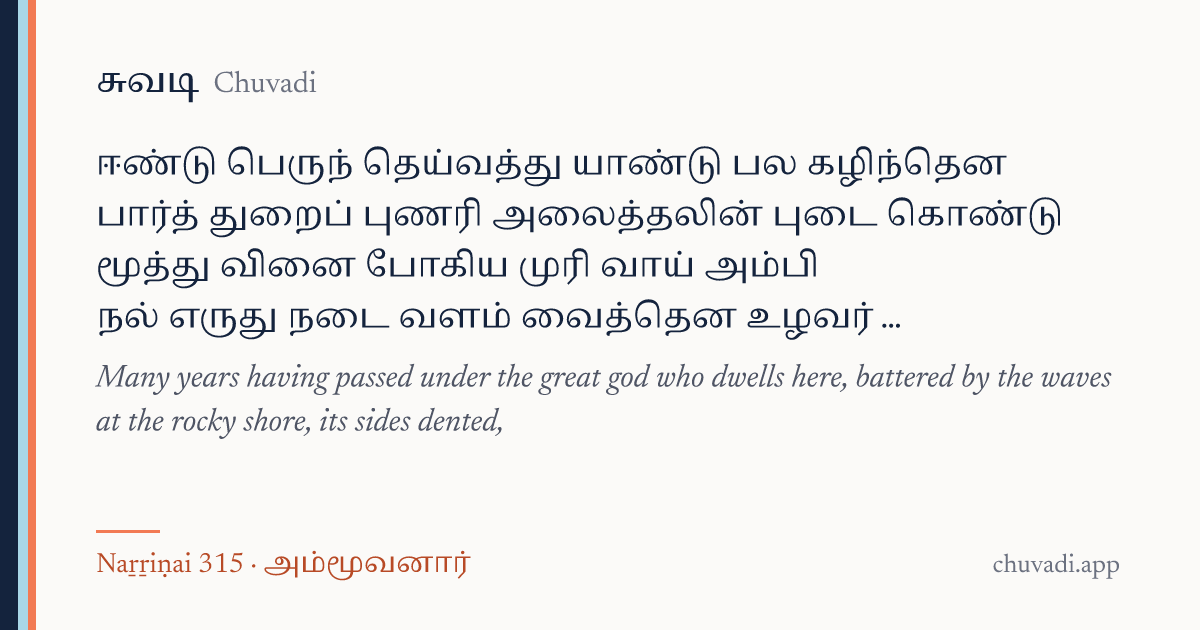
- Many years having passed under the great god who dwells here,
- battered by the waves at the rocky shore, its sides dented,
- grown old and past its work, the broken-prowed boat,
- just as farmers, when a good ox has spent its strength in labour,
- release it from work in a grassy grove,
- is given fragrant incense smoke and, in the lovely deep shade of punnai
- mingled with small-flowered ñāḻal,
- is tied to its drum-like trunk, lord of such a shore! Very
- nobly was this friendship taken up, and how lightly
- it can fail; if you do not know that well, then like me,
- with slackened arms and weeping eyes,
- like flowers scorched, will be all those who love you.
What the poem says
A courtesan speaks to the hero in hurt and reproach (the colophon's setting). He has taken up with her and is now leaving her too.
Her opening picture is of an old fishing boat. After many years of work it is battered by the waves, its prow broken, and it is past use. The fishermen do not throw it away: they offer it fragrant incense and tie it up in the shade of a punnai on the shore, just as farmers let a worn-out ox graze in a grassy grove. Even old things that have served are retired with honour.
The point is left for him to draw: he treats his lovers worse than fishermen treat their boats. A love begun so nobly can be broken lightly, she says, and if he will not see that, every woman who loves him will end as she has, arms thin and eyes wet, like flowers scorched by the sun. The first line is uncertain: īṇṭu perum teyvattu may refer to a great deity worshipped at the shore, or mean something else. In line 6 the verb koṭāar is taken as "giving"; it could be negative ("not giving"), which would change the picture.