




நற்றிணை 328
பாடல் · The poem
Tap a word to see where else it occurs.
பொருள் · Meaning in TamilAI
கிழங்குகள் கீழே மண்ணில் இறங்கியிருக்கும், தேன் மேலே தொங்கும்; சிலவற்றை மட்டுமே விதைத்துப் பலவற்றை அறுவடை செய்வர்; தினைப்புனத்தில் கிளிகளை ஓட்டுவர்; அத்தகைய பெரிய பாறைகள் நிறைந்த நாட்டை உடையவனின் பிறப்பு சாதாரணமானது அல்ல என்று அறிந்திருக்கிறோம். ஆகவே, தோழி, நீ வாழ்க, அதைப் பற்றி இனிக் கவலை வேண்டாம். ஒருநாள், பல சிறு மேகங்கள் திரண்டு வலப்பக்கமாக எழுந்து, பெருமழை பொழிந்து வெள்ளம் பெருகட்டும். அப்போது, எள்ளைப் பிழிந்த எண்ணெயும் வெண்ணிறத் துணியும் வேண்டாமல், சந்தன மரங்கள் நிறைந்த உயர்ந்த அகன்ற சாரலிலும், குறுக்கே கிடக்கும் மலையின் அடுக்குகளிலும், பரிசாகக் கலங்களைப் பெறும் விறலி இந்த ஊரில் ஆடுவாள்.
குறிஞ்சித் திணை; மணம் தள்ளிப்போவதால் வருந்திய தலைவியைத் தோழி தேற்றியது. வலப்பக்கம் எழும் மேகம் நல்ல நிமித்தம்; விறலி ஆடும் விழா மணநாளைக் குறிப்பதாகக் கொள்ளலாம், ஆனால் பாடல் அதை வெளிப்படையாகச் சொல்லவில்லை. பிறப்பு ஓரன்மை என்ற தொடருக்கும், மழைக்கும் விறலிக்கும் உள்ள தொடர்புக்கும் உறுதியான பொருள் தெரியவில்லை.
ஆங்கிலம் · English translationAI
Translation
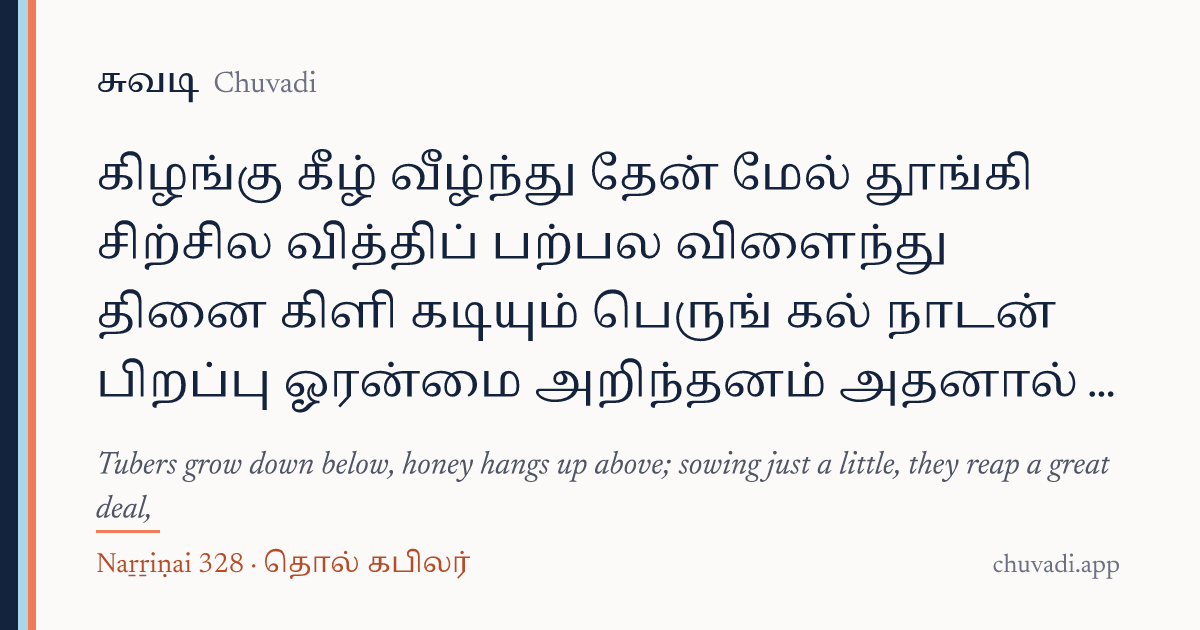
- Tubers grow down below, honey hangs up above;
- sowing just a little, they reap a great deal,
- and chase the parrots from the millet: the man of the great-rocked land,
- we have learned his birth is not of the common kind; and so,
- let that now be, may you live, friend. One day,
- gathering many small clouds and rising on the right,
- may the great rain pour and the floods run. And now,
- wanting no sesame-pressed oil and no white cloth,
- on the high, wide slopes crowned with sandalwood,
- even on the ridges of the mountain lying across,
- the viṟali who wins rich vessels will dance in this town.
What the poem says
The friend comforts the heroine while the hero is away arranging the marriage (kuṟiñci, attributed to 'the old Kapilar').
The opening describes his country as wonderfully fertile: tubers below the ground, honey hanging in combs above, harvests far larger than what was sown. From this the friend draws confidence: they know his birth is no ordinary one, so he will not fail them. She then wishes for the season to turn, with clouds gathering, rising 'on the right', a good omen, and great rain bringing floods.
The last lines look ahead to a time of celebration: the viṟali, the woman dancer of the bards, will dance in this town and on the mountain slopes and be rewarded with vessels, needing neither sesame oil nor white cloth, perhaps because the slopes give her sandal paste. The wedding is probably implied but never named.
Several links are doubtful: 'piṟappu ōraṉmai' (his birth is not one/the same) can be read in more than one way, and how the rain and the dancer connect to the heroine's comfort is left unstated.