



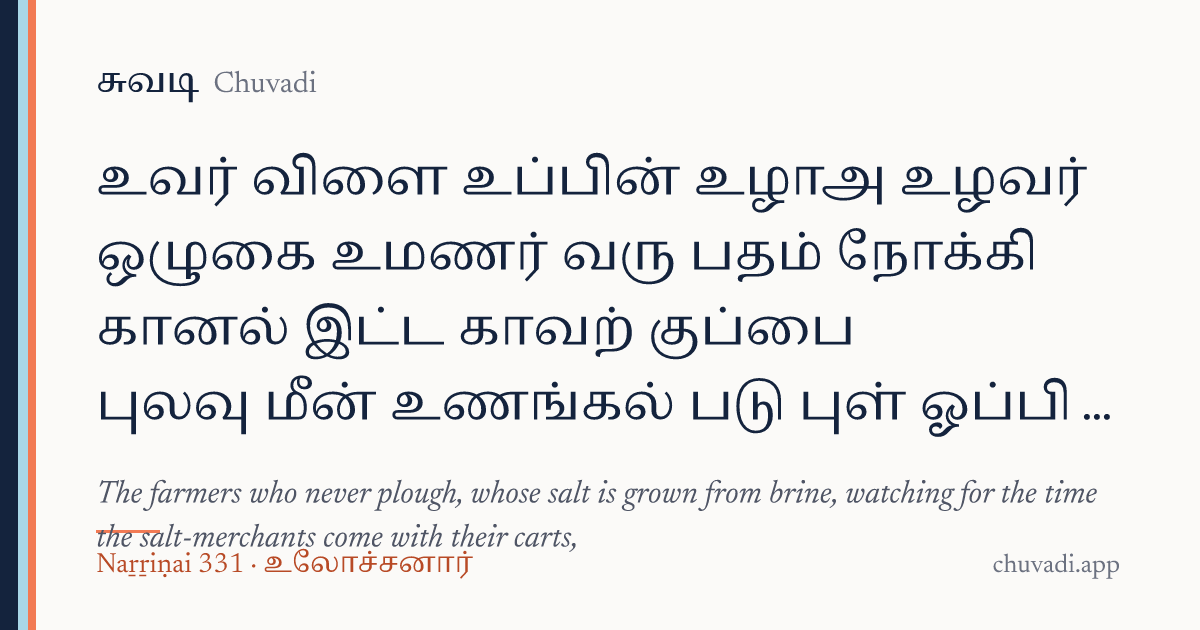

நற்றிணை 331
பாடல் · The poem
Tap a word to see where else it occurs.
பொருள் · Meaning in TamilAI
உவர் நிலத்தில் விளையும் உப்பை உடைய, நிலத்தை உழாத உழவர்கள், வண்டிகளோடு வரும் உப்பு வணிகர் வரும் காலத்தை எதிர்பார்த்து, கடற்கரைச் சோலையில் காவலோடு உப்புக் குவியல்களை வைத்திருக்கின்றனர். உலரும் நாற்றமுடைய மீன்களின் மேல் வந்து விழும் பறவைகளை ஓட்டிவிட்டு, அறியாமை நிறைந்த பார்வையுடைய தோழியர் கூட்டத்தோடு சேர்ந்து மேட்டில் ஏறி, இது என் தந்தையின் படகு, அது உன் தந்தையின் படகு என்று, சங்குகள் நிறைந்த கடலில் மீன் வேட்டைக்குச் சென்ற உறவினரின் வலிய படகுகளை எண்ணுவோம். குளிர்ந்த கடற்கரைத் தலைவனே, யாரும் வெறுக்காத எங்கள் நல்ல ஊர் இனிமையானது. இனி நீ வந்தாலும் தவறு எதுவும் இல்லை. மற்றவர்கள் எப்படி அறிய முடியும்? உறவினரே உறவினரை அறியாத அளவு நெருக்கமான தெருக்களும் அங்கே உண்டு.
நெய்தல் திணை; இரவுக்குறிக்கு உடன்பட்ட தோழி தலைவனுக்குச் சொல்லியது. உப்பளம், மீன் உலர்த்தல், படகு எண்ணுதல் என்று பரபரப்பான ஊர் வாழ்க்கையைக் காட்டி, அந்த நெருக்கத்தில் அவன் வருகையை யாரும் கவனிக்க மாட்டார்கள் என்று நம்பிக்கை ஊட்டுகிறாள்.
ஆங்கிலம் · English translationAI
Translation
- The farmers who never plough, whose salt is grown from brine,
- watching for the time the salt-merchants come with their carts,
- have left their guarded heaps in the seaside grove;
- driving off the birds that swoop on the drying, stinking fish,
- with our band of innocent-eyed girls, climbing up together,
- 'This is my father's boat, that is your father's boat,' so
- we count the sturdy boats of our kinsmen gone fishing
- on the conch-filled waters: lord of the cool sea shore,
- it is sweet, you know, our good town that no one resents;
- if you come now, there is nothing wrong at all; in any case,
- how could anyone else come to know?
- It even has a quarter where kin do not know their kin.
What the poem says
The friend agrees to a meeting by night and reassures the hero (neytal, poem by Ulōccaṉār).
She sketches daily life in the heroine's village. The salt-makers, 'farmers who do not plough', leave their salt heaps under guard in the seaside grove, waiting for the merchants' carts. The girls chase birds away from the fish laid out to dry, and climb up together to watch the fishing boats come home, each claiming 'that one is my father's'. It is a busy, cheerful place.
That busyness is the point. The town is pleasant and no one there bears ill will; and it is so crowded that in some quarters even relatives do not recognise one another. If he comes, nobody will notice him. The friend uses ordinary details of the fishing village to make his visit seem safe.
Line 9 'muṉivu il' (without displeasure) could describe the town as one nobody dislikes or one where nobody is cross; either way, it is welcoming.