



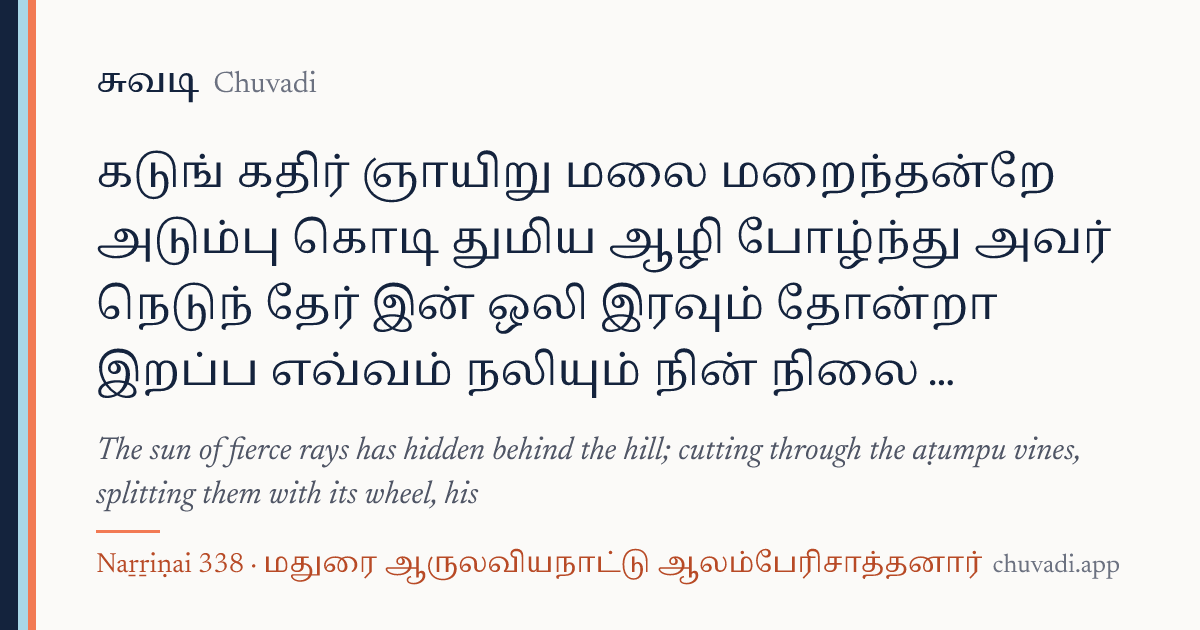

நற்றிணை 338
பாடல் · The poem
Tap a word to see where else it occurs.
பொருள் · Meaning in TamilAI
கடுமையான கதிர்களையுடைய ஞாயிறு மலைக்குப் பின்னால் மறைந்துவிட்டது. அடும்புக் கொடிகள் அறுபடும்படி சக்கரத்தால் பிளந்துகொண்டு வரும் அவருடைய நெடிய தேரின் இனிய ஒலி இரவிலும் கேட்கவில்லை. துயரம் மிகுதியாக வருத்தினாலும் உன் நிலையைக் குலையாமல் நிறுத்திக்கொள்ள வேண்டும் என்கிறாய். ஆனால் நான் நிலையாக இருக்க இது எப்படி விடும்? பார், என்னை மயங்கச் செய்யும்படி, அகன்ற கரிய நீர்ப்பரப்பின் மேல் எழுந்து இரை உண்டுவிட்டு, மீன் நாற்றம் வீசும் சிற்றூரின் பொதுவிடத்தில் உயர்ந்து நிற்கும், அசையும் அடிமரமுடைய பனையின் மடல்களில் ஏறி, வளைந்த அலகுடைய தன் பெண்பறவையின் கூட்டை அடைய, உயிர் போவது போலத் தன்னை வருத்திக்கொண்டு, தன் துணையை அழைப்பதை நிறுத்தாமல் இருக்கிறது, வருந்தும் அந்தக் குருகு.
நெய்தல் திணை; தலைவன் சிலகாலம் பிரிந்திருந்தபோது ஆற்றாத தலைவி தோழியின் தேற்றுதலுக்கு மறுமொழி கூறியது. துணையோடு கூட்டுக்குத் திரும்பி ஓயாமல் அழைக்கும் குருகு, அவள் தனிமையையும் ஏக்கத்தையும் மிகுதிப்படுத்துகிறது. ஐந்தாம் ஆறாம் வரிகளின் அமைப்பு சுருக்கமாக இருப்பதால், இங்கு தந்த பொருள் ஒரு வாசிப்பே.
ஆங்கிலம் · English translationAI
Translation
- The sun of fierce rays has hidden behind the hill;
- cutting through the aṭumpu vines, splitting them with its wheel, his
- tall chariot's sweet sound does not appear even at night.
- 'Though the sorrow torments you past bearing, your state
- you must keep steady,' you say; but to keep it steady,
- how would it ever let me? Look, to bewilder me,
- having risen to feed over the wide, dark expanse,
- in the common ground of the small, fish-smelling hamlet, on the tall
- palmyra with its swaying trunk, climbing onto its frond-stalks,
- to reach the nest of its curve-beaked mate,
- driving itself as if its life would leave it, to its partner
- it never stops calling, that wretched heron.
What the poem says
The hero has gone away for a while, and the heroine, who cannot bear it, answers her friend's attempts to steady her (neytal, poem by Maturai Ārulaviyanāṭṭu Ālampēricāttaṉār).
Evening has come and the sun is gone. Even after dark there is no sound of his tall chariot, whose wheels used to cut through the aṭumpu creepers on the sand. Her friend tells her to hold herself together however much it hurts. The heroine asks how she can, when everything around her stirs up the longing.
The heron is her example. After feeding over the wide water it flies back to the fish-smelling village, climbs to its nest on a tall palmyra in the common ground, and calls and calls to its mate as if its life depended on it. The birds go home together; her lover does not. The heron's endless calling is also an image of her own grief.
The syntax of lines 5–6 is compressed; it is read here as 'how would it (the sorrow, or the scene) let me stay steady?'