



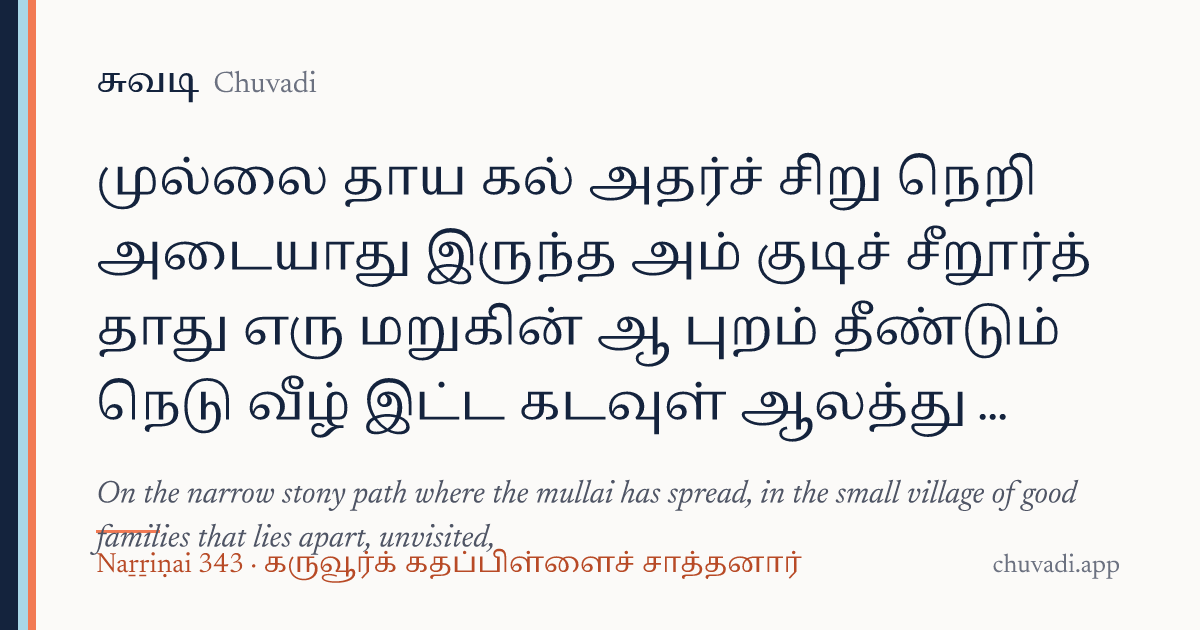

நற்றிணை 343
பாடல் · The poem
Tap a word to see where else it occurs.
பொருள் · Meaning in TamilAI
முல்லைக் கொடி படர்ந்த கற்கள் நிறைந்த சிறுவழியில், யாரும் வந்து சேராமல் ஒதுங்கியிருக்கும் நல்ல குடிகளையுடைய அழகிய சிற்றூர். மகரந்தம் எருவாகப் படிந்த அதன் தெருவில், பசுக்கள் தம் முதுகைத் தேய்க்கும் நீண்ட விழுதுகளை இறக்கிய தெய்வம் உறையும் ஆலமரம் உண்டு. அங்கே சிதறிய பலிச்சோற்றை உண்ட, நெருங்கிய விரல்களையுடைய காக்கை, துயர் தரும் அந்திப்பொழுதில் தன் கூட்டத்தோடு போய்ச் சேர்கிறது. படையெடுத்து வருவது போல வந்த இந்தத் துயர் நிறைந்த மாலை, தோழி, நீ வாழ்க, நம்மைக் கைவிட்டு அரிய பொருளைத் திரட்ட விரும்பிப் பிரிந்து வாழும் நம் காதலர் சென்ற நாட்டில் இல்லையோ?
பாலைத் திணை; பிரிவைத் தாங்க முடியாத தலைவி தோழியிடம் சொல்லியது. மாலையில் காக்கையும் தன் கூட்டத்தைச் சேர்கிறது; தலைவன் மட்டும் திரும்பவில்லை. படையோடு வந்தது போன்ற மாலை என்ற உவமை, தனித்திருப்பவளை மாலை தாக்குவதைக் காட்டுகிறது. அவர் சென்ற நாட்டிலும் இந்த மாலை இருந்தால் அவர் திரும்பியிருப்பார் என்ற குறிப்பு இதில் உண்டு.
ஆங்கிலம் · English translationAI
Translation
- On the narrow stony path where the mullai has spread,
- in the small village of good families that lies apart, unvisited,
- in its street manured with pollen, where cows rub their backs
- on the long aerial roots hung down by the god's banyan,
- the crow with clustered toes, having eaten the offerings scattered there,
- in the sad twilight presses close to its kin;
- this grieving evening that came on like an army,
- is it not there, may you live, friend, leaving us,
- seeking a gathering of hard-won wealth,
- in the land where our lover went to live apart?
What the poem says
The heroine, unable to bear the separation, speaks to her friend (pālai, poem by Karuvūrk Katappiḷḷaic Cāttaṉār).
She describes evening in a quiet village. The mullai has spread over the stony path; in the street, thick with fallen pollen, cows rub against the hanging roots of a banyan where offerings are left for the god. A crow that has fed on those offerings goes back to its flock as the light fails. Even the crow has kin to go home to at dusk.
The evening itself comes on 'like an army', a striking way of saying how it attacks a lonely woman. Her question is half bitter, half wondering: does this painful evening not exist in the country where her lover went for wealth? If it did, surely he would feel it too and come home.
The village seems to be her own, seen with a sharp eye for small details: the pollen in the dust, the banyan shrine, the crow. 'Aṭaiyātu irunta' (that lies unapproached) is read here as describing a village off the main road.