



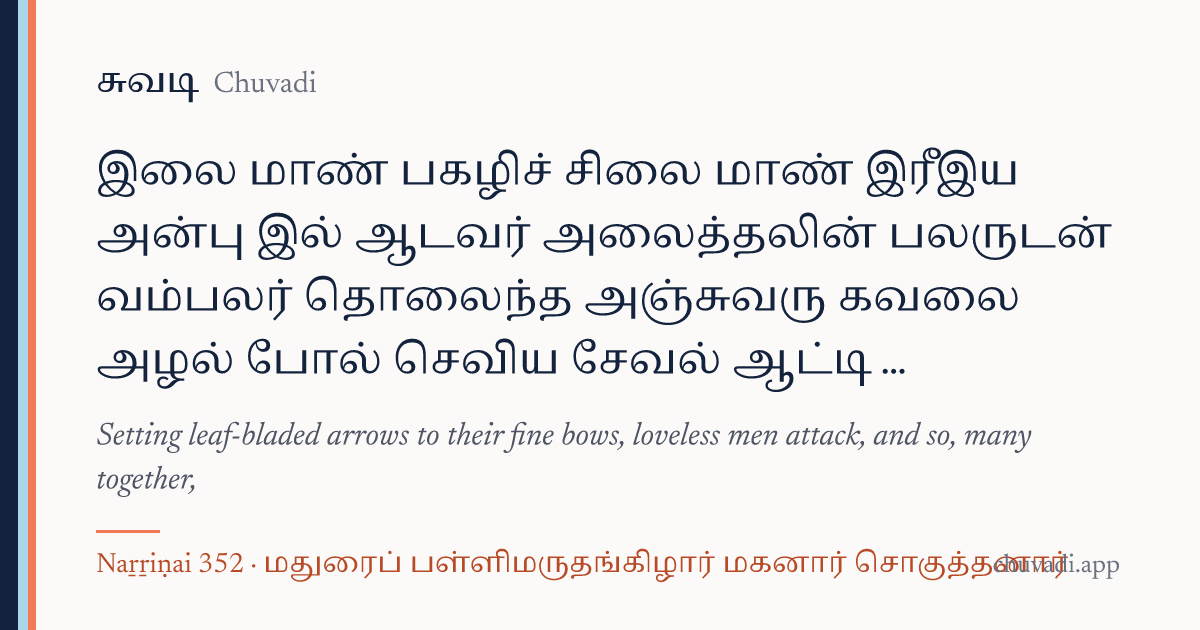

நற்றிணை 352
பாடல் · The poem
Tap a word to see where else it occurs.
பொருள் · Meaning in TamilAI
இலை போன்ற முனையுடைய அம்புகளைச் சிறந்த வில்லில் பொருத்தி, அன்பில்லாத ஆடவர்கள் தாக்கியதால், பல வழிப்போக்கர்கள் ஒருசேர மாண்டுபோன, அச்சம் தரும் கிளைவழிகள் இவை. நெருப்புப் போலச் சிவந்த காதுகளையுடைய ஆண் பறவையை விரட்டிவிட்டு, தன் நிழலோடு ஓடும், கொழுப்பை விரும்பும் முதிய நரி, பச்சை இறைச்சியைக் கொள்ளையாக உண்டு, உடல் வெப்பமடைந்து, கானல்நீர் மின்னும் வறண்ட நிலத்தில் நீரை விரும்பித் தேடி அலைந்து, கல்லறைக் குவியல்களின் நிழலில் ஒதுங்கவும் இடம் பெறாது. இத்தகைய அரிய பாலைவழியில் வந்ததால் வருந்திய நமக்கே இவை கடினமாக இருந்தன. மூங்கில் போன்ற தோளையுடைய சிறந்த அந்த இளம்பெண் தன் வீட்டை விட்டு இங்கே எப்படி வந்தாளோ? அவள் இரங்கத்தக்கவள்!
பாலைத் திணை; பொருளுக்காகப் பிரிந்த தலைவன் இடைவழியில் ஆற்றாமையால் தனக்குள் சொல்லியது. சிவந்த காதுடைய பறவை கழுகாக இருக்கலாம். தலைவி உண்மையில் வரவில்லை; அவள் உருவம் அவன் நினைவில் தோன்றியதையே இவ்வாறு சொல்கிறான் என்று கொள்ளலாம்; கனவா நினைவா என்பதைப் பாடல் சொல்லவில்லை.
ஆங்கிலம் · English translationAI
Translation
- Setting leaf-bladed arrows to their fine bows,
- loveless men attack, and so, many together,
- travellers have perished at these fearful forking paths;
- driving off the male bird with flame-red ears,
- the old jackal greedy for fat, that runs along with its shadow,
- has gorged on a plunder of raw flesh, and, grown hot,
- searching the bare land where the mirage shimmers, longing for water,
- finds no sheltered spot in the shade of the stone cairns:
- these hard wasteland paths, as we came by them suffering,
- were hard even for us; she of the bamboo-smooth shoulders,
- that noble young girl, leaving her home,
- how did she come this far? Poor thing!
What the poem says
The hero has left to earn wealth and, halfway across the wasteland, cannot bear it; he speaks to himself (pālai, poem by Maturaip Paḷḷimarutaṅkiḻār Makaṉār Cokuttaṉār).
The road is terrible. Bandits with leaf-bladed arrows have killed travellers in groups; an old jackal chases off a red-eared carrion bird, probably a vulture, and gorges on the raw flesh; then, hot and thirsty, it hunts across the shimmering bare land for water and cannot even find shade by the stone cairns heaped over the dead.
The last lines are startling. If this road was hard even for him, how did she come here, leaving her home? The heroine has not actually travelled; the sense seems to be that her image has appeared to him in the middle of the desert, so vividly that he pities her for having made the journey. It is a way of saying that she is always with him, and that his longing has become unbearable.
That reading of the closing lines is an interpretation; the poem does not say whether she came in a dream, a vision or only in his thoughts.