



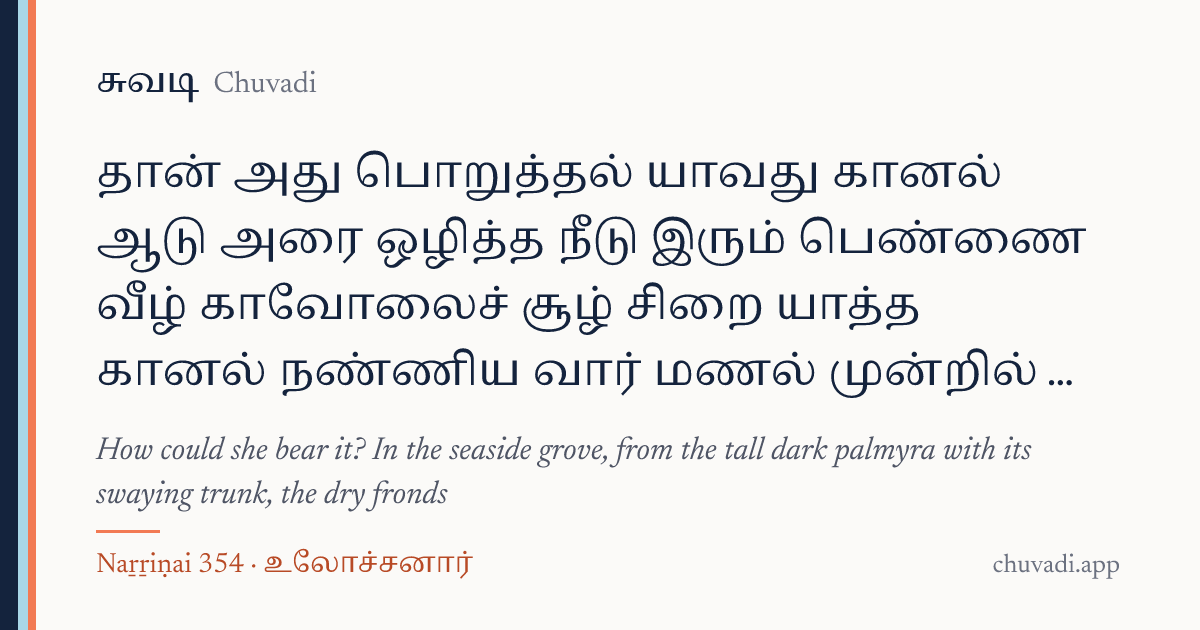

நற்றிணை 354
பாடல் · The poem
Tap a word to see where else it occurs.
பொருள் · Meaning in TamilAI
அவள் அதை எப்படித் தாங்க முடியும்? கடற்கரைச் சோலையில், அசையும் அடிமரமுடைய உயர்ந்த கரிய பனையிலிருந்து உதிர்ந்த காய்ந்த ஓலைகளைக் கட்டிச் சுற்றிலும் வேலி அமைத்த, சோலையை அடுத்த நீண்ட மணல் முற்றம் அது. இரவைப் போன்ற இருண்ட நிறமுடைய புன்னையின் நல்ல அடிமரத்தின் அடியில் கட்டப்பட்ட படகு அசைந்துகொண்டிருக்கும் அழகிய நீர்த்திவலைகள் தெறிக்கும் கடற்கரையில், கடும் வெயிலில் கொதித்துக் கல் போல விளைந்த உப்பை ஏற்றிக்கொண்டு வண்டிகள் வரிசையாக நீண்ட வழியில் செல்வதைப் பார்ப்பவர்கள், உப்பளத்திலிருந்து அவை புறப்படும்போது எழுப்பும் பேரொலியைப் போல, ஐயனே, உன் நட்பு ஊரெல்லாம் பேசும் அலராகிவிட்டது.
நெய்தல் திணை; தலைவி வீட்டில் காவலில் வைக்கப்பட்டதைத் தோழி அறிவித்து, தலைவனை மணம் செய்யுமாறு தூண்டியது; வீட்டில் தன்னைப் புகழ்ந்த தலைவனுக்குத் தோழி மறுத்துச் சொன்னதாகவும் கொள்ளலாம். உப்பு வண்டிகள் புறப்படும் ஆரவாரம் போல ஊரார் பேச்சு பெருகிவிட்டது; அதற்கு மணமே தீர்வு. முதல் வரியில் யார் எதைத் தாங்க முடியாது என்பது வெளிப்படையாகச் சொல்லப்படவில்லை.
ஆங்கிலம் · English translationAI
Translation
- How could she bear it? In the seaside grove,
- from the tall dark palmyra with its swaying trunk, the dry fronds
- that fell were tied into a fence enclosing all around
- the yard of long sand close beside the seaside grove;
- to the good trunk of the punnai, dark as night,
- at its very base, tied fast there,
- the boat swings; on the lovely spray-swept shore,
- the salt that forms like stone, boiled by the fierce sun,
- those who watch the rows of carts move off along the long road,
- like the clamour as they leave the salt pans,
- so loud, sir, has the gossip about your friendship grown.
What the poem says
The friend tells the hero that the heroine is now kept confined at home and urges him to marry her (neytal, poem by Ulōccaṉār). The colophon adds another possible setting: the hero praises the friend at the house, and she answers him like this.
The opening question, 'how could she bear it?', is followed by a long, detailed picture of the shore: a yard of sand fenced with fallen palmyra fronds, a boat tied to the base of a dark punnai tree, salt hardened like stone under the sun. At the end comes the point: when the salt carts set out from the pans in a long line, the noise of the people watching is enormous, and the gossip about the hero's friendship with the girl has become just as loud.
The careful description may also be a way of showing him where she now lives, shut in behind that fence. The only remedy for the gossip is marriage.
The opening line's subject (who cannot bear what) is left unstated; it is taken here as the heroine and the gossip.