




நற்றிணை 36
பாடல் · The poem
Tap a word to see where else it occurs.
பொருள் · Meaning in TamilAI
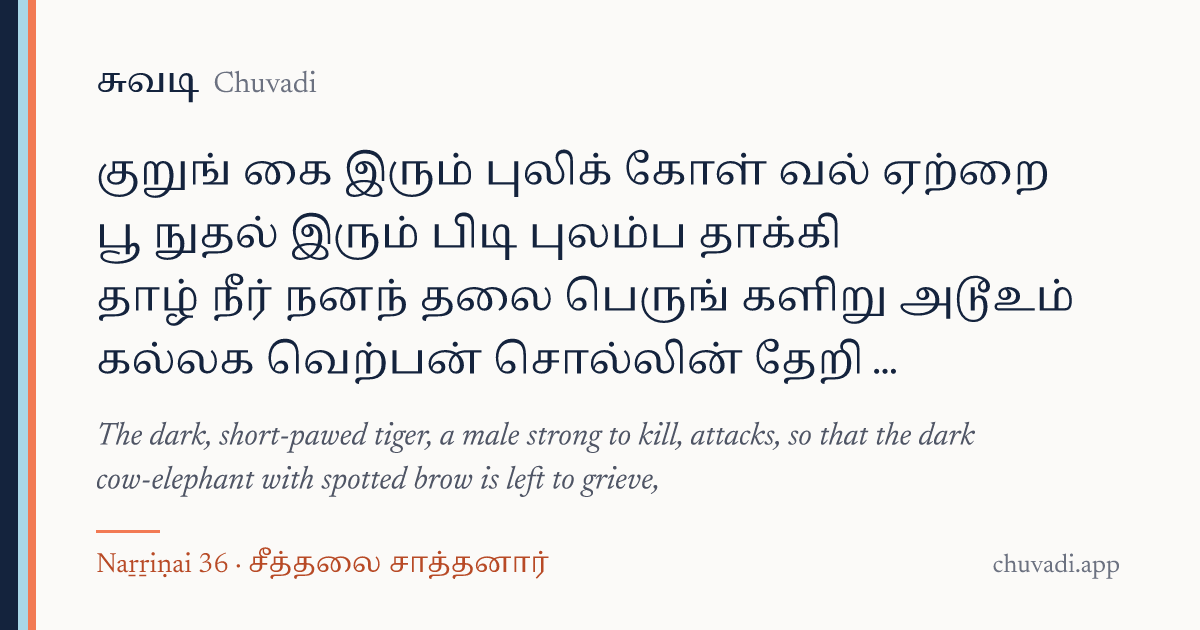
குட்டையான கால்களையுடைய, இரையைப் பற்றுவதில் வலிய கரிய ஆண்புலி, பூப்போன்ற புள்ளிகளையுடைய நெற்றியையுடைய கரிய பெண் யானை தனித்து வருந்தும்படி தாக்கி, ஆழ்ந்த நீருள்ள அகன்ற இடத்தில் பெரிய களிற்று யானையைக் கொல்லும் பாறைகள் நிறைந்த மலையின் தலைவனுடைய சொல்லை நம்பி நாம் நம் அழகை இழந்தோம். நள்ளிரவில், அலர் பேசும் வாயையுடைய பெண்டிரின் அம்பலோடு சேர்ந்து, உண்மையற்ற தீய சொற்களைத் திரும்பத் திரும்பச் சொல்லும் பேச்சை எடுத்துக்கொண்டு, ஓயாத பழிச்சொல்லாக ஆக்கிவிட்டது இந்த ஆரவாரமான ஊர். ஆனால் இதனால் அந்த ஊர் இழந்தது என்ன?
குறிஞ்சித் திணை; இரவுக்குறிக்கு வந்த தலைவன் வேலிக்கு அப்பால் நிற்கும்போது தோழி சொல்லியது. களிற்றைப் புலி கொல்ல, பெண் யானை தனித்து வருந்தும் காட்சி, தலைவனை நம்பி வருந்தும் தலைவியைக் குறிக்கும் இறைச்சியாகக் கொள்ளலாம். ஊர் எதையும் இழக்கவில்லை, தலைவி மட்டுமே துன்புறுகிறாள்; இனி மணமே வழி என்பது தலைவனுக்கு உணர்த்தப்படுகிறது.
ஆங்கிலம் · English translationAI
Translation
- The dark, short-pawed tiger, a male strong to kill,
- attacks, so that the dark cow-elephant with spotted brow is left to grieve,
- and on the wide ground by the deep water he slays the great tusker:
- trusting the word of the lord of that rocky mountain,
- we have lost our beauty. In the night
- the town joins in the whispers of women with gossiping mouths,
- takes up their talk, repeating baseless, wicked words,
- until it swells into an endless scandal:
- and what has it lost, this clamorous town?
What the poem says
The hero has come for a night meeting and stands hidden by the fence; the friend speaks so that he will hear (kuṟiñci, poem by Cīttalai Cāttaṉār).
His mountain is introduced with a violent scene: a tiger kills a great bull elephant beside a pool, leaving the cow elephant to grieve alone. In akam convention such a scene in the hero's country often has a hidden meaning; here it may mirror the heroine's state, left grieving and harmed because she trusted him.
The friend's complaint is direct. 'Trusting his word, we have lost our beauty.' Meanwhile the village gossips, at night, about the affair, repeating baseless and malicious talk until it becomes a scandal that will not die. The last line is bitter: the town loses nothing by all this; only the heroine suffers. The hero, hearing it, should understand that only marriage will end the gossip.
Puṟai il tī moḻi in line 7 can mean 'baseless evil words' or 'words without worth'; either way the friend is dismissing the gossip as unfounded, though the affair is real.