



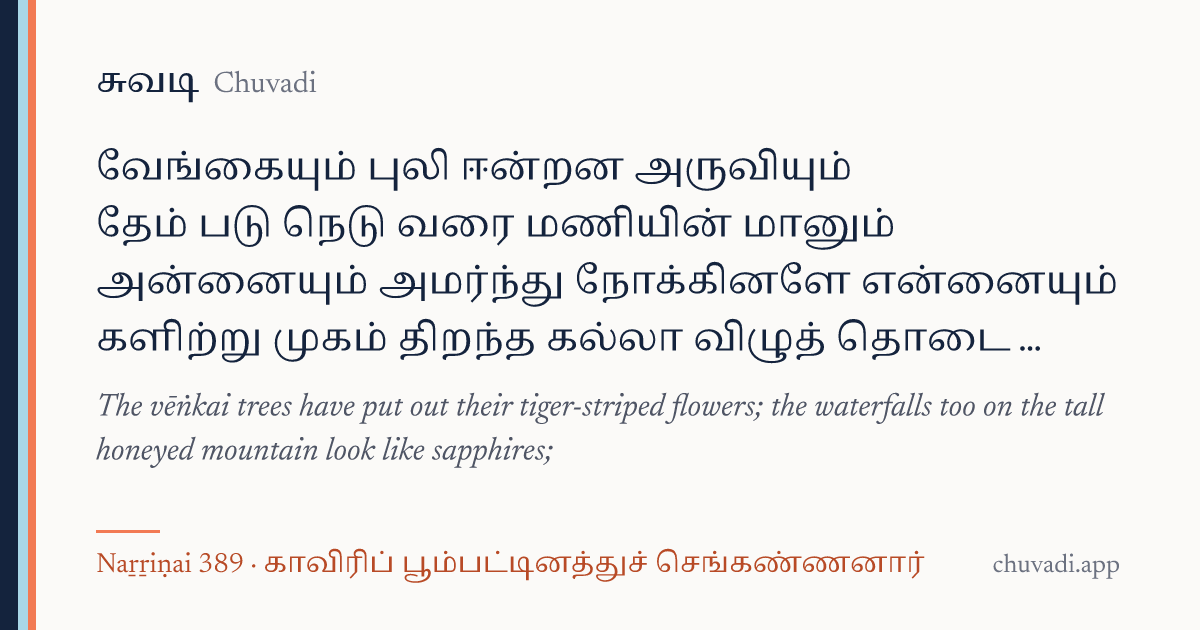

நற்றிணை 389
பாடல் · The poem
Tap a word to see where else it occurs.
பொருள் · Meaning in TamilAI
வேங்கை மரங்களும் புலியின் வரிகள் போன்ற பூக்களைப் பூத்துவிட்டன. தேன் நிறைந்த உயர்ந்த மலையில் விழும் அருவிகளும் நீலமணி போல ஒளிர்கின்றன. அன்னையும் அன்போடு என்னைப் பார்த்தாள். என் தந்தையும், யானையின் முகத்தைப் பிளக்கும் சிறந்த அம்புகளையுடைய, கல்வியறியாத, ஏவல் செய்யும் இளைஞர்களோடு விலங்குகளை வேட்டையாடச் சென்றுவிட்டதால், சிறு கிளிகள் போட்டியிடும் பெரிய கதிர்களையுடைய தினையை நீ காவல் செய் என்று அன்னை சொன்னாள். தன் சேவலோடு மலைச்சாரலில் சென்ற, கீறும் கால்களையுடைய காட்டுக்கோழி, பழைய தரிசு மேட்டில் கிளறிய புழுதியில் மிகுதியான நல்ல பொன் மின்னும் நாட்டின் தலைவனோடு நம் உறவு அன்பு நிறைந்த காமத்தால் நிறைவு பெறுவதாக.
குறிஞ்சித் திணை; பகற்குறியில் சந்திப்பு நடக்கும் காலத்தில், தலைவன் கேட்கும்படி தலைவி அல்லது தோழி கூறியது. தந்தை வேட்டைக்குச் சென்றதும், அன்னை புனக்காவலுக்கு அனுப்பியதும் சந்திப்புக்கு வாய்ப்பாகின்றன. கோழி கிளறிய புழுதியில் பொன் மின்னுவது தலைவனுடைய நாட்டின் இயற்கை வளத்தைக் காட்டுகிறது. பேசுபவள் தலைவியா தோழியா என்பது உறுதியாகத் தெரியவில்லை.
ஆங்கிலம் · English translationAI
Translation
- The vēṅkai trees have put out their tiger-striped flowers; the waterfalls too
- on the tall honeyed mountain look like sapphires;
- and mother too looked at me kindly; and my father,
- with untaught young men whose fine arrows split the elephant's brow,
- his followers at his command, has gone hunting after the beasts; and so,
- 'The millet with its large heads, that the small parrots quarrel over,
- you guard it,' she said; together with its mate,
- the scratch-footed wild fowl that has gone along the slope,
- in the dust it has scratched up on the old fallow ridge, a great deal
- of fine gold glitters — with the man of that land
- may our bond be fulfilled in loving desire.
What the poem says
The colophon says this is spoken while the lovers are meeting by day, with the hero listening. The speaker is the heroine, or her friend speaking for her. The moment is favourable: the vēṅkai is in flower, the waterfalls shine like jewels, father has gone off hunting with his men, and mother, looking on kindly, has sent the girl to guard the millet. Everything conspires to let them meet.
'The vēṅkai has borne tigers' is a bold way of saying that its flowers are tiger-striped; the same comparison appears in Naṟṟiṇai 383. The vēṅkai's flowering also marks the season for marriage, which gives the opening a second meaning.
The wild fowl scratching in the dust of an old field, with gold glittering in the soil it turns up, is a picture of the hero's land as naturally rich. The closing wish, that their bond may be fulfilled in love, looks beyond the secret meetings towards marriage. Who exactly is speaking is not certain: lines 3 and 7 refer to 'mother' and 'father' in a way that suits the heroine, but the friend often speaks in the same voice.