




நற்றிணை 391
பாடல் · The poem
Tap a word to see where else it occurs.
பொருள் · Meaning in TamilAI
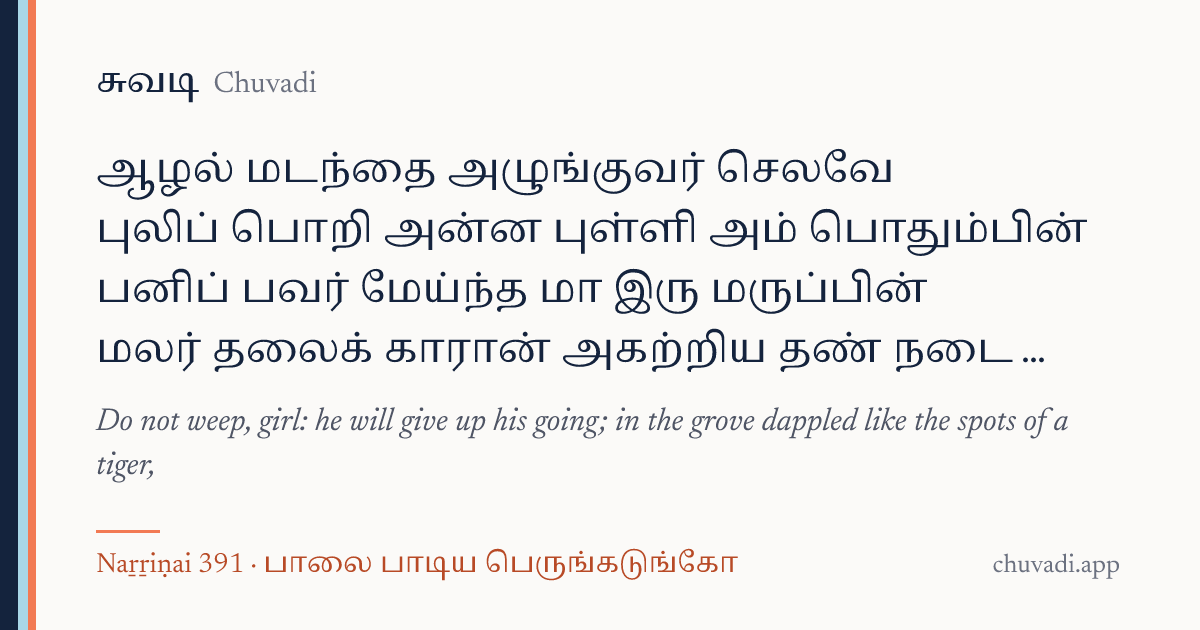
பெண்ணே, அழாதே; அவர் தம் பயணத்தைக் கைவிடுவார். புலியின் புள்ளிகள் போன்ற நிழல் புள்ளிகளையுடைய சோலையில், குளிர்ந்த கொடிகளை மேய்ந்த, பெரிய கரிய கொம்புகளையும் அகன்ற தலையையும் உடைய எருமை, குளிர்ந்த வழியை உண்டாக்க, அங்கே ஒளிரும் வளையல் அணிந்த பெண்கள் அணிகலன் செய்வதற்காகப் பொன்னைச் சேகரிக்கும், பொன் விளையும் கொண்கானம் என்னும் நன்னனின் நல்ல நாட்டில் உள்ள ஏழிற்குன்றத்தையே பெறுவதாக இருந்தாலும், நீர் சொட்டும் குவளை மலரைப் போன்ற உன் பெரிய அழகிய குளிர்ந்த கண்கள் தெளிந்த கண்ணீரால் நிறையும்படி, பொருளுக்காக உன்னைப் பிரிந்து செல்பவர் யார்?
பாலைத் திணை; பொருள்வயின் பிரிவை அறிந்து வருந்திய தலைவியைத் தோழி வற்புறுத்தியது; மணம் நெருங்குவதை அறிவித்ததாகவும் கொள்ளலாம். நன்னன் மேற்குக் கடற்கரைப் பகுதியின் தலைவன்; அவன் நாடு பொன் விளைவதாகப் பாடப்படுகிறது. எவ்வளவு பெரிய செல்வமும் உன் கண்ணீருக்கு ஈடாகாது என்பது கருத்து. எருமை வழியும் பொன் சேகரிப்பும் எவ்வாறு தொடர்புடையவை என்பது உறுதியாகத் தெரியவில்லை.
ஆங்கிலம் · English translationAI
Translation
- Do not weep, girl: he will give up his going;
- in the grove dappled like the spots of a tiger,
- having grazed on cool creepers, with great dark horns,
- the broad-headed buffalo opens a cool track, and there
- women with bright bangles gather gold to make their jewels —
- in Naṉṉaṉ's good country of gold-yielding Koṅkāṉam,
- even if he were to win Ēḻiṟkuṉṟam, for the sake of wealth
- who would ever leave you — like the kuvaḷai
- flower wet with dripping water, so are your
- large, lovely, cool eyes — and let them fill with clear tears?
What the poem says
The heroine has been told that her husband means to go away to earn wealth, and she cannot bear it. Her friend comforts her: he will give up the idea. The colophon also offers a second sense: the friend is telling her of a coming marriage.
The argument is a rhetorical question. Who, for wealth, would leave a woman whose eyes are like wet kuvaḷai flowers and let them fill with tears, even if he could gain Ēḻiṟkuṉṟam, the 'Hill of Ēḻil', in Naṉṉaṉ's land of Koṅkāṉam? Naṉṉaṉ was a chieftain of the western coast, notorious in Sangam poetry, and his country is described as yielding gold. The gold-gathering scene, in which women collect gold from the earth where a buffalo has trampled a path, emphasises that even the richest prize would not be worth the price.
Lines 4 and 5 are difficult, and the connection between the buffalo's track and the women gathering gold is not fully clear; the reading given here is tentative. The poem is by Pālai pāṭiya Peruṅkaṭuṅkō, whose Naṟṟiṇai 384 also appears in this range.