




நற்றிணை 393
பாடல் · The poem
Tap a word to see where else it occurs.
பொருள் · Meaning in TamilAI
நெடிய மூங்கில்கள் உயர்ந்து வளர்ந்த நிழல் நிறைந்த மலைச்சாரலில், நிறைசூல் கொண்ட வலிய பெண்யானை கன்றை ஈன்று சோர்ந்திருக்க, பால் சுரக்கும் அதன் ஈன்றணிமைச் சோர்வைப் போக்குவதற்காக, மிகுந்த களிப்போடு கரிய ஆண்யானை வளைந்த தினைக் கதிர்களைக் கவர்கிறது. அதனால் கானவன் எறிந்த, விரைந்து செல்லும் கொள்ளிக்கட்டை, மூங்கில் நிறைந்த மலைப்பக்கம் ஒளிரும்படி மின்னி, தன் இடத்திலிருந்து விலகி விழும் விண்மீன் போலத் தோன்றும் நாட்டின் தலைவன் அவன். இரவில் அவன் வருவதால் உண்டாகும் துன்பத்திலிருந்து நாம் தப்பும்படி, உன்னை மணக்க வந்த அவனுடைய வாய்மைக்கு ஏற்ப, நம் சுற்றத்தார் உன்னைக் கொடுக்க உடன்பட்டால், நம் காதலர் புதியவராக வருவதையும், மணமகளாகிய உன் நாணத்தால் ஒடுங்குவதையும் காணும்போது அவர்கள் அவரோடு மனம் ஒத்துப் போவார்களோ, தோழி?
குறிஞ்சித் திணை; மணம் நெருங்குவதால் மகிழ்ந்த தோழி தலைவிக்குக் கூறியது. ஈன்ற பெண்யானைக்காகத் தினையைக் கவரும் களிறு, தலைவியை முறைப்படி மணந்து காக்க வரும் தலைவனைக் குறிக்கிறது. இறுதி அடிகளில் உள்ள நேர்வர்கொல் என்ற சொல்லின் சரியான பொருள் உறுதியாகத் தெரியவில்லை.
ஆங்கிலம் · English translationAI
Translation
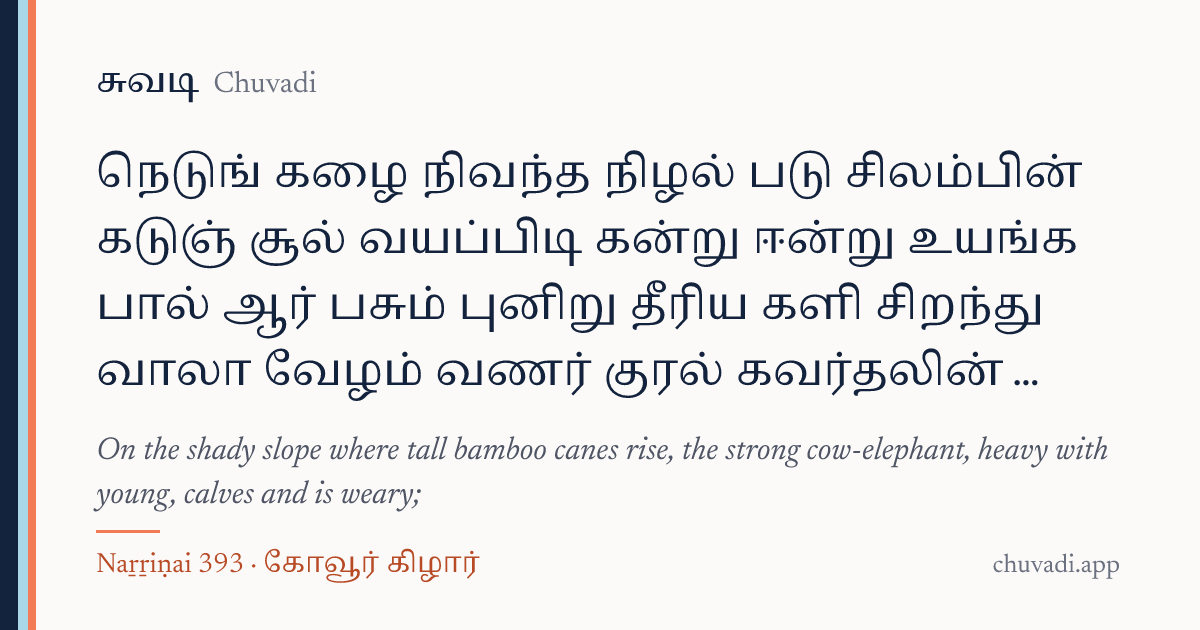
- On the shady slope where tall bamboo canes rise,
- the strong cow-elephant, heavy with young, calves and is weary;
- to ease her weakness after giving birth, full of milk, wild with excitement,
- the dusky tusker snatches the curving millet heads; and so
- the swift-flying firebrand that the forest man hurls
- flashes so the bamboo-crowded ridge is lit up,
- appearing like a star breaking loose from its place — the man of that land,
- so that we escape the trouble of his coming by night,
- in keeping with the truth with which he came to marry you,
- if our people have agreed to give you, will they then
- be at one with him, my friend — with our lover —
- when they see him coming as a stranger
- and the shy shrinking of you as a bride?
What the poem says
The colophon says only 'joy at the coming marriage'. The heroine's friend speaks to the heroine. The hero has come with a true intention to marry, and the families seem ready to agree. The friend imagines the moment of the wedding, when their kin will see the hero arrive as a newcomer and see the heroine shrinking with a bride's shyness.
The opening scene is full of incident. A cow-elephant has just given birth and is weak, and her mate, to feed her, raids the millet field. The forest man hurls a burning brand at him, and it streaks across the dark ridge like a shooting star. The tusker's care for his mate mirrors the hero's coming to marry, which will end the dangers of the night visits.
Lines 10 to 13 are uncertain. 'Will they be at one with him' renders nērvarkol, which might also mean 'will they agree' or 'will they be at ease with him'; the sense of the whole closing question depends on how this verb is taken. Vālā vēḻam in line 4 literally means 'the elephant that is not white' or 'not clean', and is read here as 'dusky'.