



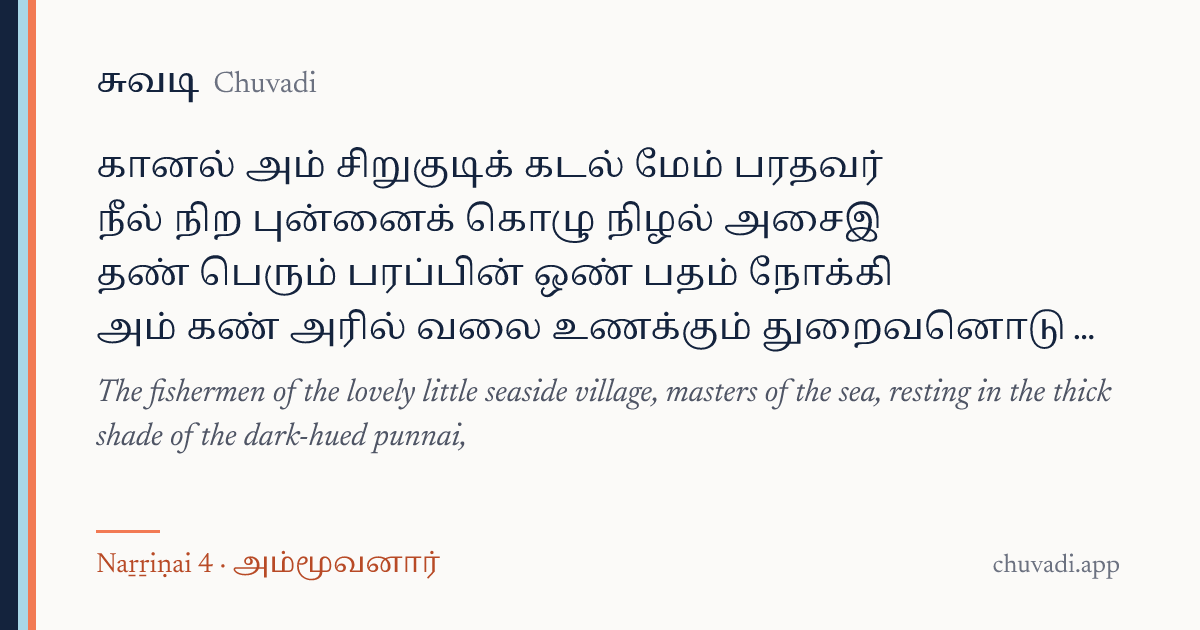

நற்றிணை 4
பாடல் · The poem
Tap a word to see where else it occurs.
பொருள் · Meaning in TamilAI
கடற்கரைச் சோலையை அடுத்த அழகிய சிற்றூரில் வாழும், கடலில் சிறந்த பரதவர், நீல நிறப் புன்னை மரத்தின் அடர்ந்த நிழலில் தங்கி, குளிர்ந்த பெரிய கடற்பரப்பில் நல்ல காலம் வருமா என்று பார்த்துக்கொண்டு, அழகிய கண்களையுடைய சிக்கலான வலைகளைக் காய வைக்கின்றனர். அத்தகைய துறையின் தலைவனோடு நம்மைச் சேர்த்து ஊரில் அலர் எழுந்திருக்கிறது. அதை அன்னை அறிந்தால் இங்கு வாழும் வாழ்க்கை நமக்கு அரிதாகிவிடும் என்று அவனிடம் சொன்னால், தோழி, அவன் நம்மை அழைத்துக்கொண்டு தன் ஊருக்குச் செல்வானோ? அங்கே உமணர் வெண்மையான கல் உப்பின் விலையைக் கூவிச் சொல்லி, மாட்டு வரிசைகளை எழுப்பி ஓட்டும் நீண்ட வழிச் செல்லும் வண்டிகள் மணலில் புதைந்து உரக்க ஒலிக்கும்; அந்த ஓசை வயல்களில் உள்ள கரிய கால்களையுடைய வெண்ணிறக் குருகுகளை அஞ்ச வைக்கும். பெரிய கழிக்கரையில் உள்ள அவன் வாழும் ஊர் அது.
நெய்தல் திணை; தலைவன் வேலிக்கு அப்பால் மறைந்து நிற்கும்போது, அவன் கேட்கும்படி தோழி தலைவியிடம் அலர் பற்றிய அச்சத்தைச் சொல்லி மணம் செய்துகொள்ளத் தூண்டியது. 'உன் ஊருக்கு அழைத்துச் செல்வாயா' என்பது, விரைவில் வந்து மணந்துகொள் என்பதன் மென்மையான வடிவம்.
ஆங்கிலம் · English translationAI
Translation
- The fishermen of the lovely little seaside village, masters of the sea,
- resting in the thick shade of the dark-hued punnai,
- watching for a fair calm on the wide cool water,
- dry their tangled nets of fine mesh: with the lord of that shore
- there is gossip; if Mother learns of it, our life here
- will become hard for us; if we tell him that,
- will he take us away with him, friend, to his town, where the salt-sellers,
- crying the price of their white crystal salt,
- drive their long-road carts behind their rousing teams,
- and the roar of the wheels ploughing into sand,
- in the fields, frightens the black-legged white herons:
- his town on the shore of the wide dark backwater?
What the poem says
The friend speaks to the heroine, but the hero is standing just out of sight by the fence, and the words are meant for him (neytal, poem by Ammūvaṉār). The colophon says she raises the fear of gossip in order to push him to marry.
Her argument is simple: the village is already talking about the heroine and 'the lord of the shore'. If her mother hears, she will be shut in and kept from him, and life here will become unbearable. If they say so to him, will he take her home to his own town? That is a polite way of saying: come and marry her.
The two landscapes are carefully set apart. Her village is a fishing settlement where men rest under punnai trees and dry their nets while they wait for calm weather. His town lies on a backwater where salt traders (umaṇar) cry their prices and their heavy carts groan through the sand, startling herons in the fields. His world is bigger and richer, and she asks whether he will bring the heroine into it.