




நற்றிணை 42
பாடல் · The poem
Tap a word to see where else it occurs.
பொருள் · Meaning in TamilAI
பாகனே, அதை மறக்க முடியாது! பல நாள்கள் அறத்தோடு வருந்தி உழைத்து, மக்களை நிலைத்த தொழிலில் ஈடுபடுத்துவதற்காகப் பழைய மேகங்கள் மழை பொழிந்தன. அந்தப் புதுநீர் நிறைந்த பள்ளங்களில், பழகிய நாவையுடைய பல தவளைக் கூட்டங்கள் ஒலித்துக்கொண்டிருந்தன. அதனால், அழகாகச் செய்யப்பட்ட தேர்மணியின் ஒலியை ஒளிரும் நெற்றியையுடைய அவள் கேட்க மாட்டாள். ஆகவே, “முன்னே செல்லுங்கள்” என்று இளைஞர்களிடம் சொன்னேன். அவர்கள் விரைந்து வீட்டுக்குள் புகுந்து செய்தியை அறிவித்தார்கள். உடனே அவள் மெதுவாகக் கழுவாமல் கிடந்த தன் கூந்தலின் அழுக்கைக் கழுவி, சில பூக்களை எடுத்துப் பல கொத்தான கூந்தலில் செருகினாள். அந்த நிலையிலேயே நாங்கள் புகுந்துவிட்டதால், உடலை வருத்திக்கொள்ளாமல், மலர்ந்த பூக்களைச் சூடிய முடியோடு, இளமையும் கருமேனியும் உடைய அவள் மகிழ்ச்சியோடு ஓடி வந்து என்னைத் தழுவிக்கொண்டாள். அந்தக் காட்சியை மறக்க இயலாது.
முல்லைத் திணை; வினை முடிந்து மழைக்காலத்தில் வீடு திரும்பும் தலைவன் தேர்ப்பாகனிடம் சொல்லியது. கணவன் பிரிந்திருக்கும்போது மனைவி கூந்தலைக் கழுவாமலும் பூச்சூடாமலும் இருப்பது மரபு; அவன் வருகிறான் என்று கேட்டு அவசரமாக அழகுபடுத்திக்கொண்ட அவளுடைய முடியாத ஒப்பனையே இப்பாடலின் அழகு. இரண்டாம் அடியின் பொருள் உறுதியாகத் தெரியவில்லை; மழை உழவுத் தொழிலைத் தொடங்கச் செய்தது என்று கொள்ளலாம்.
ஆங்கிலம் · English translationAI
Translation
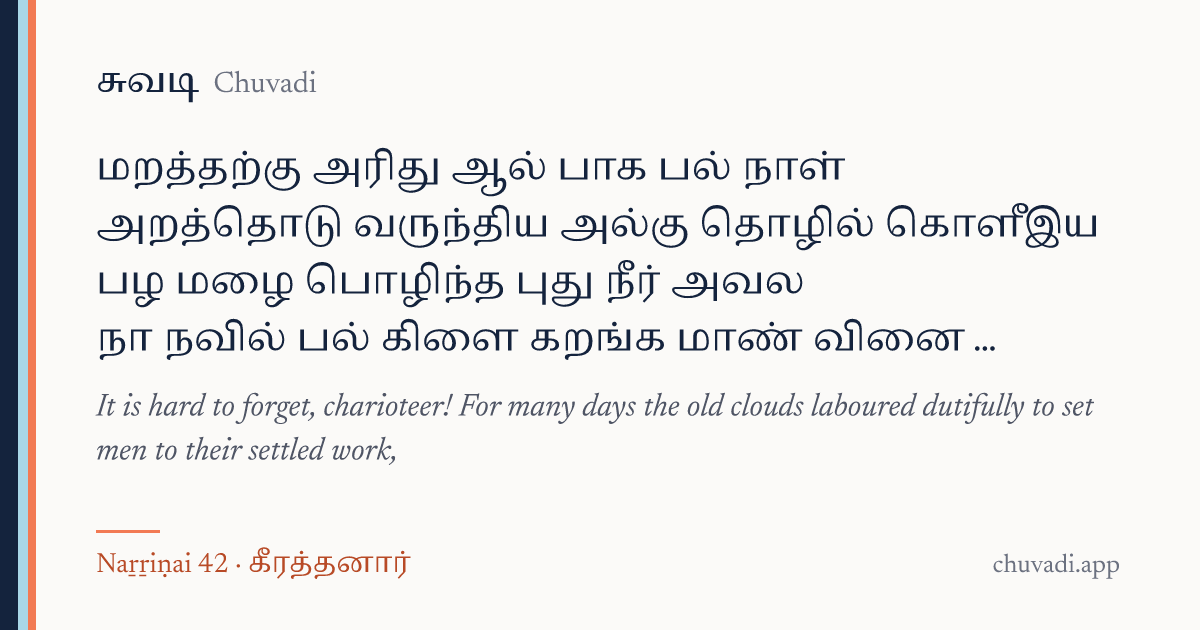
- It is hard to forget, charioteer! For many days
- the old clouds laboured dutifully to set men to their settled work,
- and in the hollows filled with the new water they poured
- the many tribes of frogs with practised tongues croaked, so the finely made
- bell's ringing she would not hear, she of the bright brow; and so
- I told the young men, 'Go on ahead,' and quickly
- they entered the house and made it known; then gently
- she washed her unwashed hair clean of its dust,
- took a few flowers and pressed them into her many tresses;
- and since we came in just then, before she had wearied herself,
- with loosely blooming flowers crowning her hair, she embraced me,
- my innocent, dark young woman, busy in her joy — that moment.
What the poem says
The hero has finished the task that took him away and is coming home in the rainy season; he speaks to his charioteer (mullai, poem by Kīrattaṉār). What he cannot forget is the scene of his arrival.
The rains have come at last, after long days, and the frogs in the flooded hollows croak so loudly that she would never have heard the bells of his chariot. So he sent his attendants ahead to warn her. In the short time she had, she washed her hair, which she had left uncombed and unwashed while he was away, as a wife in separation did, and tucked a few flowers into it. He arrived before she could finish dressing, and she ran to embrace him with the flowers still half-arranged. The charm of the poem is that hurried, unfinished welcome.
Line 2 is difficult. It seems to say that the clouds, after long effort 'with dharma', made people take up their settled work, that is, the farming that begins with the rains; but the phrase could also be read in other ways, and the translation is tentative.