




நற்றிணை 56
பாடல் · The poem
Tap a word to see where else it occurs.
பொருள் · Meaning in TamilAI
குட்டையாக நிற்கும் குரவஞ் செடியின் சிறிய அரும்புகளும் மணமுள்ள பூக்களும், வண்டுகள் வெளிப்படுத்திய நறுமணத்தைக் காற்றோடு கலந்து தரும், கண்கள் மகிழ்ச்சி அடையும் அழகிய இந்தக் காலத்தில், என் ஒளிரும் வளையல்களை நெகிழச் செய்து எனக்குத் துன்பம் தந்தவரிடம் என் நெஞ்சு சென்றது. அது அவர் செய்யும் வேலைக்குச் சலிக்காமல், அவரோடு சேர்ந்து திரும்பி வர வேண்டும் என்ற ஆசையோடு அங்கே வருந்திக்கொண்டிருக்கிறதோ? அல்லது அவர் அருள் காட்டாததால் தோற்று இங்கே திரும்பி வந்து, பழைய அழகை இழந்து பொன்னிறப் பசலை படர்ந்த என் மேனியைப் பார்த்து, “இவள் யாரோ அயலாள்” என்று எண்ணி, நோயோடு கலந்த அது மீண்டும் போய்விட்டதோ?
பாலைத் திணை; மணம் தள்ளிப்போகும் காலத்தில் தேற்ற வந்த தோழியிடம் தலைவி சொல்லியது. காதலனிடம் சென்ற நெஞ்சு திரும்பி வந்து தன்னை அடையாளம் காணாமல் போனதோ என்ற கற்பனை அவளுடைய மெலிவைக் காட்டுகிறது. பாடலின் இறுதி அடி முற்றுப்பெறாமல் நிற்கிறது; பாடலின் ஒரு பகுதி சிதைந்திருக்கலாம்.
ஆங்கிலம் · English translationAI
Translation
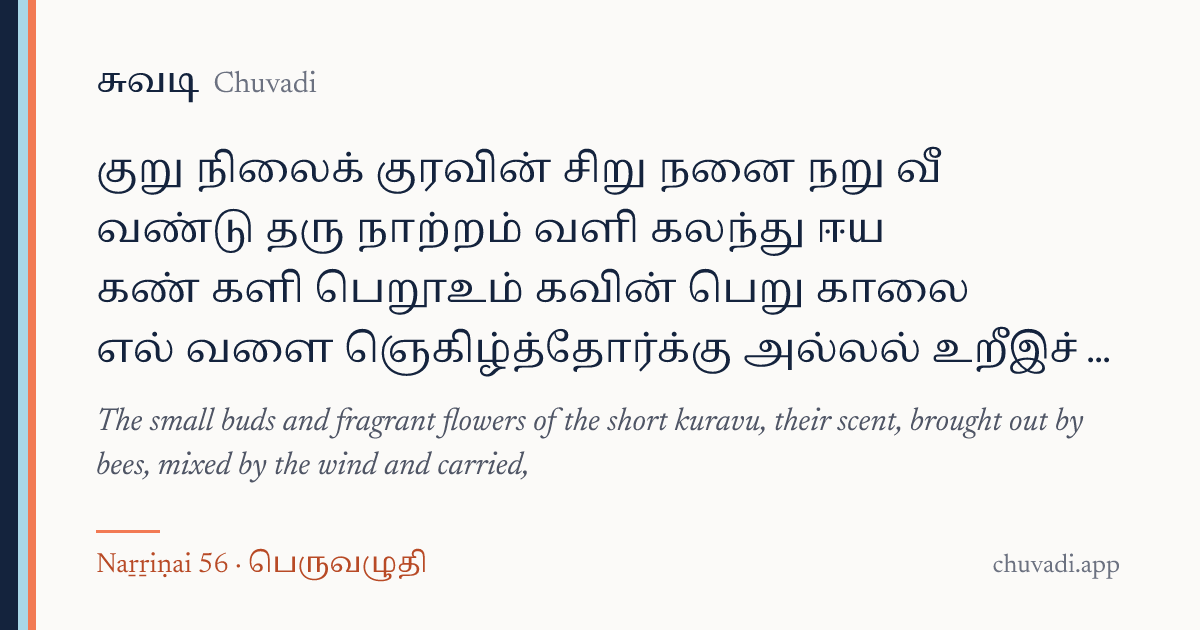
- The small buds and fragrant flowers of the short kuravu,
- their scent, brought out by bees, mixed by the wind and carried,
- in this lovely season when the eyes are filled with joy —
- to him who loosened my bright bangles, making me suffer,
- my heart went; and does it, never tiring of his work,
- suffer now with longing to come back together with him?
- Or since he showed no grace, did it come back here defeated
- and looking at my gold-coloured skin that has lost its old beauty,
- thinking, 'This woman is a stranger,'
- has it gone off again — wedded to sickness?
What the poem says
The heroine speaks to her friend, who is trying to help her bear the delay before marriage (pālai by its label, poem by Peruvaḻuti). Spring has come; the kuravu bushes are in bloom, and their scent drifts on the wind. It is the season when lovers should be together, and he is away.
Her heart, she says, went off to him, the man who made her so thin that her bangles slip. She wonders what has become of it. Perhaps it stays with him, sharing his work and longing to return with him. Or perhaps he was unkind, and the heart came home beaten, saw her sallow, wasted body, did not recognise her, and left again. The idea of the heart as a separate creature that goes to the lover is common in akam poetry; here it is turned into a sad little drama of non-recognition.
The poem appears to be incomplete or damaged at the end. The last words, 'wedded to sickness', are an adjective with nothing to qualify, so something may be missing, and the last line is rendered as best the surviving text allows. The tiṇai label pālai fits the separation, though the colophon places the poem before marriage.