




நற்றிணை 58
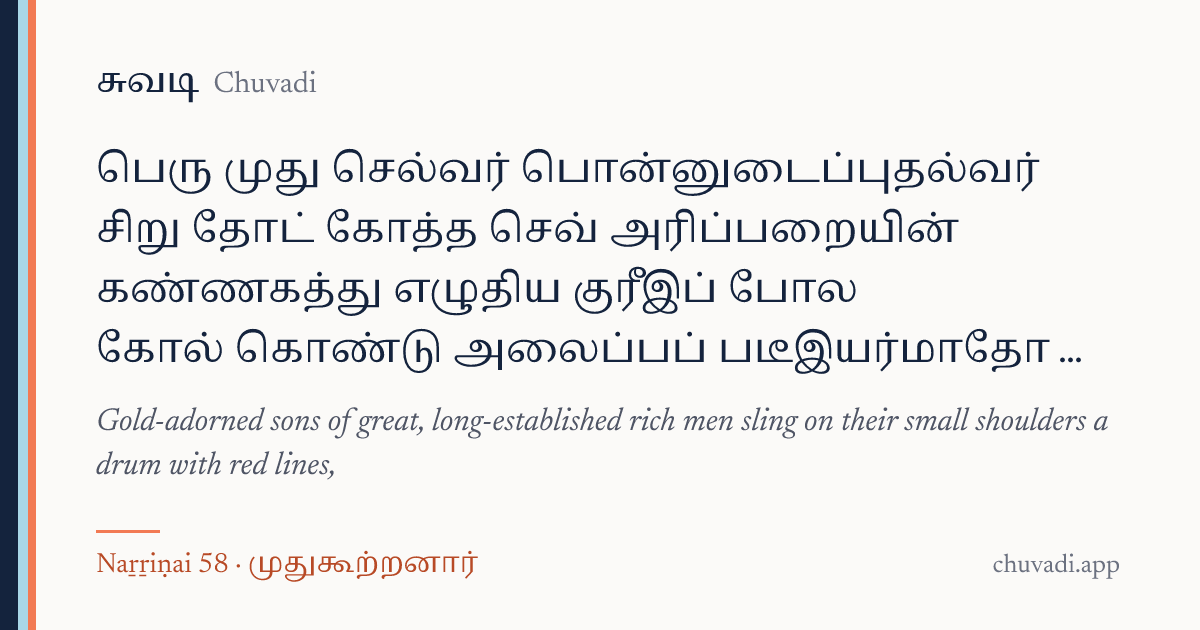
பாடல் · The poem
Tap a word to see where else it occurs.
பொருள் · Meaning in TamilAI
பழைய பெருஞ்செல்வர்களின் பொன் அணிந்த சிறுவர்கள் தங்கள் சிறிய தோளில் தொங்கவிட்டிருக்கும் சிவந்த வரிகளையுடைய பறையின் கண்ணில் வரைந்த குருவியைப் போல, அது குறுந்தடியால் அடிபடட்டும்! வீரை என்னும் ஊருக்குரிய வேளிர் தலைவனான வெளியன் தித்தன், முரசுக்கு மரியாதை செய்து மாலையில் விளக்கேற்றும் நேரத்தில், வெண்ணிறச் சங்குகள் முழங்க, நுண்ணிய பனி அரும்ப, எங்களைச் செயலற்றவர்களாக்கும் அந்த மாலைப்பொழுது வந்ததால், உடல் தளர்ந்து, துயரம் நிறைந்த நெஞ்சோடு நாங்கள் வீடு திரும்பும்போது, உயர்ந்த அலைகளும் நீண்ட நீர்ப்பரப்பும் உடைய குளிர்ந்த துறைக்குரிய தலைவனின் விரைந்தோடும் தேரின் மெல்லிய நுகத்தில் பூட்டப்பட்ட அந்தக் குதிரைதான் அப்படி அடிபட வேண்டும்!
நெய்தல் திணை; பகலில் சந்தித்துவிட்டுப் பிரிந்து செல்லும் தலைவனைப் பார்த்துத் தோழி அவனுடைய குதிரையின் மேல் சினத்தை வைத்துப் பேசுகிறாள். உண்மையில் அவள் கோபம் மாலையில் பிரிந்து செல்லும் தலைவன்மேல்தான். வெளியன் தித்தனின் மாலை விளக்குச் சடங்கைப் பற்றிப் பாடல் சொல்வதற்கு மேல் எதுவும் தெரியவில்லை.
ஆங்கிலம் · English translationAI
Translation
- Gold-adorned sons of great, long-established rich men
- sling on their small shoulders a drum with red lines,
- and like the sparrow painted on its face,
- may it be beaten with a stick, that one!
- Just as Veḷiyaṉ Tittaṉ, the Vēḷ of Vīrai,
- lights the evening lamp to honour his war drum,
- the white conches sound and fine dew begins to form,
- with the hour that has come to leave us helpless, our bodies drooping,
- as we turn home with grieving hearts — of high waves,
- the lord of the cold shore of long waters —
- the horse that has slipped into the slender yoke of his running chariot!
What the poem says
The hero has come to meet the heroine by day and is now leaving. Watching him go, the friend vents her feelings on his horse (neytal, poem by Mutukūṟṟaṉār). The colophon notes this displacement: she blames the animal that carries him away.
Her curse is playful and precise. Rich men's little sons carry toy drums painted with a sparrow on the drumhead, and the sparrow gets beaten every time the drum is struck. May the horse be beaten like that. Her anger is really at the hero for leaving at evening, the hour that leaves the girls helpless.
The evening is marked by a reference to Veḷiyaṉ Tittaṉ, a Vēḷ chieftain of Vīrai, at whose court a lamp was lit before the war drum at dusk, with the sounding of white conch shells. This seems to have been a well-known evening ceremony; the poem gives no more detail, and nothing further should be read into it. Dew and conches together signal nightfall, when separation is hardest to bear.