




நற்றிணை 6
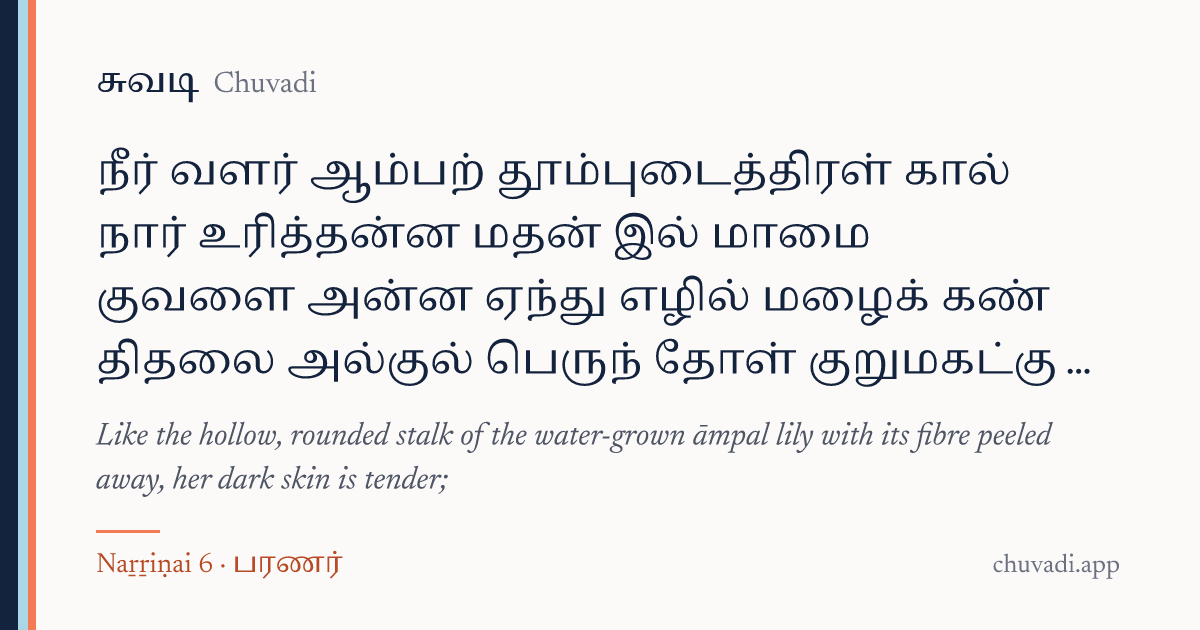
பாடல் · The poem
Tap a word to see where else it occurs.
பொருள் · Meaning in TamilAI
நீரில் வளரும் ஆம்பலின் உள்ளே துளையுடைய திரண்ட தண்டின் நாரை உரித்தது போன்ற மென்மையான மாநிறமும், குவளை மலர் போன்ற உயர்ந்த அழகுடைய குளிர்ந்த கண்களும், தேமல் படர்ந்த இடையும், பெரிய தோள்களும் உடைய அந்த இளம்பெண்ணிடம் அருகே சென்று என் செய்தியைச் சொல்லுபவர் கிடைத்தால், அவள் 'இவர் யார்?' என்று கேட்பவள் அல்லள். முன்னே உள்ள பாலைநிலக் குமிழ மரத்தின் வளைந்த மூக்கைப் போன்ற முனையுடைய பழம் கனிந்து உதிர்ந்து மருண்ட மான்களுக்கு உணவாகும். வலிய வில்லையுடைய ஓரியின் அந்தக் காட்டைப் போல மணக்கும், கரிய அடர்ந்த நீண்ட கூந்தலை உடைய அவள், நான் வந்திருக்கிறேன் என்று கேட்டதும் பெரிதும் கலங்கிப் போவாள்.
குறிஞ்சித் திணை; இரவுக்குறியில் தலைவியைக் காண முடியாமல் வருந்திய தலைவன், தோழி கேட்கும்படி தன் நெஞ்சுக்குச் சொல்லியது. ஓரி கொல்லி மலைக்குத் தலைவனான, வில்லில் சிறந்த வள்ளல்; அவனுடைய காட்டின் மணம் தலைவியின் கூந்தல் மணத்துக்கு உவமையாகிறது. 'முனாஅது' என்ற சொல் எதனோடு இயைகிறது என்பது உறுதியாகத் தெரியவில்லை.
ஆங்கிலம் · English translationAI
Translation
- Like the hollow, rounded stalk of the water-grown āmpal lily
- with its fibre peeled away, her dark skin is tender;
- her rain-cool eyes, lifted in beauty, are like the kuvaḷai;
- to that young girl with spotted waist and broad shoulders,
- if I could find someone to go close and speak for me,
- she is not one who would say, 'Who is this?' Out there in front,
- the ripe fruit of the wasteland kumiḻ, with its crooked beak-like tip,
- drops and becomes food for the gentle deer:
- with hair fragrant as that forest of Ōri of the strong bow,
- her dark, thick, abundant tresses,
- she will be utterly flustered to hear that I have come.
What the poem says
The hero has been kept from his night meeting with the heroine and cannot bear it. He speaks to his own heart, but within the hearing of her friend, so that she will help (kuṟiñci, poem by Paraṇar).
He begins with the heroine's beauty in standard images: skin soft and dark like the peeled stem of the āmpal water lily, eyes like the blue kuvaḷai flower, the spots (titalai) on her waist that were thought a mark of beauty. If only someone would carry word to her! She would not ask 'who is he?'; she knows him well, and she would be overcome with excitement to hear he has come.
Her hair is compared to the fragrant forest of Ōri, a chieftain famous as an archer and lord of the Kolli hills, where the fallen fruit of the kumiḻ tree feeds the deer. The poet often uses such references to real chieftains to praise a woman's beauty.
Muṉāatu in line 6 ('in front', 'formerly') is hard to place; it may refer to the forest lying ahead, or to Ōri's earlier fame. The sense of the whole is clear, but the link between lines 6 and 7 is uncertain.