



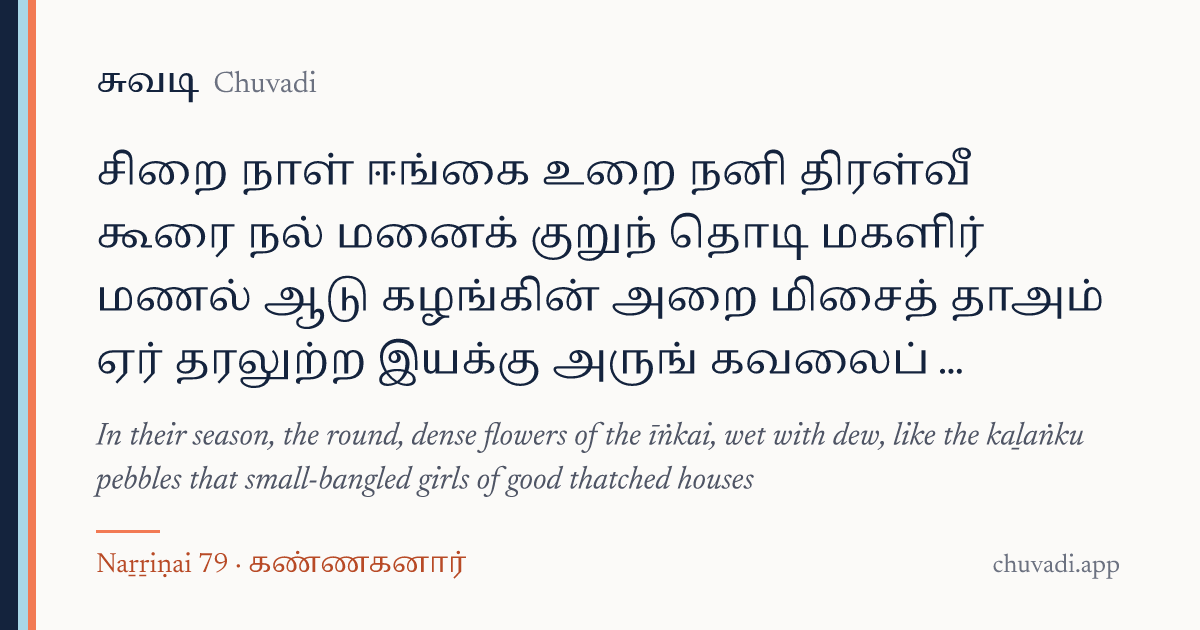

நற்றிணை 79
பாடல் · The poem
Tap a word to see where else it occurs.
பொருள் · Meaning in TamilAI
அதன் பருவத்தில் பனித்துளிகள் படிந்த ஈங்கைச் செடியின் அடர்ந்த உருண்டையான பூக்கள், கூரை வேய்ந்த நல்ல வீடுகளில் வாழும் சிறு வளையல் அணிந்த சிறுமிகள் மணலில் விளையாடும் கழங்குக் காய்களைப் போலப் பாறையின்மேல் பரந்து கிடக்கின்றன. அப்படி அழகு பெறத் தொடங்கிய, கடந்து செல்வதற்கு அரிய கவர்த்த வழிகளில் அவர் செல்ல இருக்கிறார். “பிரிந்திருந்தவர் திரும்பி வந்து நம்மோடு சேர்வதும், சேர்ந்திருப்பவர் பிரிய நினைப்பதும் ஆகிய இதைவிடக் கொடியது வேறு உண்டோ?” என்று சொல்லி நம் காதலை அவரிடம் வெளிப்படுத்துவோம். சொல்லாமல் விட்டால், இந்தத் துயரம் உயிரையே தொடுவதாக ஆகிவிட்டது. தோழி, நீ வாழ்க, கேள்! காதலர் செல்வதை எதைக் கொண்டு தடுப்போம்?
பாலைத் திணை; தலைவன் பிரியப் போவதை உணர்ந்து வேறுபட்ட தலைவி தோழியிடம் சொல்லியது. பூக்கள் மலரும் பருவத்தில் பிரிவது மிகவும் கொடியது என்பது அவள் கருத்து. சொல்லிப் பார்க்கலாம் என்று சொன்னாலும், இறுதியில் அதுவும் பயன்படுமோ என்ற ஐயத்தோடு முடிக்கிறாள். முதல் அடியில் உள்ள சிறைநாள் என்ற தொடரின் பொருள் உறுதியாகத் தெரியவில்லை.
ஆங்கிலம் · English translationAI
Translation
- In their season, the round, dense flowers of the īṅkai, wet with dew,
- like the kaḻaṅku pebbles that small-bangled girls of good thatched houses
- play with on the sand, lie scattered over the rock,
- at the forking ways, hard to travel, now growing lovely —
- 'That those who parted should come back and join us, and those who are joined
- should think of parting — is anything harder than that?'
- So we shall say, and speak of our love;
- if we leave it unsaid, it has come to touch life itself;
- listen, long may you live, my friend:
- by what means shall we stop our lover's going?
What the poem says
The heroine has sensed that the hero means to leave, and she talks it over with her friend (pālai, poem by Kaṇṇakaṉār). Her question is practical: how can they stop him?
The first four lines describe the road he would take. The īṅkai bushes are in flower, their round blossoms falling on the rocks like the pebbles (kaḻaṅku) that little girls play with on the sand; the forking tracks, hard to travel, are taking on their seasonal beauty. The flowering season was the time when lovers should be together, which makes his going all the worse.
Her plan is to speak openly. They will tell him a simple truth: those who have been apart long to be reunited, and for those who are together to think of parting is the hardest thing there is. If she says nothing, she fears the grief will cost her her life. Even so, she ends with a helpless question to her friend, as if she doubts that words will hold him back.
The opening words ciṟai nāḷ are uncertain; they may refer to the season when the īṅkai blooms, but the exact sense is not clear.