




நற்றிணை 81
பாடல் · The poem
Tap a word to see where else it occurs.
பொருள் · Meaning in TamilAI
பாகனே, அகன்ற நிலம் தேயும்படி குளம்புகளால் அடித்து ஓடியும் சோர்வடையாதவை; ஆதி என்னும் நேர் ஓட்டத்தில் ஓடியும் தளர்ச்சி இல்லாத வலிய கால்களை உடையவை; அரசர்களும் மதிக்கும் சிறந்த பயிற்சி பெற்றவை நம் குதிரைகள். கத்தரித்த பிடரி மயிருடைய அவற்றின் கழுத்தில் கட்டிய மணிகள் ஒலிக்க, அவற்றை உன் தேரில் பூட்டுவாயாக. அணிகலன்கள் தொங்கும் மார்பில், அழகிய முலைகளின் மேல் கண்ணீர் கரைபுரண்டு தெறிக்க, அழுதுகொண்டே வீட்டில் இருக்கும் அழகிய மாநிறப் பெண் அவள். விருந்தினரைப் போற்றும் விருப்பத்தோடு உழைத்துச் சோர்ந்திருக்கும் அவளுடைய இனிய புன்முறுவலைக் காண்போம். வலிய வாளையுடைய வேந்தன் நெருக்கிய பகையை அடக்கிவிட்டான்.
முல்லைத் திணை; போர்ப் பணி முடிந்த தலைவன் தன் தேர்ப்பாகனிடம் சொன்னது. குதிரைகளின் வேகத்தைப் புகழ்வது விரைந்து செல்ல வேண்டும் என்ற அவனுடைய ஆவலைக் காட்டுகிறது; அழுதாலும் விருந்தோம்பலை விடாத தலைவியின் சிரிப்பைக் காண்பதே அவன் விருப்பம். ஆறாம் அடியில் வரும் கரைவலம் என்ற சொல்லின் பொருள் உறுதியாகத் தெரியவில்லை.
ஆங்கிலம் · English translationAI
Translation
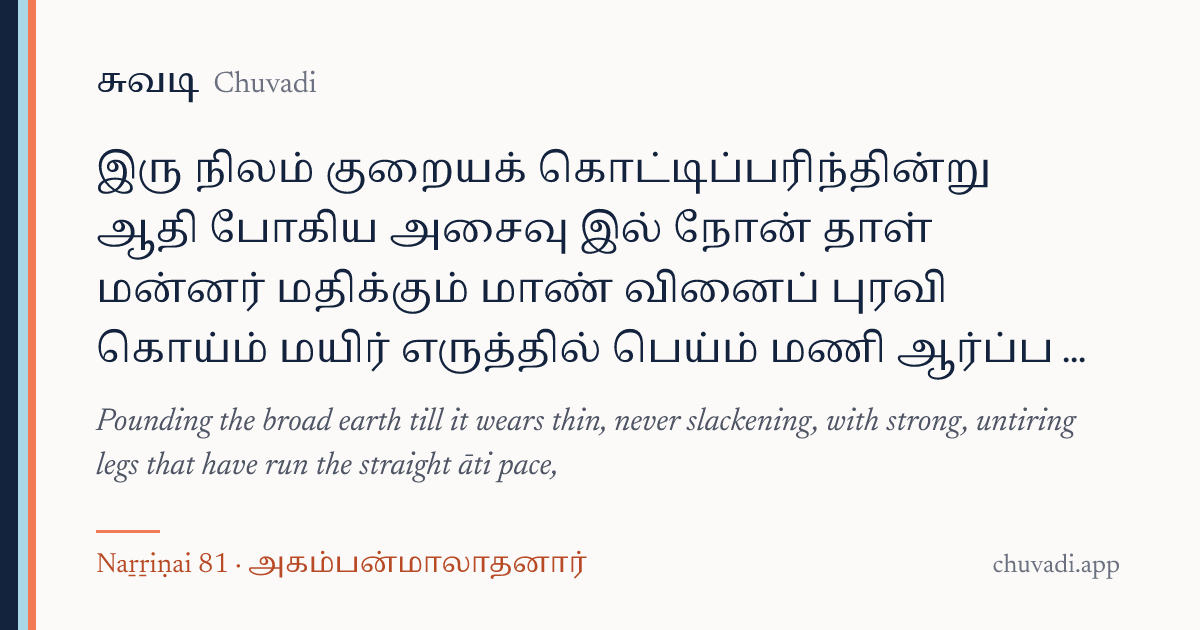
- Pounding the broad earth till it wears thin, never slackening,
- with strong, untiring legs that have run the straight āti pace,
- the horses of fine training that kings hold in esteem,
- the bells hung on their clipped-maned necks ringing,
- let them be yoked, charioteer, to your chariot! Where ornaments hang
- on her chest, the tears spill over and splash her lovely breasts:
- the beautiful dark young woman who stays at home weeping,
- weary with toil, eager to prepare a feast for guests,
- let us go and see her sweet smiling laugh.
- The king of the mighty sword has quelled the pressing enmity.
What the poem says
The colophon says the hero speaks to his charioteer once the task that took him away is finished (mullai, by Akampaṉmālātaṉār). He has been serving a king at war; now the king has put down the enemy, and he can go home.
Most of the poem is about the horses: they pound the ground, run the straight gait called āti without tiring, and wear bells on their trimmed manes. Praising the horses is a way of asking for speed. The hero then pictures his wife, weeping so that the tears run down onto her breasts, yet still busy with the household duty of feeding guests. What he wants is to see her face change into a smile when he arrives. Mullai is the tiṇai of patient waiting at home, and the poem ends where the waiting ends.
Line 6 is hard to construe: the word read here as the tears "spilling over the banks" (karaivalam) is uncertain, and the line may be damaged.