




நற்றிணை 84
பாடல் · The poem
Tap a word to see where else it occurs.
பொருள் · Meaning in TamilAI
என் கண்களையும் தோள்களையும் குளிர்ந்த மணமுள்ள கூந்தலையும், தேமல் படர்ந்த இடையையும் பலமுறை புகழ்ந்துகொண்டு, நேற்றுக்கூட அவர் இங்கே என்னோடு இருந்தார். இன்றோ, பெருவெள்ளம் போலத் தோன்றும் வெண்மையான பேய்த்தேர் மரமில்லாத நீண்ட வழியில் மான்களை நீர் வேட்கையால் ஏங்க வைக்கிறது; சுட்ட மண்பானையில் மத்தால் கடையப்பட்டு இன்னும் வெண்ணெயாகத் திரளாத தயிரை வெப்பத்தில் அள்ளி வைத்தது போல, உவர் படிந்த களர் நிலம் ஓமை மரக் காட்டில் கிடக்கிறது. வெயில் அரசு வீற்றிருக்கும், வெப்பம் அலையலையாக வீசும் அந்தக் கடத்தற்கரிய பாலை வழியில் அவர் போவார் என்கிறார்கள். தம்மிடம் வந்து இரந்தவர்களை மறுக்க முடியாதவர் அவர்; பொருள் இல்லாத இல்வாழ்க்கையைத் தாங்க முடியாதவர்.
பாலைத் திணை; தலைவன் பிரியப்போவதை அறிந்து தாங்க முடியாத தலைவி தோழியிடம் சொன்னது. பாடியவர் பெயர் கிடைக்கவில்லை. இரப்போருக்குக் கொடுக்கப் பொருள் தேடச் செல்வதைக் கடமையாகக் காட்டினாலும், அதன் வலியையும் அவள் சொற்கள் காட்டுகின்றன. ஆறு, ஏழாம் அடிகளின் சரியான பொருள் உறுதியாகத் தெரியவில்லை.
ஆங்கிலம் · English translationAI
Translation
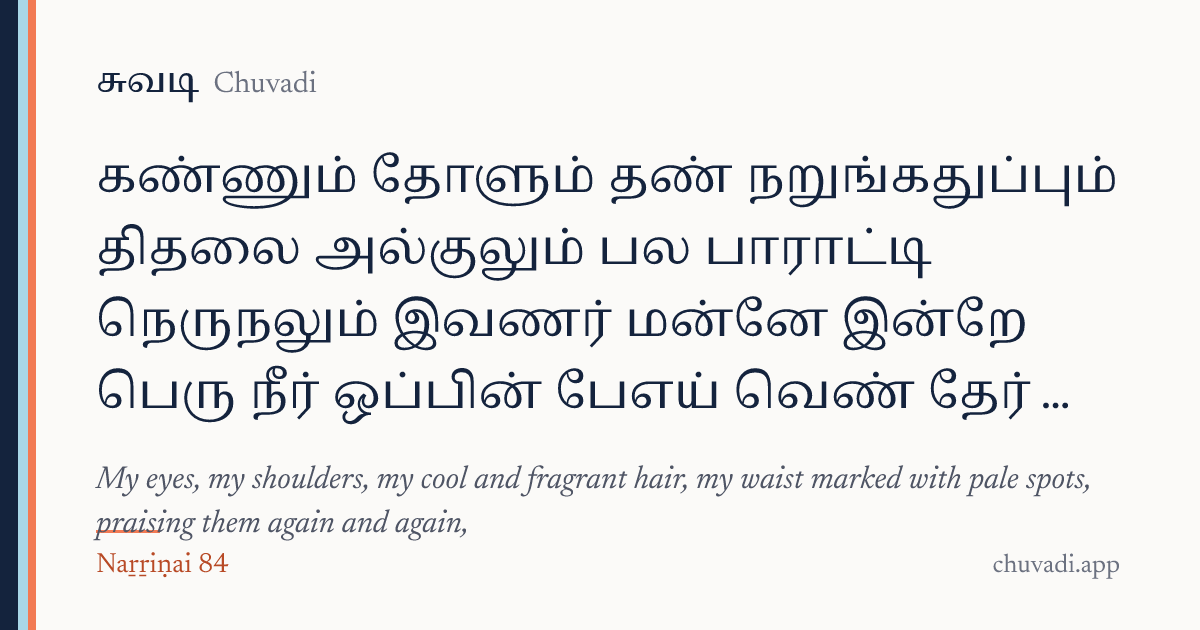
- My eyes, my shoulders, my cool and fragrant hair,
- my waist marked with pale spots, praising them again and again,
- even yesterday he was here with me; but today,
- where the ghostly white mirage, looking like a great flood,
- draws the deer to thirst for it along the long treeless way,
- where, like curds in a pot of fired clay worked by the churning stick
- that have not yet turned to butter, scooped up in the heat,
- the salt-crusted barren ground lies in the forest of ōmai trees,
- through the hard wasteland where the sun sits enthroned and heat comes in waves,
- he will go, they say; he who cannot bear
- to turn away those who come to him begging,
- and has no strength for a life with nothing in the house.
What the poem says
The heroine, unable to bear the coming separation, speaks to her friend (pālai; the poet's name is lost). Only yesterday her lover was beside her, praising her eyes, shoulders, hair and the pale spots on her skin that are counted a mark of beauty. Today she hears he is about to cross the wasteland.
The desert is drawn in hard detail: a mirage that looks like a flood and lures thirsty deer, treeless distances, ōmai trees, and white salt crust on barren soil. The salt is compared to churned curds that have not yet become butter, a striking domestic image set inside the wilderness. Lines 6–7 are difficult, and the exact sense of uruppu iṭantaṉṉa ("as if scooped out in the heat") is uncertain.
The last lines give his reason without blaming him outright: he cannot bear to send away people who come to ask for help, and he cannot live with an empty house. Going to earn wealth is a duty in Sangam ethics, yet the heroine's words show what that duty costs her.