




நற்றிணை 86
பாடல் · The poem
Tap a word to see where else it occurs.
பொருள் · Meaning in TamilAI
தோழி, நீ வாழ்க! அவர் அறவழியில் நிற்பவர். வீரர்களின் வேல்கள் போல விரிந்த கொத்துகளோடு, தோலால் செய்த வட்டக் கேடயங்களைப் போலப் பகன்றை மலர்கள் மலரும், எல்லாரும் நடுங்கும் கடுமையான பனியையுடைய குளிர்காலம் கழிந்தது. பின்பு, காண்பதற்கு அழகாக, கைத்திறம் மிக்க கலைஞன் தைத்துச் சொரிந்தது போலச் சுருண்ட வடிவுடைய பெரிய கோங்கின் குவிந்த மொட்டுகள் விரிகின்றன; ஈங்கையின் நல்ல தளிர்கள் விருப்பம் தரும்படி அசைகின்றன. அத்தகைய முதிராத இளவேனிலை மனத்தில் கொண்டு அவர் வந்துவிட்டார்.
பாலைத் திணை; சொன்ன பருவத்தில் வினையை முடித்துத் தலைவன் திரும்பி வந்ததைக் கேட்ட தோழி தலைவியிடம் சொன்னது. பூக்கள் மலர்வதே காலத்தைக் காட்டுகிறது; சொன்ன நேரத்தில் வந்ததால் அவன் அறவர் எனப்படுகிறான். வேல், கேடயம், தையல் வேலை ஆகிய உவமைகள் எந்த மலருக்கு எவ்வாறு பொருந்துகின்றன என்பது உறுதியாகத் தெரியவில்லை.
ஆங்கிலம் · English translationAI
Translation
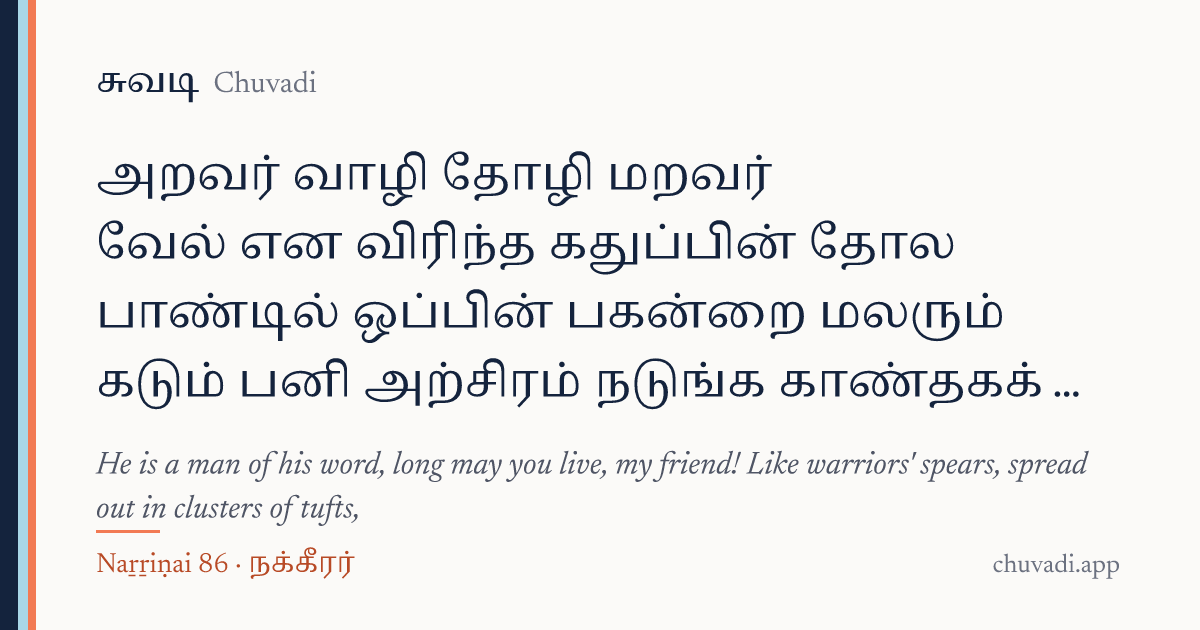
- He is a man of his word, long may you live, my friend! Like warriors'
- spears, spread out in clusters of tufts,
- like round leather shields, the pakaṉṟai flowers open
- in the harsh dew of the cold season, and all shiver; then, lovely to see,
- like work a skilled craftsman has stitched and scattered,
- curled in shape, the big
- clustered buds of the kōṅku unfold, and the īṅkai's
- good tender shoots sway, a delight to see,
- in the young summer: he has come, keeping to that time.
What the poem says
The friend has heard that the hero has finished his work and come back at the season he promised, and tells the heroine (pālai, by Nakkīrar). Her first word praises him: he is a man of aṟam, who keeps his word.
Most of the poem traces the turn of the seasons. In the cold dewy months the pakaṉṟai flowers open; then, as the early summer begins, the kōṅku buds unfold and the īṅkai puts out fresh shoots. The flowers serve as a calendar: he left saying he would return when they bloomed, and he has kept that time exactly. Instead of the usual pālai complaint that the season has come and he has not, here the season and the man arrive together.
The comparisons in lines 1–3 and 5–6 are dense and hard to construe with confidence. The warriors' spears, the leather shields and the craftsman's stitched work may describe the pakaṉṟai and kōṅku flowers, but how each image attaches to each flower is not certain.