



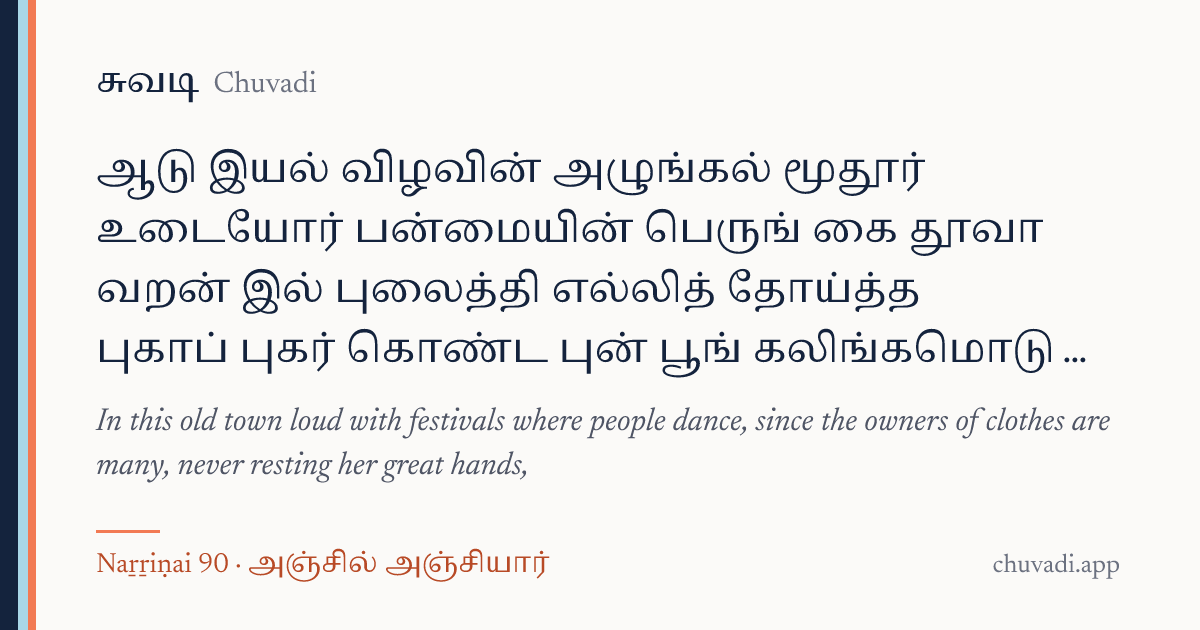

நற்றிணை 90
பாடல் · The poem
Tap a word to see where else it occurs.
பொருள் · Meaning in TamilAI
ஆடலும் பாடலுமான விழாக்களின் ஆரவாரம் நிறைந்த இந்தப் பழைய ஊரில், துணிகளுக்கு உரியவர்கள் பலராக இருப்பதால் தன் பெரிய கைகளுக்கு ஓய்வே இல்லாத, வேலைக்குக் குறைவில்லாத வண்ணாத்தி, இரவில் துவைத்து எடுத்த, கஞ்சிப் புள்ளிகள் படிந்த மெல்லிய பூவேலைச் சேலையை உடுத்திக்கொண்டு, வாடாத மாலை அசைய, ஒரு சிறுமி பெரிய கயிறுகளில் தொங்கும் கரிய பனநார் ஊஞ்சலை நோக்கி ஓடினாள். அழகிய கண்களையுடைய தோழியர் தள்ளியும் அவள் ஆட முடியவில்லை. அழகிய சிலவான கூந்தலும் சில வளையல்களும் உடைய, ஏழைப் பெண்ணின் அந்தச் சிறுமகள் அழுதுகொண்டே திரும்பிப் போகிறாள். ஊஞ்சலில் நடந்த அச்செயலைப் பற்றி முறையிட்டு ஆரவாரம் எழுப்பாத, நடுநிலை இல்லாத மனிதர்களோடு கூடியிருக்கும், வேந்தனை உடைய இந்த அவை பயனற்றதே.
மருதத் திணை; பரத்தையிடம் சென்ற தலைவனுக்காகத் தூது வந்த பாணனை, தலைவியிடம் சொல்வது போல அவனருகே நின்று தோழி மறுத்தது. ஊஞ்சலில் இடம் மறுக்கப்பட்ட ஏழைச் சிறுமி போலத் தலைவியும் தனக்கு உரியதை இழந்து நிற்கிறாள், அவளுக்காகப் பேச வேண்டியவர் பேசவில்லை என்பது குறிப்பாக இருக்கலாம். இக்கதை அக்காலத்தில் அறியப்பட்ட ஒரு நிகழ்ச்சியைக் குறிக்கிறதா என்பது உறுதியாகத் தெரியவில்லை.
ஆங்கிலம் · English translationAI
Translation
- In this old town loud with festivals where people dance,
- since the owners of clothes are many, never resting her great hands,
- the washerwoman who never lacks for work washed at night
- a fine flowered cloth marked with spots of rice-starch;
- wearing it, an unfading garland swaying, a girl ran
- to the swing of dark palm fibre hanging from great ropes;
- though her bright-eyed playmates pushed, she was not allowed to swing,
- and she goes home weeping, with her lovely sparse hair,
- the little daughter of a poor woman, with only a few bangles.
- Those who raised no outcry over what was done at the swing:
- keeping company with such men, who have no sense of justice,
- this assembly that has a king in it is of no use at all.
What the poem says
The hero, who has been with other women, sends his bard to plead for entry. The friend refuses him, speaking as if to the heroine but drawing close to the bard so he hears (marutam, by Añcil Añciyār).
She tells a little story from the town. A poor woman's daughter, dressed in a cloth freshly washed by the busy washerwoman and wearing a garland, runs to the festival swing; but she is not let on, though her friends push, and she goes home crying. Nobody with authority took up her cause, and the friend ends by calling the royal assembly useless, since it sits with men who have no fairness.
The pointed meaning is uncertain. One likely reading is that the heroine, like the poor girl, has been shut out of what is hers, and that those who should speak for her (the hero, or the bard who serves him) stay silent. The story may also refer to an event known to the first listeners and now lost. Lines 2–4 about the washerwoman are clear in detail but their purpose in the argument is not.