




நற்றிணை 97
பாடல் · The poem
Tap a word to see where else it occurs.
பொருள் · Meaning in TamilAI
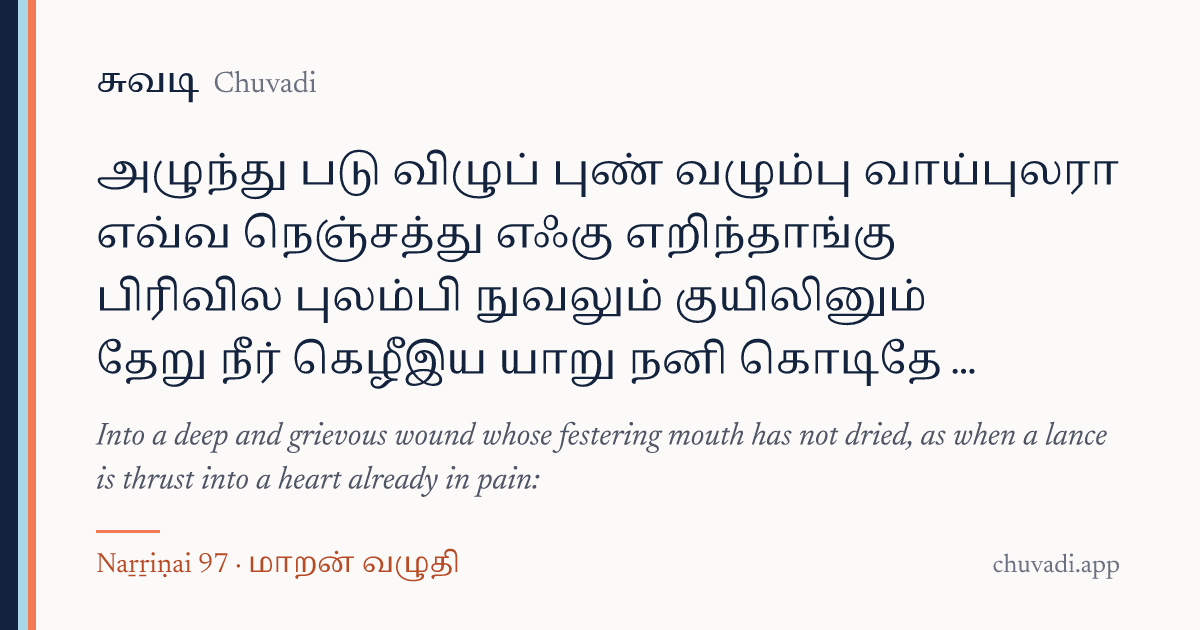
ஆழமாகப் பட்ட பெரிய புண்ணின் சீழ் வடியும் வாய் உலராத நிலையில், வேதனையுற்ற நெஞ்சில் மேலும் வேலை எறிந்தது போல, ஓயாமல் தனிமையில் கூவும் குயிலைவிட, தெளிந்த நீர் நிறைந்து ஓடும் ஆறு மிகவும் கொடியது. அதைவிடவும் கொடியவள் ஒருத்தி: மென்மையான நுனியுடைய இதழ்களைக் கொண்ட பசுமையான குருக்கத்திப் பூவோடு பித்திகைப் பூவும் கலந்த மலர்களை வாங்க மாட்டீர்களா என்று ஆர்வத்தோடு கூவிக்கொண்டு, வண்டுகள் சூழ்ந்த பூக்கூடையோடு தனியாகத் திரிகிறாள், சோலைகளில் பயிர் செய்யும் உழவரின் இளம் மகள்.
முல்லைத் திணை; தலைவன் வருவதாகச் சொன்ன பருவம் வந்ததைக் கண்டு தாங்க முடியாத தலைவி தோழியிடம் சொன்னது. குயில், நிறைந்த ஆறு, பூ விற்கும் பெண் ஆகிய எல்லாமே பருவம் வந்ததை அறிவிப்பதால் அவளுக்குத் துன்பம் தருகின்றன. மூன்றாம் அடியில் வரும் பிரிவில என்ற சொல்லின் பொருள் உறுதியாகத் தெரியவில்லை.
ஆங்கிலம் · English translationAI
Translation
- Into a deep and grievous wound whose festering mouth has not dried,
- as when a lance is thrust into a heart already in pain:
- crueller than the cuckoo that cries out lonely, without a pause,
- far crueller is the river brimming with clear water;
- and crueller even than that is she, who, eager,
- 'Fresh kurukkatti, with soft-tipped petals,
- mixed with pittikai flowers, won't you buy?' calling so,
- wanders about with her basket ringed by bees,
- the young daughter of the grove-farmers, all on her own.
What the poem says
The heroine sees the season her lover promised to return by, and speaks to her friend because she cannot bear it (mullai, by Māṟaṉ Vaḻuti).
Everything that announces the season hurts her, and she ranks the hurts. The cuckoo's call is like a lance driven into an unhealed wound; the river full again with clear water is worse; and worst of all is a farmer's daughter walking the lanes with a basket of kurukkatti and pittikai flowers, crying her wares, with bees buzzing round. The flower girl is cheerful and innocent, which makes her cruelty unintended: the blossoms she sells are proof the season has come, and he has not.
The flowers and the cuckoo belong to the early warm season more than to the rainy season usually linked with mullai; the poem keeps the mullai theme of waiting for a promised time. Line 3's pirivila ("without pause", or perhaps "about separation") is open to more than one reading.