




நற்றிணை 99
பாடல் · The poem
Tap a word to see where else it occurs.
பொருள் · Meaning in TamilAI
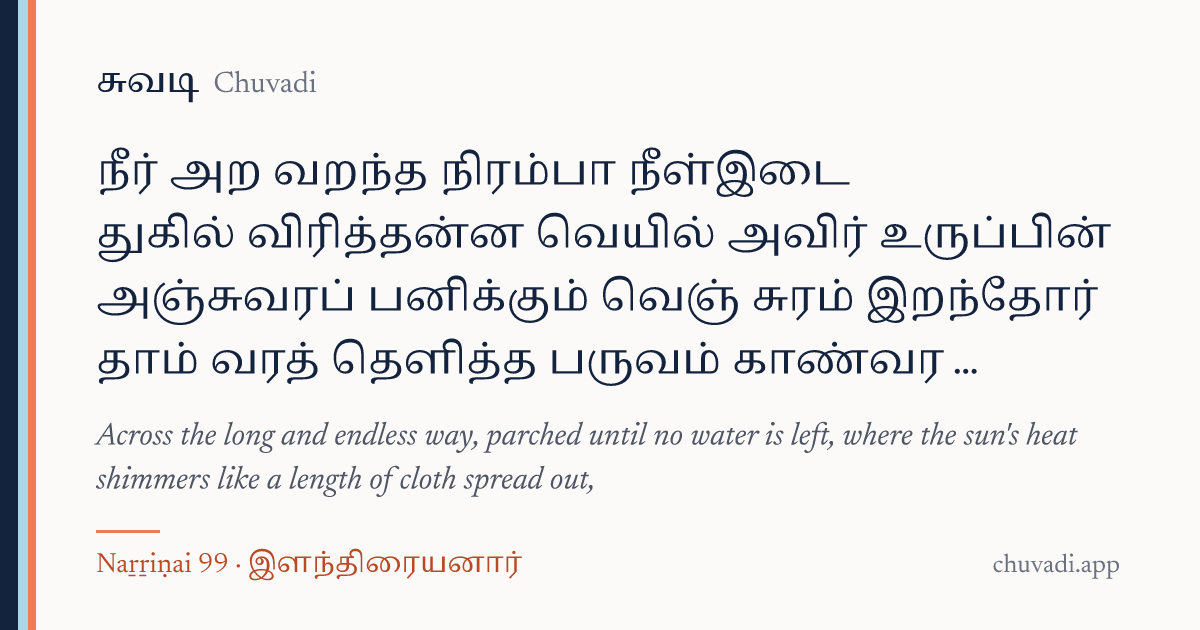
நீர் இல்லாமல் வறண்டுபோன, முடிவில்லாத நீண்ட வழியில், விரித்த துணி போல வெயிலின் வெப்பம் மின்னும், அச்சத்தால் நடுங்க வைக்கும் கொடிய பாலையைக் கடந்து சென்றவர், தாம் திரும்பி வருவதாக உறுதியாகச் சொன்ன அழகிய பருவம் இதுதானோ என்று கேட்கிறாய், பேதைப் பெண்ணே! அறிவில்லாமல், காலத்தை மறந்து, கடலில் நீரை முகந்து நிறைந்த சூல் கொண்ட பெரிய கரிய மேகம், தாங்க முடியாமல் பெருமழையைக் கொட்டிவிட்டது. அதைக் கார்காலம் என்று எண்ணி மயங்கிய மனத்தோடு, ஆராய்ந்து பார்க்கும் அறிவில்லாமல், பிடவமும் கொன்றையும் கோடலும் பேதைமையால் நிறைய மலர்ந்துவிட்டன.
முல்லைத் திணை; பருவம் வந்ததைக் கண்டு வருந்திய தலைவியிடம், இது அவர் சொன்ன பருவம் அன்று என்று தோழி வற்புறுத்திச் சொன்னது. மேகத்தையும் பூக்களையும் அறிவற்றவை என்று சொல்லி, காலம் தவறிய மழை என்று ஆறுதல் கூறுகிறாள். தோழி இதை உண்மையாக நம்புகிறாளா, தலைவியைத் தேற்றவே சொல்கிறாளா என்பது பாடலில் தெளிவாக இல்லை.
ஆங்கிலம் · English translationAI
Translation
- Across the long and endless way, parched until no water is left,
- where the sun's heat shimmers like a length of cloth spread out,
- he crossed the burning wasteland that makes one shudder with fear;
- the season he swore he would return by, lovely to see,
- 'Is this it?' you ask, my innocent girl. Without sense,
- forgetting, the great cloud, heavy with water it scooped from the sea,
- unable to bear its load, has let fall a lavish downpour;
- and taking it for the true rains, bewildered and without judgement,
- the piṭavam and the koṉṟai and the kōṭal,
- being foolish things, have burst into bloom in plenty.
What the poem says
The heroine sees rain and flowers and thinks the season of his return has come; her friend comforts her by saying it has not (mullai, by Iḷantiraiyaṉār).
The friend's argument is gently comic. The cloud, she says, forgot itself: it had drawn up so much water from the sea that it could not hold it, and burst out of season. The piṭavam, koṉṟai and kōṭal, which bloom when the monsoon arrives, were fooled and have flowered by mistake. So this is not the season he promised, and his lateness is not real.
Whether the friend believes this or is only easing her companion's grief is left open; the trick of calling the season "false" is a known way of consoling the waiting woman in mullai poems. The opening lines remind both women how hard the road he took really was.