



பதிற்றுப்பத்து 31 · நான்காம் பத்து
பாடல் · The poem
Tap a word to see where else it occurs.
பொருள் · Meaning in TamilAI
குன்றுகள் உச்சியில் கலந்து, கூட்டமான கடலை ஆடையாக உடுத்த இந்த மண் நிறைந்த உலகில், மக்கள் எல்லோரும் ஒருசேரக் கைகளைத் தலைமேல் வைத்துக் கூவும் ஆரவாரம் நான்கு திசைகளிலும் ஒன்றாக எழுந்து ஒலிக்கிறது. தெளிந்த உயர்ந்த ஓசையுடைய மணிகளை அடிப்பவர்கள் ஒலிக்க, உண்ணா நோன்பிருக்கும் மக்கள் குளிர்ந்த நீர்த்துறையில் நீராடுகின்றனர். வண்டுகள் ஊதும் மாலையணிந்து திருமகள் தங்கும் மார்பும், கண்ணைக் கூசச் செய்யும் சக்கரமும், மணம் கமழும் துளசி மாலையும் உடைய திருமாலின் சிவந்த அடிகளைப் போற்றி, மனம் நிறைந்த மகிழ்ச்சியுடன் தம் ஊர்களுக்குத் திரும்புகின்றனர். கரிய இருள் நீங்க ஒளி விரிக்கும் முழுநிலவைப் போல, நீ நிலைகுலைந்த நற்குடிகளைச் சீர்திருத்தி, பகைவரின் முரசைக் கைப்பற்றி, ஆண்மைக் கடமையை நிறைவேற்றினாய். அணிகலன்கள் ஒளிரும் உன் அகன்ற மார்பு, குளிர்ந்த மழை பொழியும் மேகங்கள் சூழ்ந்த, வடக்குத் தெற்காக நீண்ட விண்டு மலையைப் போன்றது. வானில் தொங்கும் கோட்டையின் கதவுக்குக் காவலாக இருந்த கணையமரத்தை உயர்த்தியது போன்றவை உன் வலிய முழவு போன்ற தோள்கள். கடல் சூழ்ந்த உலகில் வள்ளன்மைப் புகழ் நிறுத்திய செல்வத்தால் நீ வண்டனைப் போன்றவன். வண்டு மொய்க்கும் கூந்தலும் அறம் நிறைந்த கற்பும் அழகிய உந்தியும் உடைய உன் பழைய மாளிகையின் தலைவி, வானில் உலவும் மகளிருள்ளும் சிறந்த அருந்ததி என்னும் செம்மீனைப் போன்றவள். நிலம் அதிர முரசுகள் முழங்கும் வேல் நிறைந்த போர்க்களத்தில், பொற்கழலும் பனைமாலையும் அணிந்த உன் வீரர்கள் பகைவரின் ஊக்கம் அழியும்வரை விரட்டுகின்றனர்; ஆயினும் புறமுதுகிட்டவரைத் தாக்க மாட்டார்கள். உன் படை நண்பர்க்கு அரணாகவும், பகைவர்க்கு அச்சம் தரும் தெய்வம் போலவும் இருக்கிறது. போரில் சிறந்த தலைவனே, நீ பல வகையிலும் சிறந்தாய்.
துறை: செந்துறைப் பாடாண்பாட்டு. காப்பியாற்றுக் காப்பியனார் களங்காய்க்கண்ணி நார்முடிச் சேரலைப் போற்றிப் பாடியது. பெயர் 'கமழ்குரல் துழாய்' (வரி 8): திருமால் அணியும் மணம் கமழும் கொத்தான துளசி மாலை. நிலவு, மழைமேகம் சூழ்ந்த மலை, தொங்கும் எயிலின் கணையமரம், வண்டன், அருந்ததி என உவமைகள் தொடர்கின்றன.
ஆங்கிலம் · English translationAI
Translation
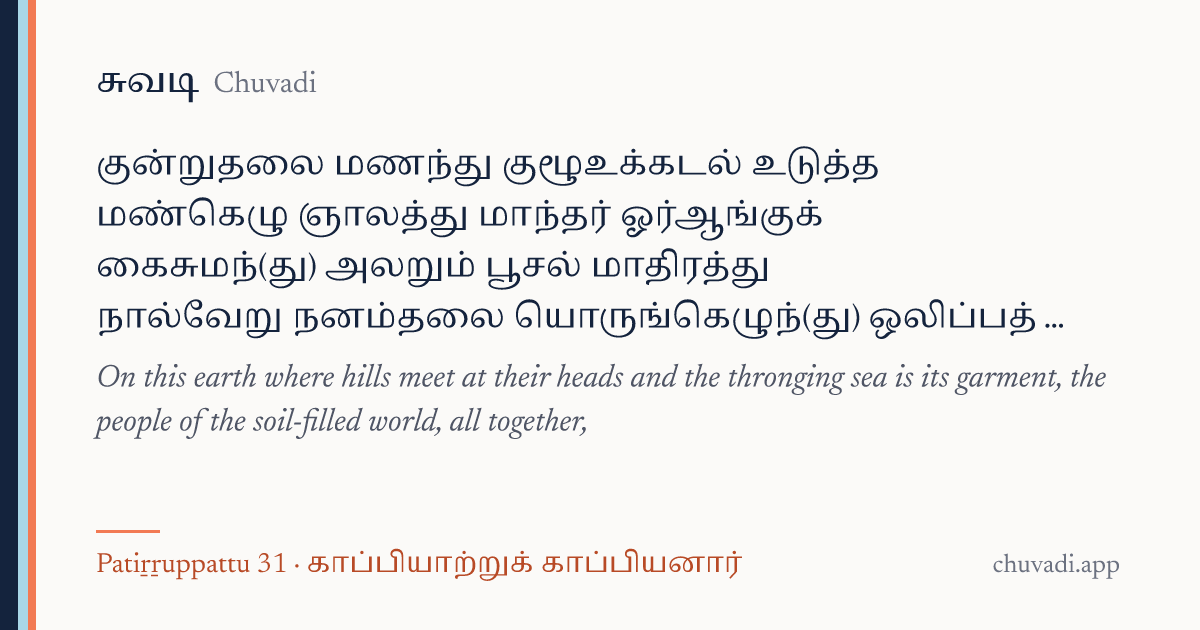
- On this earth where hills meet at their heads and the thronging sea is its garment,
- the people of the soil-filled world, all together,
- raise their hands over their heads and cry aloud, a clamour that across the directions
- of the four separate wide regions rises as one and resounds;
- as the ringers strike the clear, high, well-shaped bells with a clang,
- the fasting multitude bathe at the cool ford,
- and praising him whose broad chest, where Tiru dwells, bears a bright garland where bees hum,
- who holds the discus that dazzles the eye, and wears the fragrant clustered tuḷāy
- as a swaying garland, they praise the red feet of the Lord,
- and with hearts brimming with joy they return to their towns to sleep;
- like the moon that spreads its light so the sapphire-dark black night departs,
- its horns joined, moving full along its course,
- you set right the shaken families of noble lineage, took the drum of your foes,
- and fulfilled the duty of a man; your broad chest, bright with ornaments,
- is like the clustered clouds of the sky pouring cool rain
- on the mountain that stretches across from north to south, high and lovely with clouds,
- the mighty peak of Viṇṭu streaming with dew;
- which was built in the sky in fear of the gods,
- the hanging fortress whose gates the bar held under guard,
- your drum-like shoulders, broad and strong, are like that bar lifted high;
- in the world encircled by the three waters of white waves
- you are rich in many kinds of wealth that have fixed a generous fame,
- you are truly like Vaṇṭaṉ; with bees settling
- on her thick hair, she of chastity full of virtue,
- whose lovely curved navel is a lamp to her ornaments,
- most excellent even among the women who move in the sky,
- like the red star is the lady of your ancient house;
- making the earth tremble with their roar, rising to the right,
- the wide drums thunder in the battlefield thick with spears;
- with strong feet wearing golden anklets and close-fitted palm garlands,
- they drive on the unyielding foes until their zeal is gone,
- yet do not strike at turned backs, those who bear your fierce weapons;
- a fortress to friends, and to enemies
- your army is like a terror come to pass;
- lord who excels in war, you are great in many ways.
What the poem says
The poet Kāppiyāṟṟuk Kāppiyaṉār speaks to the Chera king Kaḷaṅkāykkaṇṇi Nārmuṭic Cēral. This is the first poem of the fourth decade. Its turai is ceṉturaip pāṭāṇpāṭṭu, plain praise of the king. The poem opens with a long scene of worship (lines 1 to 10). People from all four regions gather, bells ring, fasting crowds bathe at a cool ford, and they praise the red feet of the god who holds the discus and wears the tuḷāy (holy basil) garland. That god is Viṣṇu, called here the wealthy lord on whose chest Tiru (Lakṣmī) lives. The worshippers then go home with full hearts.
The poet then turns to the king through a chain of comparisons. The king who restored shaken families is like the full moon that drives away dark night. His chest is like the rain-clouded Viṇṭu mountain. His shoulders are like the great bar on the gates of the hanging fortress in the sky, a fortress of the enemies of the gods. In wealth and fame he is like Vaṇṭaṉ, a famously generous figure of old. His queen is compared to the red star, Arundhatī, the model of wifely chastity, who excels even among the women of the sky.
The last part praises his army. His warriors do not strike a fleeing enemy in the back. The army is a fortress to friends and a terror to foes. The final line, 'you are great in many ways', is picked up as the first line of the next poem, as the poems of a decade are linked in this way.
The poem's name, Kamaḻkural tuḻāy, 'the fragrant clustered tuḷāy', comes from line 8, the basil garland of Viṣṇu. Lines 16 and 18 to 20 are compressed and their exact construction is uncertain; 'Viṇṭu' in line 17 may be a name for the Vindhya range or simply mean 'mountain'.