



பதிற்றுப்பத்து 33 · நான்காம் பத்து
பாடல் · The poem
Tap a word to see where else it occurs.
பொருள் · Meaning in TamilAI
கொடி கட்டிய தேரையுடைய தலைவனே, இது பெரும் வியப்பே. அழகிய மணிகள் கட்டிய, பனைமரம் போன்ற வலிய கால்களை உடைய உன் களிறுகளைப் பகைவரின் காவல்மரத்தில் கட்டினாய்; ஆழமான நீர்த்துறைகள் கலங்கின. சூழ்ந்து வந்து தங்கிய உன் பெரும்படை, நாட்டைப் பாழாக்க வரிசையாக வரும் எல்லையற்ற வெள்ளம் போன்றது. வாளே மதிலாகவும், வேலே காவற்காடாகவும், வில்லின் ஓசையுடன் எய்யப்படும் கூரிய அம்புகளும், சிவந்த வாயுடைய எஃகம் சூழ்ந்த அகழியும், கார்கால இடிபோல முழங்கும் முரசும் கொண்டு கால்களால் நடக்கும் அரிய கோட்டை போன்றது உன் படை. அதை நினைத்தாலே உன்னை எதிர்த்துப் போர் செய்ய வரும் வேந்தர் உன்னை விட்டு விலகுவர்.
துறை: வஞ்சித்துறைப் பாடாண்பாட்டு. காப்பியாற்றுக் காப்பியனார் நார்முடிச் சேரலின் படையெழுச்சியைப் பாடியது. பெயர் 'வரம்பில் வெள்ளம்' (வரி 6): எல்லையற்ற வெள்ளம் போன்ற படை. படையையே நடமாடும் கோட்டையாக உருவகித்தது இப்பாடலின் சிறப்பு.
ஆங்கிலம் · English translationAI
Translation
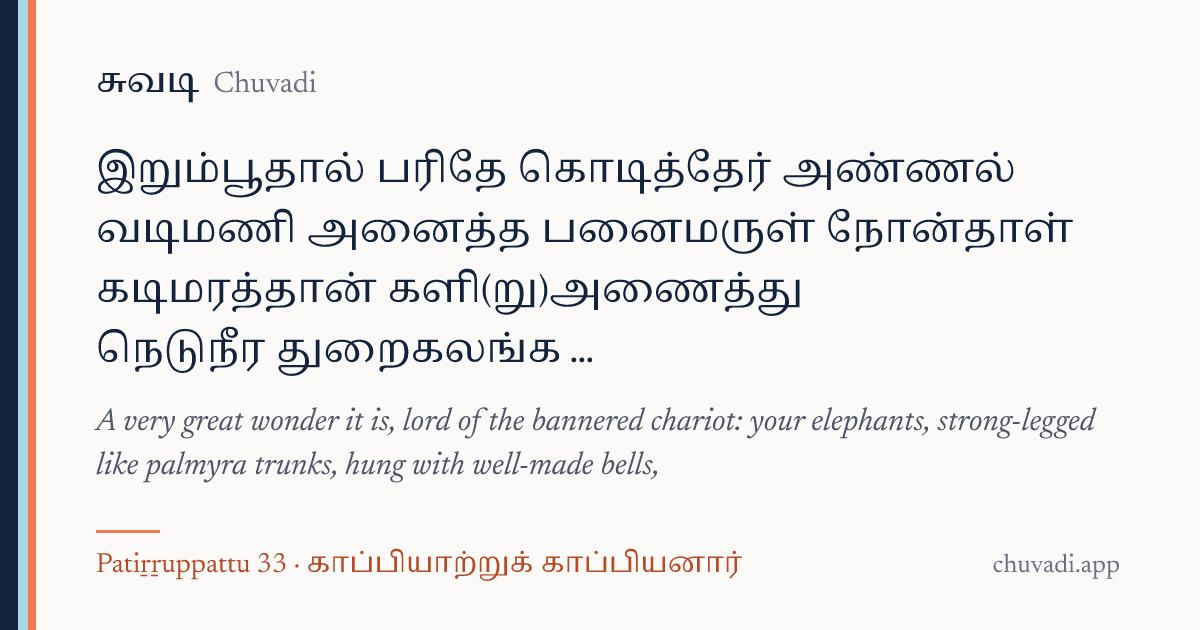
- A very great wonder it is, lord of the bannered chariot:
- your elephants, strong-legged like palmyra trunks, hung with well-made bells,
- tethered to the guardian trees of your foes,
- so that the fords of deep water were stirred to mud;
- with your vast army that closed in and encamped,
- a boundless flood that comes in ranks to lay waste the land;
- with swords for a wall, raising spears for a thorny hedge,
- with arrows of sharp points that the bow spits out with its twang,
- with a moat ringed round by red-mouthed blades,
- with drums that roar like the thunderbolt of the rain-cloud,
- if they think of your great fortress that moves on legs,
- the kings who would face you in battle shun you.
What the poem says
This short poem is linked to the last by its first words, 'a very great wonder'. Its turai is vañcit turai pāṭāṇpāṭṭu, praise set in the theme of marching out to attack. The poet describes the king's army as it invades. His elephants are tied to the enemy's guardian tree (kaṭimaram), the sacred tree that stood for a king's power, and the deep fords are churned to mud. The army is a 'boundless flood' (varampil veḷḷam), which gives the poem its name, from line 6. Veḷḷam can also mean a vast number, so the phrase plays on both a flood and a countless host.
Lines 7 to 11 build a striking image: the army itself is a fortress that walks. Its swords are the wall, its spears the thorny hedge, its blades the moat, its drums the thunder. Enemy kings who think of attacking this moving fort turn away. The last line, 'they shun you', opens the next poem.
Line 6 (pulaṅkeṭa naritarum) is uncertain. It may mean 'that comes in ranks to ruin the land', or it may refer to jackals brought by the slaughter. Line 11 (kālvaḻaṅku āreyil) is read here as a 'fortress that moves on legs', meaning the army.