



பதிற்றுப்பத்து 88 · ஒன்பதாம் பத்து
பாடல் · The poem
Tap a word to see where else it occurs.
பொருள் · Meaning in TamilAI
உலகம் செழித்த நெறிமுறையைக் கைவிடாமல், கடவுள் பெயர் கொண்ட காட்டோடு மலையில் உயர்ந்து, தெளிந்த கடல் சூழ்ந்த அகன்ற உலகில், புகழ் பரந்த பகைவர் நாட்டில், அலைகடலின் ஆழம் அழியுமாறு வேல் எறிந்து, அச்சம் தரும் தெய்வம் உறையும் கடம்ப மரத்தை அடியோடு வெட்டி, பகைத்து வந்த கழுவுளைப் புறமுதுகிடச் செய்து, அச்சம் தரும் மன்னரை அழித்து, விரைந்தோடும் குதிரைகளுடைய அண்டரை ஓட்டி, ஒளிரும் வாகைப் பூவுடைய நன்னனை அழித்து, குருதி தெளித்த சோற்றுக் குவியலோடு அயிரை தெய்வத்தை வழிபட்டு, வேந்தரும் வேளிரும் பின்வந்து பணியுமாறு வெற்றி பெற்ற பெரியோரின் வழித்தோன்றலே! அகன்ற பிடரியுடைய சிங்கம் போன்ற வீரத் தலைவனே! முரசு முழங்கும், கேடய வரிசை சூழ்ந்த, யானைக்கொடி அசையும் பாசறையும், அரிய கோட்டைகளைத் தாக்கிய கல்லெறியும் கவணும் உடைய, கள்ளுண்ணும் கொங்கர் அரசே! பகைவரை அழித்த பொன்தேர்த் தலைவனே! கடல் முழங்கும் தொண்டி மக்களின் தலைவனே! பெருமானே, நீ நீடு வாழ்க! நீர் நிறைந்த பேராறு கடலை நோக்கிப் பாய்வது போல, வருவோரைத் தடுக்காமல் வழங்கும் உன் செல்வம் கொள்ளக் கொள்ளக் குறையாமல் மேலும் மேலும் பெருகுகிறது. ஓவியம் போன்ற உயர்ந்த மாளிகையில், பாவை போன்ற மகளிர் நடுவே, சந்தனம் பூசி, குளிர்ந்த மாலை சூடி, அணிகள் பூண்டு, வானவில் வளைந்து, மழை சேர்ந்து, வேங்கை மலர்ந்து, வானைத் தொடும் சிகரமும் அருவியும் உடைய மலை போன்ற மார்புடையவனே! புகழ் பெற்ற அரசியின் கணவனே! வானில் எழும் ஞாயிறு போல நீ பலநாள் விளங்குவாயாக! காற்று எழுப்பும் அலைகள் நுண்மணல் கரையில் உடையும் குளிர்ந்த கடற்கரை நாட்டுத் தலைவனே, உன்னைக் காண இங்கு வந்தேன்.
துறை செந்துறைப்பாடாண்பாட்டு. பெருங்குன்றூர்கிழார் இளஞ்சேரல் இரும்பொறையின் முன்னோர் வெற்றிகளையும் அவன் கொடையையும் பாடுகிறார். பெயர் 'கல்கால் கவணை' (18ஆம் அடி): கல் எறியும் கவண். 23-25ஆம் அடிகளின் பொருள் ஐயத்திற்குரியது.
ஆங்கிலம் · English translationAI
Translation
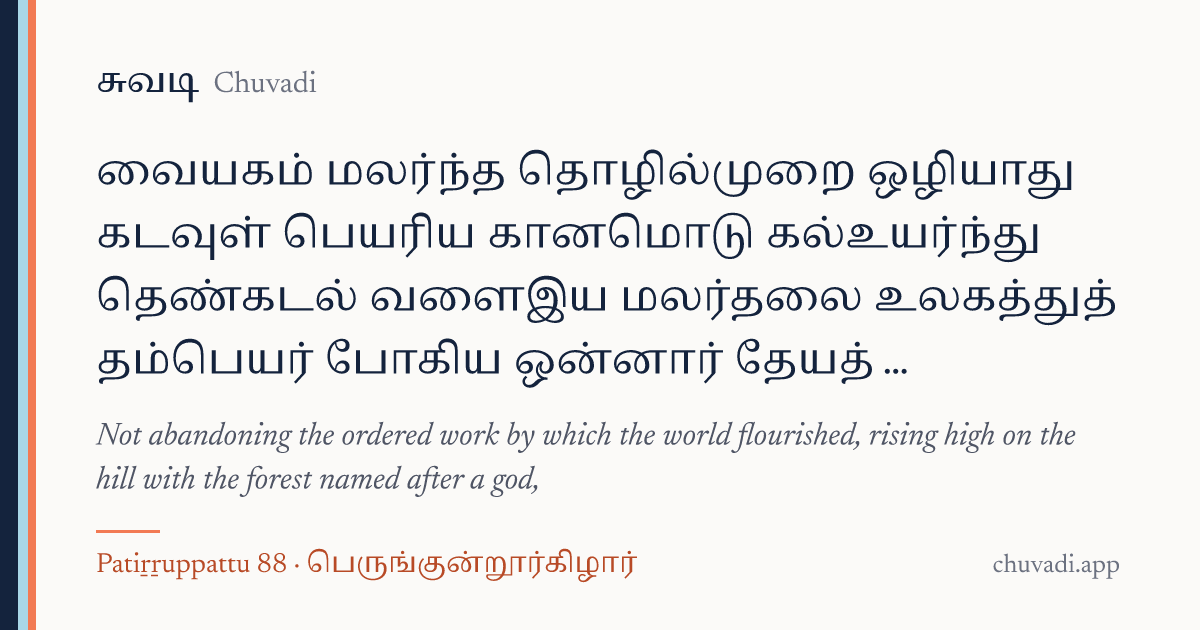
- Not abandoning the ordered work by which the world flourished,
- rising high on the hill with the forest named after a god,
- in the wide world encircled by the clear sea,
- in the land of foes whose names had spread far,
- hurling the spear so that the shaking great deep was undone,
- cutting down the whole trunk of the kaṭampu tree where a fearsome spirit dwelt,
- seeing the back of Kaḻuvuḷ who had come to fight in hostile strife,
- smashing the kings of terror until they were cut down,
- putting to flight the Aṇṭar with their swift-footed horses,
- crushing Naṉṉaṉ of the vākai with bright flowers,
- with a hill of heaped rice sprinkled with blood
- worshipping Ayirai of fearsome tradition,
- so that kings and chieftains came after and bowed,
- O descendant of the great ones who won victory!
- Lord with the valour of a lion with a wide mane,
- in the enclosure of ranked shields where mixed drums roar,
- in the war camp where the victory banner of strong elephants waves,
- with stone-hurling catapults that battered strong forts,
- king of the Koṅkar with their fibre-strained liquor,
- lord of the golden chariot who destroyed those who opposed,
- chief of the people of Toṇṭi, where the curving sea is the drum,
- may you live long, great one! Your
- resounding tumpai battle, having truly seen it, those who ask of it,
- heading for the gathering of the god none can turn back,
- as the great river full of water flows down,
- so the rich treasures, not barring any who come,
- not lessening though taken and taken, grow greater each time;
- in the tall fearsome palace that is like a painting,
- among women who are like statues,
- with sandal paste bright with fine marks that you love,
- wearing a cool fragrant garland, bearing ornaments,
- the rainbow bending, like a fine gem,
- joined by the great rain of fearsome gathered clouds,
- vēṅkai in bloom, its distant peak touching the sky,
- the hard mountain with waterfalls: like that is your chest,
- husband of the woman of red jewels whose good fame spreads far!
- Like the sun that rises in the great sky making the heavens shine,
- you shine; through many days
- I have come here to see you, I,
- where the high-rising waves lifted by strong winds
- break on the shore heaped with fine sand,
- O lord of the land with cool seaside gardens!
What the poem says
The poet greets Iḷañcēral Irumpoṟai by recounting the deeds of his ancestors and then praising him. The turai is plain praise (centuṟaip pāṭāṇ pāṭṭu).
Lines 1-14 list the famous victories of the Chera line, many of them known from earlier decades: hurling a spear at the sea, cutting down the guarded kaṭampu tree, routing Kaḻuvuḷ, defeating the Aṇṭar and Naṉṉaṉ, and worshipping the goddess Ayirai with a hill of rice sprinkled with blood. The king is their descendant. Lines 15-21 give him titles: lion-like lord, master of a war camp with catapults that batter forts, king of the Koṅkar, chief of Toṇṭi, the Chera port where the sea sounds like a drum. The poem's name, kalkāl kavaṇai, 'the stone-throwing catapult' (line 18), comes from this list.
Lines 22-27 compare his gifts to a great river that flows down without check: they never run out. Lines 28-36 show him in his palace, garlanded and anointed, with a chest like a mountain with waterfalls and blooming vēṅkai, husband of a famous queen. He shines like the rising sun, and the poet has come to see him, lord of the seashore. Lines 23-25 are hard: 'nanavuṟṟu viṉavum' and 'the meeting of the god none can turn back' are uncertain, and may refer to suppliants who come on hearing of his wars, and to a river rushing to the sea.