



பதிற்றுப்பத்து Fragment f4
பாடல் · The poem
Tap a word to see where else it occurs.
பொருள் · Meaning in TamilAI
பெருமானே, வந்தேன்; யானைகளோடும் செருக்குடைய குதிரைகளோடும் தேர்களோடும் வாரி வழங்கி நல்ல அணிகலன்களை ஈயும் மகிழ்ச்சி நிறைந்த உன் அவையைக் கண்டேன்; இனிச் செல்லலாம். நீ மழைக்காலம் என்று எண்ணுவதில்லை; பனி என்று சோம்புவதில்லை; பகையின் வெம்மையால் அசையாத ஊக்கம் உடையாய். வேற்று நாட்டில் தங்கிய வெற்றியுடைய கடும் படையுடன், பணியாத பகைவீரரின் எதிர்நிலை தேய்ந்தழிய, வலிமை நிறைந்த ஊக்கத்துடன் கட்டுத்தறிகளைப் பிடுங்கி மதயானைகள் முழங்கும் எல்லையற்ற உன் பாசறையில்.
இது இழந்த பத்துகளைச் சேர்ந்த ஒரு பகுதி; புறத்திரட்டின் பாசறைப் பகுதியில் இடம்பெறுகிறது. பாணன் அல்லது புலவன் சேர மன்னனின் பாசறைக்கு வந்து அவனுடைய கொடையையும், மழையும் பனியும் பாராது போர்செய்யும் ஊக்கத்தையும், மதயானைகள் முழங்கும் பரந்த பாசறையையும் புகழ்கிறான்.
ஆங்கிலம் · English translationAI
Translation
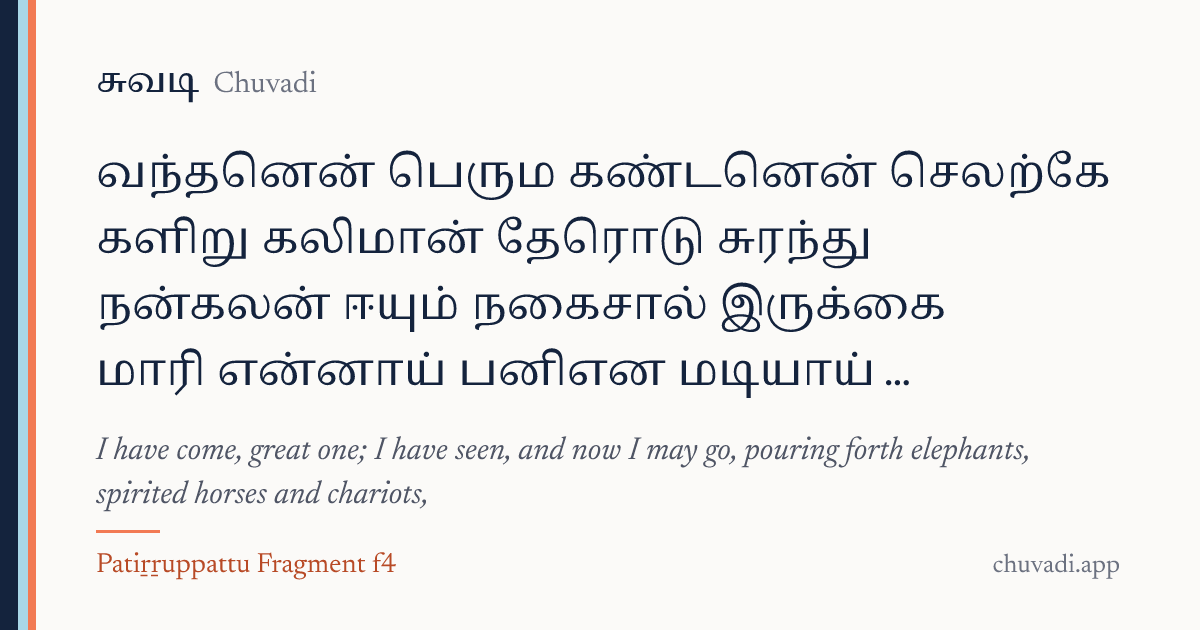
- I have come, great one; I have seen, and now I may go,
- pouring forth elephants, spirited horses and chariots,
- your joyous court that gives away fine ornaments.
- You do not say it is the rainy season; you do not slacken for the dew;
- you have a zeal that the heat of enmity does not shake;
- with your fierce victorious army camped in a foreign land,
- so that the stand of unyielding warriors who oppose you wears away,
- filled with the eagerness of strength, tearing up the posts they are tied to,
- elephants in musth roar
- in your camp that has no bounds.
What the poem says
This fragment from a lost decade is spoken by a bard or poet who has come to the Chera king's war camp. He says he has come and has seen the king's joyous court, where the king gives away elephants, horses, chariots and fine ornaments, and now he can leave. This shows the convention of the bard who visits the king and receives gifts.
The poet then praises the king's endurance on campaign. The king does not stop for the rainy season or slacken for the cold dew, and the heat of war does not shake his resolve. His army is camped in enemy country and wears down the resistance of brave foes. In the camp, elephants in musth are so full of energy that they tear up the posts they are tied to and roar. The camp is vast, without bounds.
The poem is quoted in a section of a later anthology on the war camp, and the camp is its main image. Line 1 is uncertain: the phrase rendered I have seen, and now I may go may also mean that the bard has seen the king so that he may go on his way with gifts. Line 10 is also uncertain: the word read as bounds can also mean a ladder, and the reading that has no bounds is a guess. No colophon name survives.