



புறநானூறு 101
பாடல் · The poem
Tap a word to see where else it occurs.
பொருள் · Meaning in TamilAI
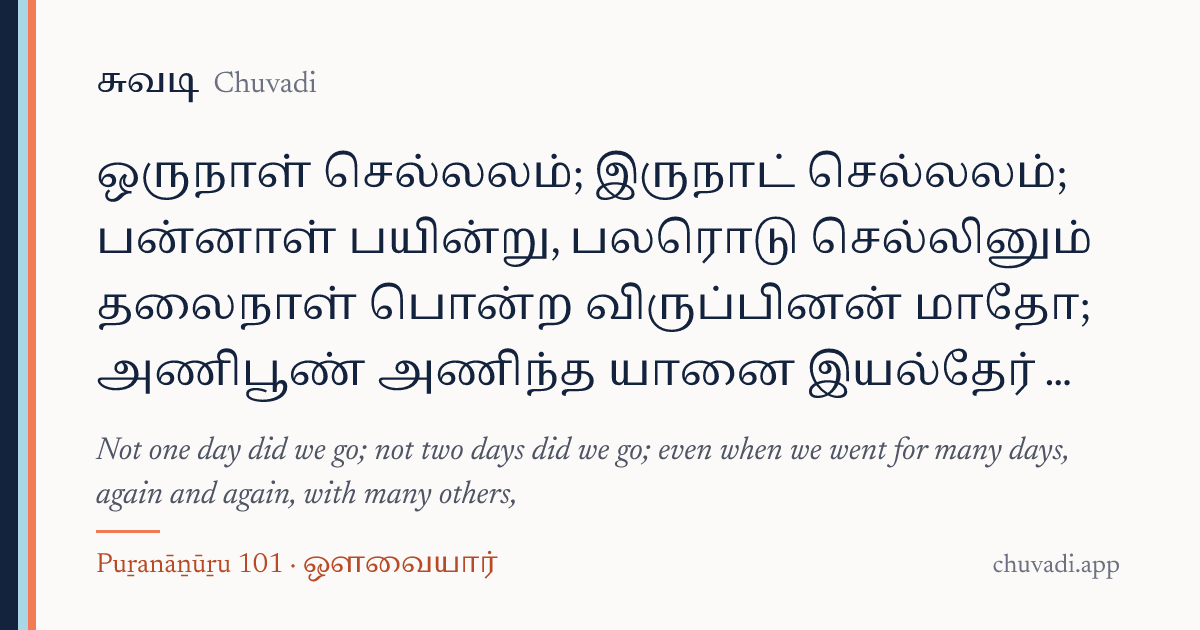
நாங்கள் ஒருநாள் மட்டும் சென்றவர்கள் அல்லோம்; இரண்டு நாள் மட்டும் சென்றவர்களும் அல்லோம். பல நாட்கள் மீண்டும் மீண்டும் பலரோடு சென்றாலும், முதல் நாளில் காட்டிய அதே விருப்பத்தோடு எங்களை வரவேற்பவன் அவன். அழகிய அணிகலன் அணிந்த யானைகளும் நன்கு அமைந்த தேர்களும் உடையவன் அதியமான். பரிசு பெறும் காலத்தை அவன் நீட்டித்தாலும், நீட்டிக்காவிட்டாலும், யானை தன் தந்தங்களுக்கு இடையில் வைத்திருக்கும் உணவுக் கவளம் போல, அது நம் கையில் இருப்பதே; அது பொய்க்காது. அதை உண்ண ஆவலுற்று ஏங்கும் நெஞ்சமே! நீ வருந்த வேண்டாம்; அவனுடைய திருவடிகள் வாழ்க!
இது பாடாண் திணை; துறை பரிசில் கடா நிலை, புரவலனிடம் பரிசிலை வேண்டி நிற்கும் நிலை. பாடியவர் ஔவையார்; பாடப்பட்டோன் அதியமான் நெடுமானஞ்சி. ஒன்பதாம் அடியின் சொற்பிரிப்பும் பொருளும் உறுதியாகத் தெரியவில்லை; ஆவலுற்ற நெஞ்சம் எனக் கொண்டோம்.
ஆங்கிலம் · English translationAI
Translation
- Not one day did we go; not two days did we go;
- even when we went for many days, again and again, with many others,
- he was as eager as on the very first day, indeed;
- with elephants wearing fine ornaments and well-built chariots,
- is Atiyamāṉ; the time of receiving our gift,
- whether he puts it off or does not put it off, like the
- mouthful an elephant holds between its tusks,
- it is already in our hand; it will not fail;
- O heart, anxious to taste it!
- There is no need to fret; long live his feet!
What the poem says
Auvaiyār speaks to her own heart about Atiyamāṉ Neṭumāṉ Añci. The tiṇai is pāṭāṇ, praise of a patron, and the turai paricil kaṭā nilai is a poem in which a poet presses for, or waits for, the gift a patron owes.
The poet has visited the king not once or twice but many times, with many companions, and his welcome has never cooled; he was as glad to see them as on the first day. The gift has not yet been handed over, and she seems to sense some delay. Yet she tells her impatient heart that it makes no difference whether he is slow or quick: the gift is as certain as the ball of food an elephant has already lifted and holds between its tusks, which is as good as eaten.
The comparison is neat because the elephant's mouthful is both 'not yet eaten' and 'sure to be eaten'. The poem ends with the conventional blessing on the patron's feet.
Line 9 is compressed: aruntē māntu, or arunta ēmānta, is taken as 'longing to eat, anxious', but the exact words are uncertain. In line 6 the edition prints a stray quotation mark after yāṉaitaṉ.