



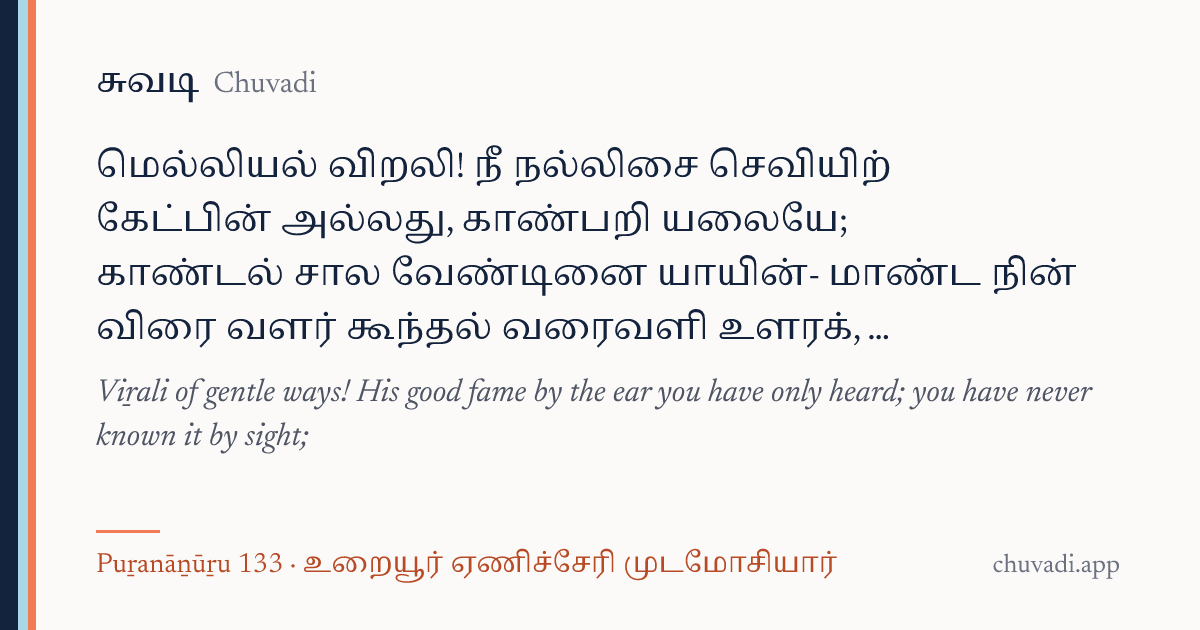
புறநானூறு 133
பாடல் · The poem
Tap a word to see where else it occurs.
பொருள் · Meaning in TamilAI
மென்மையான இயல்பை உடைய விறலியே! அவனுடைய நல்ல புகழை நீ காதால் கேட்டிருக்கிறாயே தவிர, கண்ணால் கண்டு அறிந்ததில்லை. அதைக் காண வேண்டும் என்று உனக்கு மிகுந்த விருப்பம் இருந்தால், மணம் கமழும் உன் அழகிய அடர்ந்த கூந்தலை மலைக்காற்று அசைக்க, தோகை விரித்த மயிலைப் போல அழகாக நடந்து, மழை போன்ற கொடையை உடைய தேர்வேள் ஆயைக் காணச் செல்வாயாக!
பாடாண் திணை; துறை விறலியாற்றுப்படை, அதாவது பரிசில் பெற்ற ஒருவர் விறலியை வள்ளலிடம் வழிகாட்டி அனுப்புவது. பாடியவர் உறையூர் ஏணிச்சேரி முடமோசியார்; பாடப்பட்டவன் ஆய் அண்டிரன். கேட்டல், காணல் என்ற வேறுபாட்டின் மூலம் ஆயின் கொடையை நேரில் அனுபவிக்க வேண்டும் என்கிறார்.
ஆங்கிலம் · English translationAI
Translation
- Viṟali of gentle ways! His good fame by the ear
- you have only heard; you have never known it by sight;
- if you truly long to see it — your fine
- fragrant, flourishing hair stirred by the mountain wind,
- moving beautifully like a peacock in its plumage,
- to see him whose giving is like the rain,
- Āy, the Vēḷ of chariots — go now, go and see him!
What the poem says
This is a guide-poem, in which one performer directs another to a generous patron. Muṭamōciyār speaks to a viṟali, a woman dancer and singer: she has heard of Āy's fame but never seen it with her own eyes. If she wants to, she should go to him, moving gracefully like a peacock, her hair lifted by the mountain wind.
The tiṇai is pāṭāṇ, praise of a patron, and the turai viṟaliyāṟṟuppaṭai, 'guiding a viṟali on her way', a form in which the guide's directions become praise of the patron.
The key contrast is between hearing and seeing: Āy's fame is everywhere, but his generosity must be experienced. He is called tērvēḷ, 'the Vēḷ (chieftain) of chariots', and his giving is like the rain, falling on all without asking.