



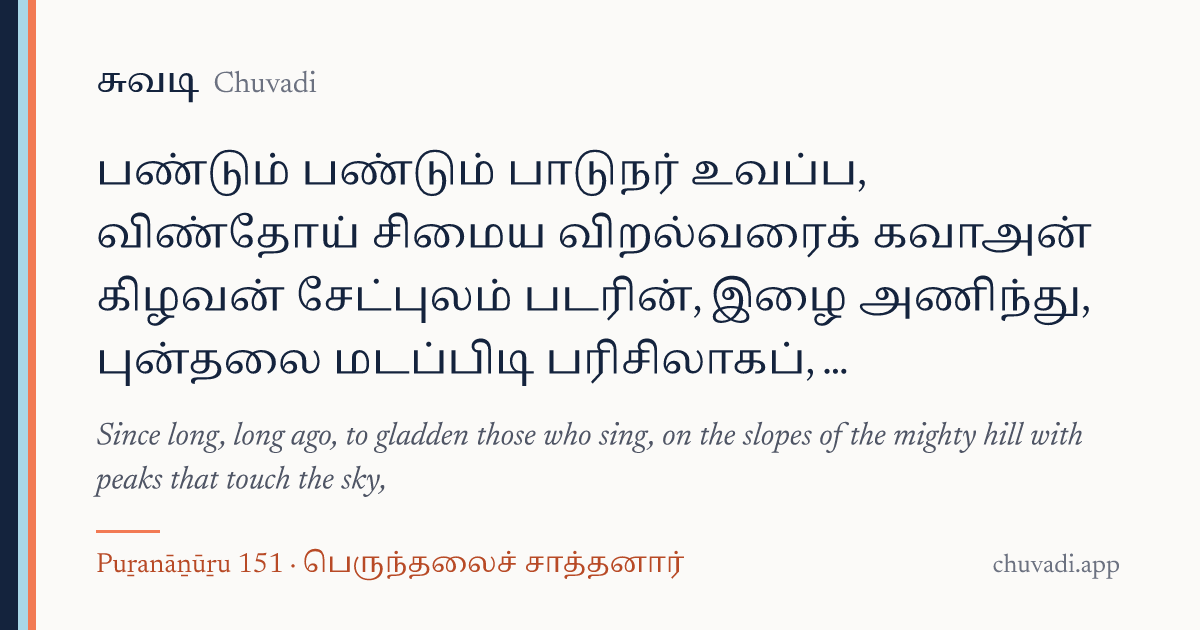
புறநானூறு 151
பாடல் · The poem
Tap a word to see where else it occurs.
பொருள் · Meaning in TamilAI
பழங்காலம் முதலே பாடுவோர் மகிழும்படி, வானைத் தொடும் சிகரங்களை உடைய வலிய மலைச்சாரலின் தலைவன் தொலைவான நாட்டுக்குச் சென்றிருந்தாலும், அவன் வீட்டுப் பெண்டிரும் அணிகலன்களை அணிந்து, மெல்லிய மயிருடைய தலையை உடைய இளம் பெண் யானைகளைத் தம் முறைப்படி பரிசிலாகக் கொடுப்பர். அப்படிப்பட்ட வளமான புகழ் உடைய கண்டீரக்கோன் என்பதால், நான் அவனை மகிழ்ந்து தழுவினேன். பொன்னால் ஆன தேர்களை உடைய நன்னனின் வழித்தோன்றல் என்பதோடு நீயும் தழுவத் தகுந்தவனாகத்தான் இருந்தாய். ஆனால் விளங்கும் சொற்களைப் பாடுவோர்க்கு உன் கதவுகள் அடைக்கப்பட்டுள்ளன. ஆகவே அசையும் மேகங்கள் அச்சம் தரும் சாரல்களில் பொழியும், மணம் கமழும் உன் பெரிய மலையை எங்களவர் விலக்கிவிட்டனர்.
பாடாண் திணை, இயன்மொழித் துறை. பாடியவர் பெருந்தலைச் சாத்தனார்; பாடப்பட்டவன் இளவிச்சிக்கோ. கண்டீரக்கோனைப் புகழ்ந்து, பாடுவோர்க்குக் கதவடைத்த இளவிச்சிக்கோவைக் கடிந்துரைக்கிறார்; ஆகவே இயன்மொழி என்ற துறை கண்டீரக்கோனுக்கே பொருந்துகிறது. இறுதி அடியில் 'வரைந்தனர்' என்பதை 'விலக்கினர்' என்று கொள்ளப்பட்டது.
ஆங்கிலம் · English translationAI
Translation
- Since long, long ago, to gladden those who sing,
- on the slopes of the mighty hill with peaks that touch the sky,
- when its lord has gone away to distant lands, putting on their jewels,
- young cow-elephants with sparse-haired heads as gifts
- even the women give in their turn; of such generous fame
- is Kaṇṭīrakkōṉ, and so gladly
- I embraced him. Of golden chariots
- Naṉṉaṉ's descendant though you are, you too
- were fit to be embraced, once; but to singers of bright
- words your doors are shut; where moving rain clouds
- pour on the slopes full of dread spirits, your
- fragrant great hill — our people have shunned it.
What the poem says
Peruntalaic Cāttaṉār addresses Iḷaviccikkō, and the poem is a rebuke wrapped in praise of another chieftain. In the hill country of Kaṇṭīrakkōṉ, generosity has been the custom since ancient times: even when the lord is away, the women of his house give young elephants to singers. So the poet embraced Kaṇṭīrakkōṉ gladly. Iḷavicci too, as a descendant of Naṉṉaṉ of the golden chariots, might have deserved an embrace; but his doors are shut to singers, and so poets keep away from his fragrant hill.
The tiṇai is pāṭāṇ, praise of a patron, and the turai iyaṉmoḻi, praise of a patron's nature. The label fits Kaṇṭīrakkōṉ better than the man addressed, since the poem is chiefly a reproach to Iḷavicci.
The poem seems to describe a scene in which the poet embraced one chieftain and not the other, but it gives no more detail and none is added here. Naṉṉaṉ is named only as an ancestor known for golden chariots. The verb varaintaṉar in the last line is taken as 'shunned, kept away from'; it could also mean 'set a boundary to'. The slopes are aṇaṅkucāl, 'full of dread powers', a phrase for haunted mountain heights.