



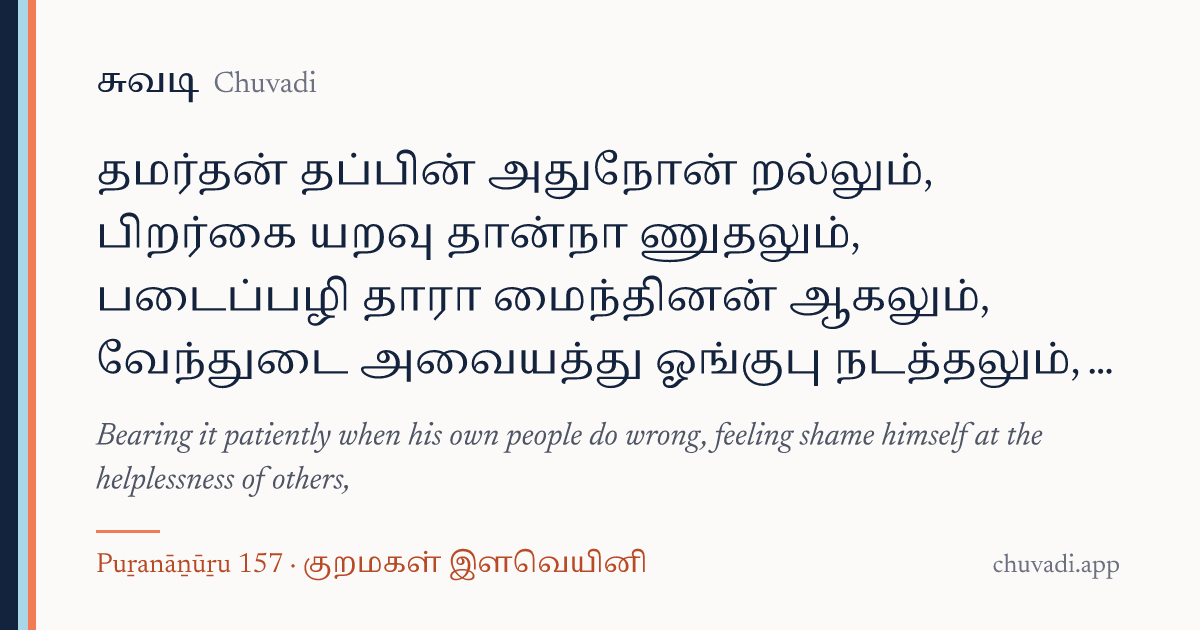
புறநானூறு 157
பாடல் · The poem
Tap a word to see where else it occurs.
பொருள் · Meaning in TamilAI
தன் சுற்றத்தார் தவறு செய்தால் அதைப் பொறுத்துக்கொள்வதும், பிறர் செய்வதறியாது நிற்கும்போது அதற்குத் தானே நாணுவதும், தன் படைக்குப் பழி வராமல் காக்கும் வலிமை உடையவனாக இருப்பதும், வேந்தர்கள் கூடிய அவையில் தலைநிமிர்ந்து நடப்பதும் உங்களைப் போன்றவர்களுக்குப் பொருந்துவன அல்ல. எங்கள் தலைவன், வில்லை முழுதும் இழுக்கும் அளவுக்கு அகன்ற மார்பும் கொல்லும் வேலும் உடையவன்; காந்தள் மலர் மாலை சூடிய குறவர்களின் பெருமகன். அசையும் மேகங்களைத் தடுத்து நிறுத்தும் வளமான உயர்ந்த மலையில், கதிரவன் மறையும் நேரத்தில் கூட்டத்திலிருந்து பிரிந்து தடுமாறித் தன் தங்குமிடத்தைக் காணாத நல்ல ஆண் கடமான், இளமையான பெண் மானை அழைக்க, மலைப்பிளவின் குகையில் உள்ள பெரிய புள்ளிகளை உடைய ஆண் புலி அதைக் கூர்ந்து கேட்கும். அப்படிப்பட்ட பெரிய மலைநாட்டின் தலைவனாகிய எங்கள் ஏறைக்கே இவை பொருந்தும்.
பாடாண் திணை, இயன்மொழித் துறை. பாடியவர் குறமகள் இளவெயினி; பாடப்பட்டவன் ஏறைக் கோன். 'உங்களைப் போன்றவர்' என்று யாரை நோக்கிச் சொல்கிறார் என்பதைப் பாடல் தெளிவாகச் சொல்லவில்லை. 'கோடல்' என்பது காந்தள் வகை மலர்.
ஆங்கிலம் · English translationAI
Translation
- Bearing it patiently when his own people do wrong,
- feeling shame himself at the helplessness of others,
- being a man of strength who never brings disgrace on his army,
- walking tall in the assembly where kings sit —
- these are not things that suit your kind; our lord,
- his chest as broad as a bow's stretch, with a killing spear,
- chief of the Kuṟavar, wearing a garland of kōṭal flowers,
- on the fruitful heights that hold back the drifting clouds,
- when the sun goes down, the herds thrown into confusion,
- the fine stag of the sambar that cannot find its lair
- calls to its gentle young doe, and in the cleft cave
- the great spotted male tiger listens —
- lord of the great rocky country: these befit our Ēṟai.
What the poem says
Kuṟamakaḷ Iḷaveyiṉi, 'Iḷaveyiṉi the Kuṟava woman', a poet of the hill people, praises her own chief, Ēṟaikkōṉ. She lists four qualities: patience with his own people's faults, shame at the helplessness of others, strength that never disgraces his army, and a proud bearing in the assembly of kings. These, she tells another (perhaps a rival chief or his people), do not suit 'your kind'; they suit Ēṟai, the chief of the Kuṟavar with his kōṭal garland.
The tiṇai is pāṭāṇ, praise of a patron, and the turai iyaṉmoḻi, praise of his nature and conduct.
Ēṟai's country is drawn in a tense night scene: at dusk a sambar stag, separated from its herd and unable to find its resting place, calls to its doe, and in a cave the great tiger listens. The image suggests both the wildness of the land and, perhaps, the alertness of its lord. The poem does not say to whom 'your kind' refers. Line 6 is taken as a chest broad enough for the full draw of a bow.