



புறநானூறு 159
பாடல் · The poem
Tap a word to see where else it occurs.
பொருள் · Meaning in TamilAI
“வாழும் நாளோடு இன்னும் பல ஆண்டுகள் இருப்பதால் என் உயிர் போகமாட்டேன் என்கிறதே” என்று மீண்டும் மீண்டும் புலம்புகிறாள் என் தாய். கோலையே காலாகக் கொண்டு சிறு சிறு அடிகள் வைத்து நடக்கிறாள்; அவள் கூந்தல் விரித்த நூல் போல் வெளுத்திருக்கிறது; கண்கள் சோர்ந்து மூடுகின்றன; முதுமையால் முற்றத்தைத் தாண்டியும் போக முடியாதவள். என் மனைவியோ, வெளிறிய உடலோடு துயரத்தால் வருந்துகிறாள்; பக்கத்தில் இருக்கும் பல சிறு குழந்தைகள் பிசைந்து சுவைப்பதால் அவள் முலைகள் வாடிப் போயின; மிகவும் நொந்து, குப்பையில் முளைத்த கீரையை முன்பு கிள்ளிய இடத்தில் மீண்டும் துளிர்த்த இளந்தளிரைக் கொய்து, உப்பும் இல்லாமல் வெறும் நீரில் உலையேற்றி, மோரும் இல்லாமல், சோறு என்பதையே மறந்து, அந்தப் பச்சைக் கீரையைத் தின்கிறாள்; அழுக்கேறிக் கிழிந்த உடையை உடுத்தியிருக்கிறாள்; ஆயினும் அறத்தைப் பழிக்காமல் பட்டினி கிடக்கிறாள். இவ்விருவர் நெஞ்சமும் மகிழும்படி, கானவர் சுட்டுத் திருத்திய அகன்ற கொல்லையில் விதைத்த மலைநெல் கருத்துச் செழிக்க, இன்னும் கதிர் விடாத தினைப் பயிருக்கு மேகக் கூட்டம் ஓசையுடன் மழை பொழிவது போல, கொடுக்கும் உன் புகழைப் போற்றி, பசியால் வாடிய என் சுற்றத்தாரும் மகிழும்படி நீ தர வேண்டும். உயர்ந்த கொம்புகளையுடைய கொல்லும் களிற்று யானையையே தந்தாலும், மனமில்லாமல் தயங்கித் தரும் பரிசிலை நான் ஏற்க மாட்டேன்; நீ மகிழ்ந்து, நான் இன்புறும்படி அனுப்பினால், குன்றிமணி அளவு சிறியதையும் பெற்றுக்கொள்வேன், கூர்வேல் குமணனே! அவ்வாறே அருள வேண்டுகிறேன் — வெற்றிப் புகழும் குற்றமற்ற உயர்குடிப் பிறப்பும் கொண்ட, புகழால் உயர்ந்த தலைவனே! உன்னைப் பாடியவன் நானே.
இது பாடாண் திணை, பரிசில் கடாநிலைத் துறை; வறுமையில் வாடும் புலவர் தம் நிலையைச் சொல்லிப் பரிசில் வேண்டுவது. பாடியவர் பெருஞ்சித்திரனார்; பாடப்பட்டவன் குமணன். ஐந்தாம் அடியில் உள்ள “முதுர்வினள்” என்பது “முதிர்வினள்” என்பதன் அச்சுப்பிழை எனத் தோன்றுகிறது.
ஆங்கிலம் · English translationAI
Translation
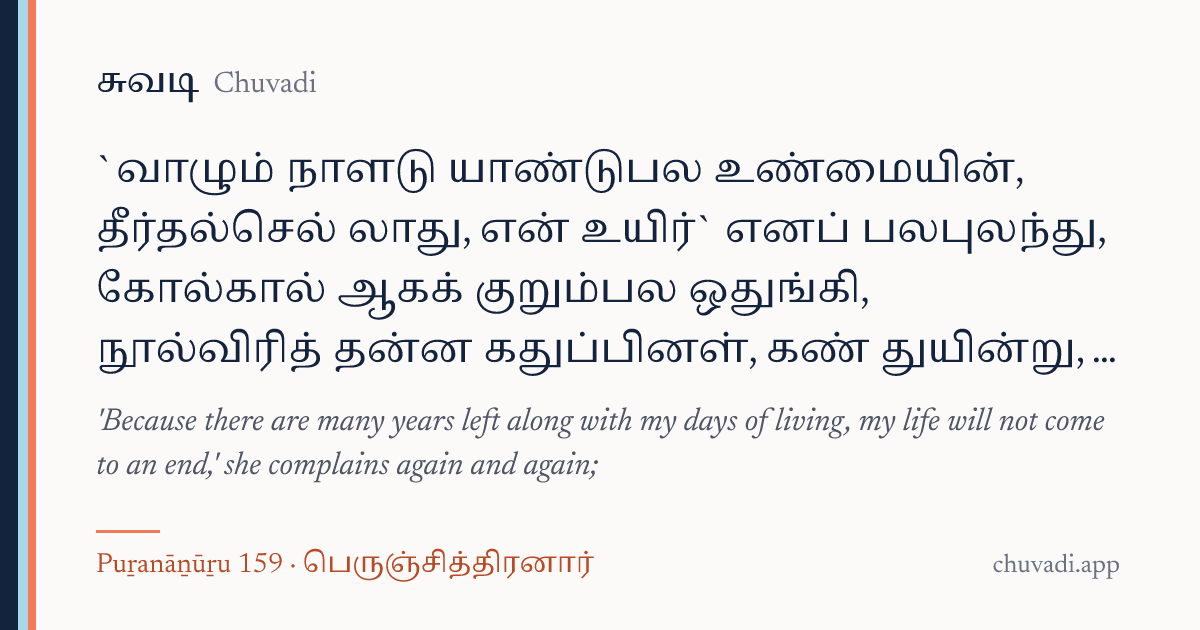
- 'Because there are many years left along with my days of living,
- my life will not come to an end,' she complains again and again;
- with a staff for a leg she shuffles in many short steps;
- her hair is like spread-out thread; her eyes droop with sleep;
- so old she cannot go beyond the front yard — that is my mother.
- With a pallid body, suffering as grief crushes her,
- the many small children she keeps at her side
- squeezing and gnawing her withered breasts, utterly broken,
- from the rubbish-heap greens, where they were plucked and sprouted again,
- she plucks the unripe tender shoots, and without salt
- puts them on the fire with only water in the pot; without buttermilk,
- forgetting what cooked rice is, she eats the green leaves;
- her cloth is worn thin and dirty; never cursing virtue,
- she goes without food — that is my wife.
- So that the hearts of these two may rejoice — as on the wide field where forest people
- have turned over the burnt clearing
- and sown hill rice, which grows dark and beautiful,
- and on the millet that has not yet put out its ears, with a rushing sound
- the massed clouds of the sky pour down — just so,
- praising your fame that gives, so that my gathered
- kin, shrivelled as hunger gnawed at them, may also rejoice —
- even if I were to get a killing elephant with high, lifted tusks,
- I will not accept a gift held back and grudgingly given; but if, gladly, you
- send me off with joy, even something as small
- as a kuṉṟi seed I will take, Kumaṇa of the sharp spear!
- I ask that you grant it in that way — you of mighty fame,
- born of a faultless, noble lineage,
- lord who stands high in renown! I am the one who has sung you.
What the poem says
Peruñcittiraṉār addresses the chieftain Kumaṇaṉ (the next poems place him at Mutiram) in the mode the tradition calls paricil kaṭā nilai, "pressing for the gift": a poet in need sets out his case and asks his patron to give. The tiṇai is pāṭāṇ, praise of a patron.
Most of the poem is a picture of the poet's home. First comes his mother, so old that she complains her life will not end, walking with a stick, unable to leave the front yard. Then his wife: her breasts are dry because many small children cling to her, and she boils weeds from the rubbish heap in plain water, without salt or buttermilk, having forgotten what rice tastes like. Even so she does not blame virtue or fate. The giving the poet hopes for is compared to rain pouring on a hill field of young millet that has not yet come into ear.
The last part sets out the poet's terms. A gift handed over grudgingly he will not take, even if it is a war elephant; one given gladly he will accept even if it is no bigger than a kuṉṟi seed (the tiny red-and-black seed used as a jeweller's weight). The edition's muturviṉaḷ in line 5 seems to be a misprint for mutirviṉaḷ, "aged"; the edition also regularly prints -aṭu where -oṭu ("with") is meant. The full stop at the end of line 16 does not fit the syntax and is ignored here.