



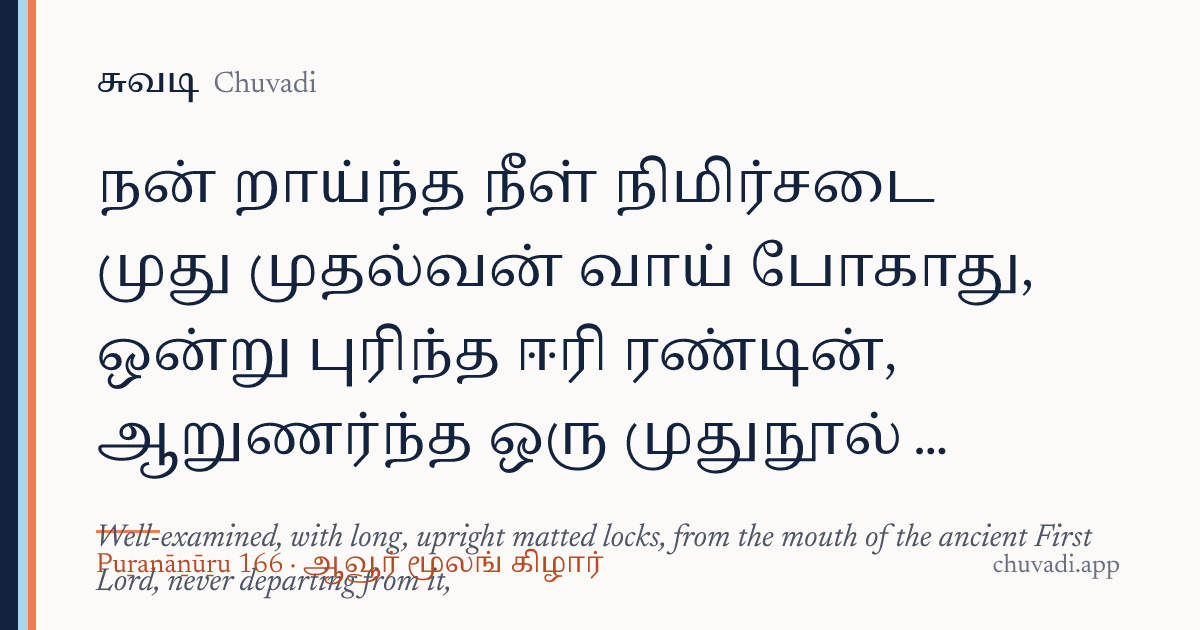
புறநானூறு 166
பாடல் · The poem
Tap a word to see where else it occurs.
பொருள் · Meaning in TamilAI
நன்கு ஆராயப்பட்ட, நீண்டு நிமிர்ந்த சடையையுடைய பழைய முதல்வனின் வாயிலிருந்து நீங்காமல் வந்தது; ஒரே அறத்தை விரும்புவது; நான்கு பிரிவுகள் கொண்டது; ஆறு உறுப்புகளை உணர்ந்த ஒப்பற்ற பழைய நூல் அது. அதைக் கொண்டு, மாறுபட்டு வாதிடுவோரின் செருக்கை அடக்க, உண்மை போலத் தோன்றும் பொய்யை உணர்ந்து, பொய்யை ஏற்காமல் மெய்யை நிலைநாட்டி, மூவேழு வகை வேள்விகளையும் குறையின்றிச் செய்து முடித்த, புகழ்பெற்ற அறிவுடையோரின் வழித்தோன்றலே! வேள்விக்குத் தேவையாக நீ அணிந்திருக்கும் புல்வெளிக் கலைமானின் தோல் உன் தோளில் பூணூலுக்கு மேல் பொலிகிறது. கடுமையை நீக்கிய அரிய கற்பும், அறம் புகழும் தலையணியும், சிறிய நெற்றியும், அகன்ற இடையும், குறைந்த சொல்லும், நிறைந்த கூந்தலும் கொண்ட, உன் நிலைக்கு ஏற்ற உன் துணைவியர் தமக்குரிய பணிகளைக் கேட்டுச் செய்கின்றனர். காடானாலும் நாடானாலும் ஈரேழு இடங்களிலும் தவறாமல், நீர் நாணும்படி நெய்யை வழங்கியும், எண்ணிக்கை நாணும்படி பல வேள்விகள் செய்தும், உலகம் நாணும்படி புகழைப் பரப்பியும், அரிய காவலுடைய பெரிய வேள்விக்காலத்தில் விருந்தினரை ஏற்கும் உன் சிறந்த நிலையை என்றும் நாங்கள் காண்போமாக! மேற்கே பொன் விளையும் நெடிய மலையில் புயல் இடி முழங்கினால், பூக்கள் மிதக்கும் புதுவெள்ளத்தோடு காவிரி வளம் தரும், குளிர்ந்த நீர்வளமுடைய எங்கள் ஊரில் உண்டும் தின்றும் ஊர்ந்தும் விளையாடுவோம். நான் போகிறேன்; நீயோ அழியாமல், மேகங்களும் அண்ணாந்து பார்க்கும்படி உயர்ந்த மூங்கில் வளரும் இமயமலை போல இந்த நிலத்தின் மேல் நிலைத்து வாழ்வாயாக!
இது வாகைத் திணை, பார்ப்பன வாகைத் துறை; கல்வியாலும் வேள்வியாலும் பார்ப்பான் சிறப்பதைப் புகழ்வது. பாடியவர் ஆவூர் மூலங்கிழார்; பாடப்பட்டவன் சோழநாட்டுப் பூஞ்சாற்றூர்ப் பார்ப்பான் கௌணியன் விண்ணந்தாயன். “ஆறு”, “ஈரேழ் இடம்”, “வலை” முதலியவை எவற்றைக் குறிக்கின்றன என்பது உறுதியாகத் தெரியவில்லை.
ஆங்கிலம் · English translationAI
Translation
- Well-examined, with long, upright matted locks,
- from the mouth of the ancient First Lord, never departing from it,
- devoted to the one truth, in its twice two parts,
- the one ancient book that understands the six,
- so that the arrogance of those who seek dispute may be brought low,
- knowing the falsehood that looks like truth,
- not accepting falsehood but holding to truth,
- who went through all three times seven kinds of rite without fault —
- descendant of the wise ones of renowned excellence!
- Needed for the rite, the one you wear,
- the hide of the black buck of the open fields
- shines on your shoulder above the thread;
- of rare chastity, free of harshness,
- wearing the head-ornament that virtue praises,
- with small foreheads and broad hips,
- of few words and abundant hair, your
- wives, fit for your station and your companions,
- listen for the tasks that are theirs to do.
- Whether in forest or in settled land,
- without failing in the twice seven places,
- pouring ghee so freely that water is put to shame,
- performing so many sacrifices that number is put to shame,
- spreading fame so wide that the earth is put to shame,
- at the great time of the rare, guarded rite,
- your fine and lofty state as you receive guests —
- may we see it always! As for me: when in the west,
- on the tall gold-bearing mountain, the storm-bull thunders,
- the Kāviri, with its fresh flood strewn with flowers, nourishes
- the cool, well-watered fields of our town; there
- we shall eat and feast, ride and play.
- I am going now; and you, never failing,
- like the tall bamboo-clad Himalaya, its high peaks
- rising so the clouds look up at them,
- may you stand firm upon the earth!
What the poem says
Āvūr Mūlaṅkiḻār praises a brahmin, Kauṇiyaṉ Viṇṇantāyaṉ of Pūñcāṟṟūr in the Cōḻa country. The tiṇai is vākai, "excellence", and the turai pārppaṉa vākai, the excellence proper to a brahmin: learning, ritual and hospitality rather than war.
The first nine lines describe the Veda as the poet sees it. It came from the mouth of the "ancient First Lord" with long matted hair (Śiva, by the usual reading), it has four parts and six auxiliary sciences, and it lets its masters see through falsehood that looks like truth and refute those who come to argue. Viṇṇantāyaṉ is called the descendant of men who performed all "three times seven" rites without fault. He wears the black-buck skin for the rite over his sacred thread, and his wives, modest and of few words, attend to their ritual duties. His ghee offerings, sacrifices and fame put water, number and the earth itself to shame.
Then the poet takes leave. He is going home to his own town, watered by the flowering flood of the Kāviri, which rises when the storm thunders on the western mountain; he wishes the brahmin to stand as firm as the Himalaya. Several technical phrases are uncertain: what exactly the "six" and the "twice seven places" (line 20) are, and what valai is in line 14, taken here as a woman's head-ornament. The numbers seem to stand for set groups of Vedic lore and rites, but the poem does not list them.