



புறநானூறு 170
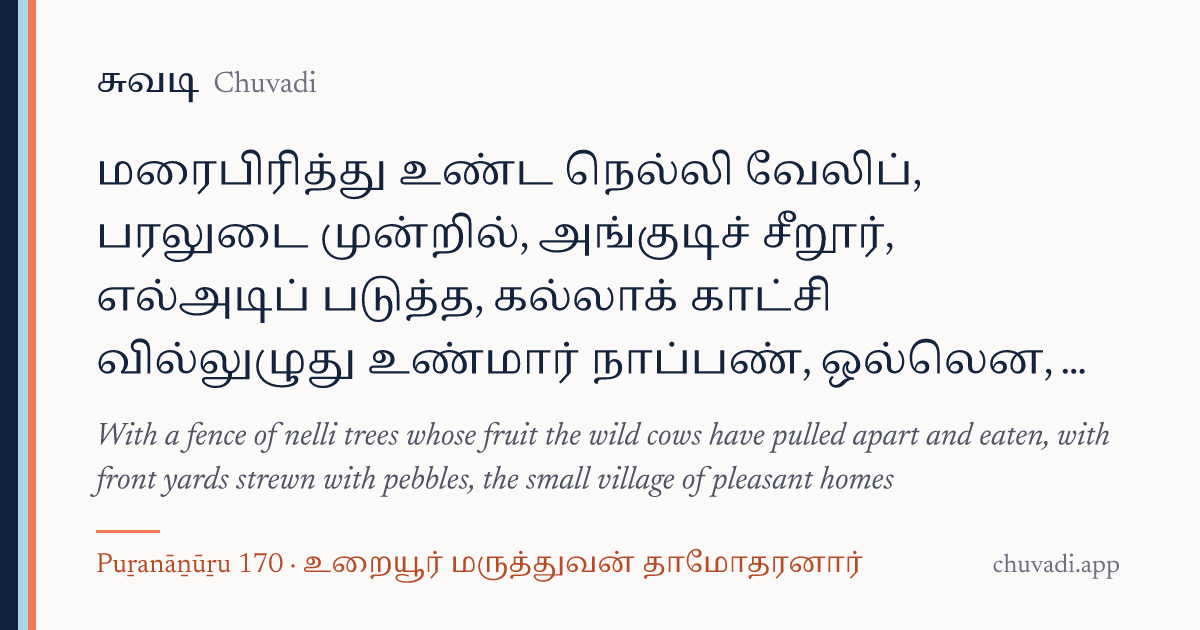
பாடல் · The poem
Tap a word to see where else it occurs.
பொருள் · Meaning in TamilAI
காட்டுப்பசுக்கள் பிய்த்துத் தின்ற நெல்லிமரங்களை வேலியாகவும், பருக்கைக்கற்கள் நிறைந்த முற்றங்களையும் கொண்ட அழகிய குடியிருப்புகளுள்ள சிற்றூர்; அங்கே பகலையும் அடிப்படுத்தும் கல்லாத பார்வையுடைய, வில்லால் உழுது வாழும் வேட்டுவர் நடுவே, இழிந்த பிறப்பினனாகிய பறையடிப்பவன் தன் கரிய கை சிவக்கும்படி வலிமையாக அடிக்கும் அஞ்சாத கடுமையான துடிப்பறை ஒலிக்கிறது; புலிகள் உறங்கும் நெடிய மலையில் கூகையின் குரலோடு அது மாறி மாறி ஒலிக்கிறது. அத்தகைய மலைநாட்டுத் தலைவன் கூர்வேல் பிட்டன். பகைவர்களே, அவனை நெருங்காமல் காத்துக்கொள்ளுங்கள்! அவன், சிறிய கண்களையுடைய யானைகளின் வெண்கொம்புகள் தந்த ஒளிரும் முத்துக்களை விறலியர்க்குக் கொடுத்து, நாரால் பிழிந்து வடித்த வெப்பமான கள்ளை நல்ல யாழையுடைய பாணர் குடும்பத்துக்குக் குடிக்கக் கொடுத்து, தன்னை விரும்பி வருபவர்களுக்கு மென்மையானவனாக மட்டுமே இருக்கிறான்; பகைவர்களுக்கோ, இரும்பைப் பயன்படுத்தும் கரிய கைக் கொல்லன் விசையோடு அடிக்கும் சம்மட்டியோடு மோதும் உலைக்கல் போன்ற வலியவன்.
இது வாகைத் திணை, வல்லாண் முல்லைத் துறை; தானை மறம் எனவும் கொள்ளலாம் என்பது குறிப்பு. பாடியவர் உறையூர் மருத்துவன் தாமோதரனார்; பாடப்பட்டவன் பிட்டங்கொற்றன். மூன்றாம் அடியில் உள்ள “எல் அடிப்படுத்த கல்லாக் காட்சி” என்பதன் பொருள் உறுதியாகத் தெரியவில்லை.
ஆங்கிலம் · English translationAI
Translation
- With a fence of nelli trees whose fruit the wild cows have pulled apart and eaten,
- with front yards strewn with pebbles, the small village of pleasant homes
- of men who tread down the daylight, of untaught ways of seeing,
- who live by ploughing with the bow; among them, with a roar,
- the man of low birth, so that his black hand turns red,
- drives with force the bold, harsh tuṭi drum till it booms,
- and it sounds back and forth with the owl on the high peak where tigers sleep —
- lord of the mountain country, Piṭṭaṉ of the sharp spear:
- beware of coming near him, enemies! He
- gives the bright, shining pearls that the white tusks of small-eyed elephants yield
- to the dancing women,
- and the hot liquor strained through fibre
- he pours for the bards' families with their fine tuned lutes;
- to those who long for him he is nothing but gentle; but to enemies
- he is like the anvil stone of the black-handed smith who works iron,
- which clashes with the hammer struck down with force —
- like that anvil stone is this strong man.
What the poem says
Uṟaiyūr Maruttuvaṉ Tāmōtaraṉār (his name suggests he was a physician) warns the enemies of Piṭṭaṉ to keep away. The tiṇai is vākai and the turai vallāṇ mullai, the steadfast manliness of a hero; the colophon allows tāṉai maṟam, the valour of his army, as an alternative.
The first half describes the hero's hill village: a fence of nelli (Indian gooseberry) trees stripped by wild cattle, pebbly yards, and men who "plough with the bow", that is, live by hunting. Among them a drummer, called in the poem a man of "low birth", beats the tuṭi drum until his dark hand turns red, and its booming answers the owl on peaks where tigers sleep.
The second half sets the hero's two faces against each other. To dancers he gives pearls taken from elephant tusks (a common Sangam belief), and to bards strained liquor; to those who come in hope he is wholly gentle. To enemies he is the smith's anvil stone, which meets every hammer blow and does not break. Line 3 is obscure: el aṭip paṭutta is taken literally as "tread down the daylight", perhaps meaning men who are out from dawn, and kallāk kāṭci as "untaught" or "rough" ways of seeing; both readings are uncertain.