



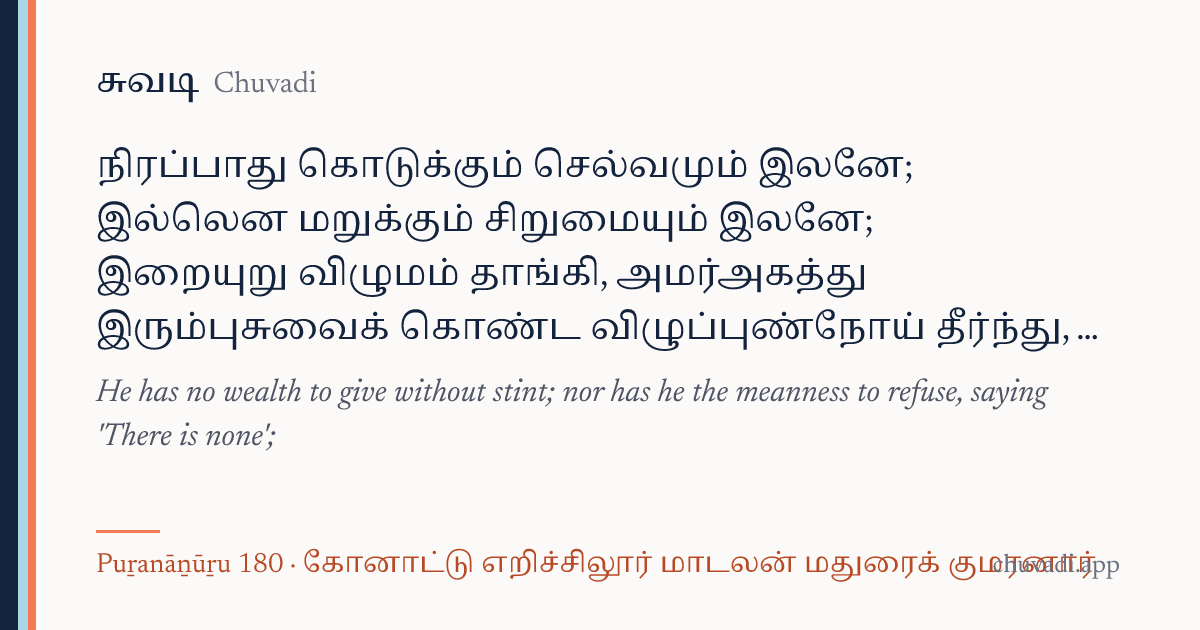
புறநானூறு 180
பாடல் · The poem
Tap a word to see where else it occurs.
பொருள் · Meaning in TamilAI
குறையாமல் அள்ளிக் கொடுக்கும் அளவுக்குச் செல்வம் அவனிடம் இல்லை; “இல்லை” என்று மறுக்கும் இழிவும் அவனிடம் இல்லை. தன் அரசனுக்கு வரும் துன்பங்களைத் தாங்கி, போர்க்களத்தில் இரும்பு சுவைத்த சிறந்த புண்கள் ஆறி, மருந்துக்காகப் பட்டை உரிக்கப்பட்ட மரம் போல வாள்வடுக்கள் கலந்திருந்தும், குறையில்லாமல் செம்மையாக அமைந்த உடலுடையவன்; கொடுப்பதையே மேற்கொண்டவன்; பாணர்களின் பசிக்குப் பகைவனான அவன் ஈர்ந்தூரில் இருக்கிறான். அனுபவம் மிக்க முதிய இரவலனே, உன் வறுமை தீர வேண்டுமானால் நீயும் எங்களோடு வருவாயா? நாங்கள் அவனிடம் இரக்கும்போது, அவன் உண்ணாத எங்கள் வயிற்றைக் காட்டி, தன் ஊரில் உள்ள கரிய கைக் கொல்லனிடம் “திருந்திய இலையுடைய நீண்ட வேல் ஒன்றை வடித்துக் கொடு” என்று இரப்பான்.
இது வாகைத் திணை, வல்லாண் முல்லைத் துறை; பாணாற்றுப்படை எனவும் கொள்ளலாம். பாடியவர் கோனாட்டு எறிச்சிலூர் மாடலன் மதுரைக் குமரனார்; பாடப்பட்டவன் ஈர்ந்தூர் கிழான் தோயன் மாறன். கையில் செல்வம் இல்லாதபோது போரில் வென்று பெற்றுக் கொடுப்பான் என்பது இறுதி அடிகளின் கருத்து.
ஆங்கிலம் · English translationAI
Translation
- He has no wealth to give without stint;
- nor has he the meanness to refuse, saying 'There is none';
- bearing the troubles that come upon his king, in battle
- his noble wounds where iron tasted him have healed;
- like a tree whose bark is cut for medicine, mingled with sword scars,
- his body is finely shaped and without blemish; having pledged himself to giving,
- he lives in Īrntai, this enemy of the bards' hunger.
- If you want your poverty to end, along with us
- will you come too, old and seasoned suppliant?
- When we beg of him, he, showing
- our unfed bellies, of his own town
- will beg the black-handed smith,
- 'Forge me a long spear with a well-made blade!' saying so.
What the poem says
Māṭalaṉ Maturaik Kumaraṉār speaks to an older, experienced suppliant and invites him to come along to Tōyaṉ Māṟaṉ, lord of Īrntūr (called Īrntai in the poem). The tiṇai is vākai and the turai vallāṇ mullai; the colophon notes that it may also be taken as pāṇāṟṟuppaṭai, a poem in which one bard guides another to a patron, which fits its form well.
The portrait is honest. Māṟaṉ is not rich enough to give without limit, but he is never mean enough to say "I have nothing". He has borne his king's troubles in battle, and his body is covered with healed sword scars, mingled like the cuts on a tree whose bark is stripped for medicine. The poem plays on vaṭu, "scar" and also "blemish": his body is scarred all over yet "without blemish".
The ending shows how he gives. When the poets come to beg, he points to their empty bellies and goes to the smith of his own town to ask for a new spear, meaning that he will win in war the wealth he does not have at home to give them.