



புறநானூறு 193
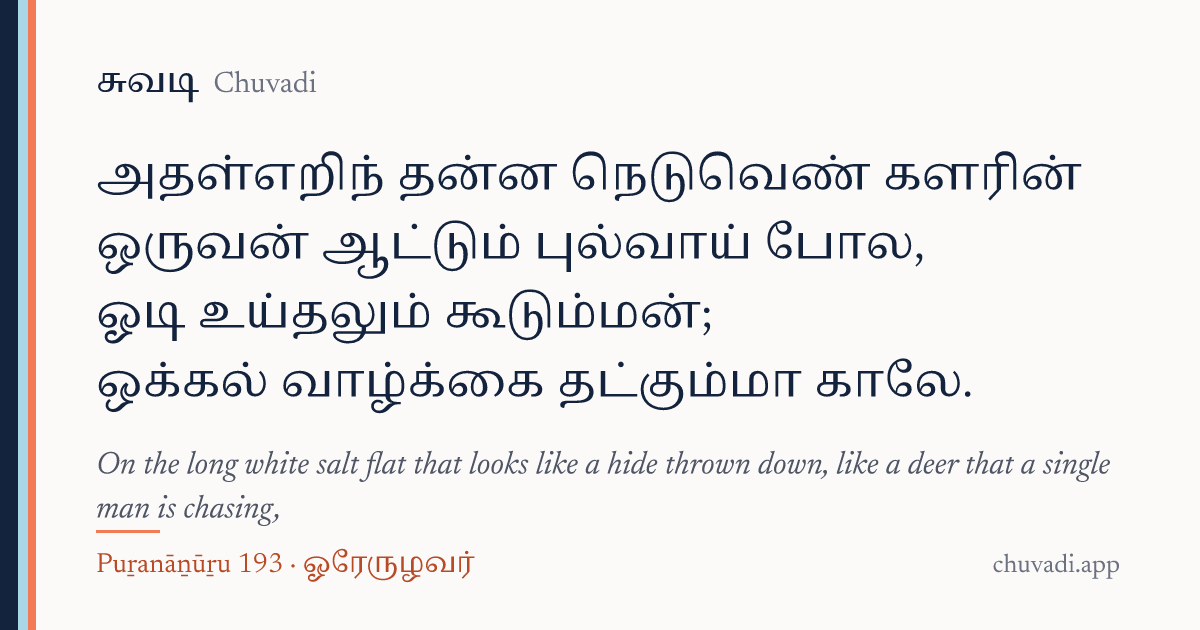
பாடல் · The poem
Tap a word to see where else it occurs.
பொருள் · Meaning in TamilAI
விலங்கின் தோலை விரித்து எறிந்தது போலத் தோன்றும் நீண்ட வெண்மையான உவர்நிலத்தில், ஒருவன் துரத்தும் மானைப் போல ஓடித் தப்பிப் பிழைப்பதும் முடியும்தான்; ஆனால் சுற்றத்தோடு வாழும் குடும்ப வாழ்க்கை கால்களைக் கட்டித் தடுக்கிறதே.
இது பொதுவியல் திணை, பொருண்மொழிக் காஞ்சித் துறை. பாடியவர் ஓரேருழவர். குடும்பப் பொறுப்பு உள்ளவன் துன்பத்திலிருந்து ஓடித் தப்ப முடியாது என்பது பாடலின் கருத்து. ஒளிந்துகொள்ள இடமில்லாத வெட்டவெளியான உவர்நிலத்திலும் மான் தப்பிவிடக்கூடும்; குடும்பத்தால் கட்டுண்டவனுக்கு அதுவும் முடியாது என்னும் ஏக்கம் இதில் தொனிக்கிறது.
ஆங்கிலம் · English translationAI
Translation
- On the long white salt flat that looks like a hide thrown down,
- like a deer that a single man is chasing,
- one could run away and escape —
- but family life holds back one's legs.
What the poem says
A four-line poem by Ōr ēr uḻavar, whose name means "the farmer with a single plough" (potuviyal tiṇai, poruṇmoḻik kāñci). The speaker imagines himself as a deer chased by one hunter across a wide white salt flat, a bare stretch of ground that looks like an animal skin spread out to dry.
A deer in that situation could run and get away. A man cannot, because "family life" (okkal vāḻkkai, life with one's kin) holds his legs back. The poem says in very few words that the responsibilities of a household keep a person from simply escaping the troubles that pursue him.
The salt flat (kaḷar) is bare, open ground where a hunted animal can be seen from far off and has nowhere to hide. Even there, the poem says, a deer might get away; the man held by his family cannot, and the particle maṉ in line 3 ("it could have been, but") carries that regret.