



புறநானூறு 209
பாடல் · The poem
Tap a word to see where else it occurs.
பொருள் · Meaning in TamilAI
குளத்து நாரை வைக்கோல் போர்களில் தங்கும், நெய்தல் மலர்கள் நிறைந்த அழகிய வயல்களில், நெல் அறுக்கும் உழவர்கள் மொட்டுக் கட்டு அவிழ்ந்து மலர்ந்த ஆம்பலின் அகன்ற இலையில் கள்ளைப் பருகி, தெளிந்த கடலின் அலைகள் எழுப்பும் இனிய தாளத்துக்கு ஏற்ப ஆடும் மென்மையான நிலமுடைய நல்ல நாட்டின் தலைவனே! பல பழங்களை விரும்பி, வானத்தில் பறந்து, பெரிய மலையின் எதிரொலிக்கும் பிளவுகளை நோக்கிச் சென்று, பழம் நிறைந்த பெரிய மரம் பழமற்றுப் போனதால் செய்வதறியாமல் எதுவும் பெறாமல் திரும்பும் பறவைக் கூட்டத்தைப் போல, உன்மேல் கொண்ட ஆசையால் வந்து உன் புகழைப் பாடும் பரிசிலனாகிய நான் வெறுங்கையோடு திரும்புவேனோ? வாளால் சிறந்தவனே! நீ கொடுக்காவிட்டாலும் நான் வருந்தமாட்டேன். பெருமானே, நோயில்லாமல் வாழ்வாயாக! மணமுள்ள அடர்ந்த கூந்தலும் இனிய சொல்லும் உடைய, சிறந்த அணிகளை அணிந்த மகளிர்க்கு உரிய மார்பையுடைய, போரை விரும்பும் சேயே! உன் மகிழ்ச்சி நிறைந்த அவையை நாள்தோறும் நாங்கள் அருகிலிருந்து காண்போமாக!
இது பாடாண் திணை; துறை பரிசில் கடா நிலை. பாடியவர் பெருந்தலைச் சாத்தனார்; பாடப்பட்டவன் மூவன். இறுதி ஐந்து அடிகளின் தொடர் அமைப்பு தெளிவாக இல்லை; குறிப்பாகத் ‘தெரியிழை அன்ன மார்பின்’ என்பதன் பொருள் உறுதியாகத் தெரியவில்லை.
ஆங்கிலம் · English translationAI
Translation
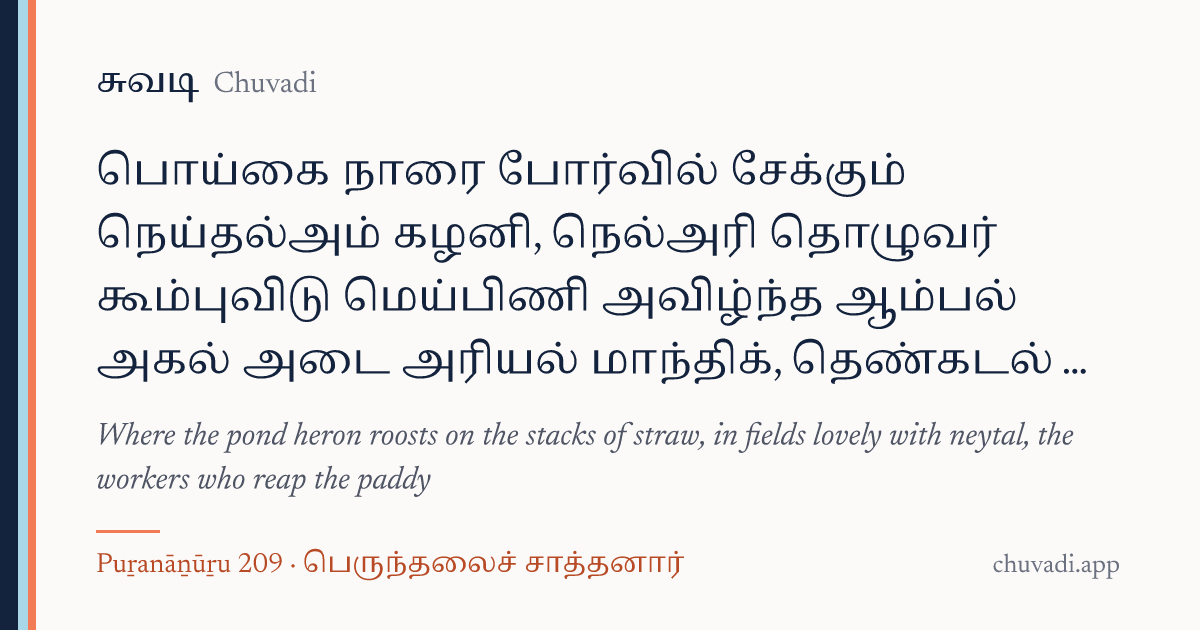
- Where the pond heron roosts on the stacks of straw,
- in fields lovely with neytal, the workers who reap the paddy
- drink toddy from the broad leaves of the āmpal,
- whose closed buds have loosened their bonds, and to the clear sea's
- breaking waves, to their sweet measure, they sway in dance:
- lord of the good land with its soft, watered tracts!
- Longing for many fruits, crossing the sky where they dwell,
- making for the echoing clefts of the great mountain,
- finding the fruit-laden great tree spent, helpless,
- like flocks of birds that leave without getting anything, drawn
- by longing for you, I, the poet who proclaims your fame,
- must I go away empty? Lord great with the sword!
- Even if you do not give, I will not grieve;
- be free from sickness, great one! Among us
- may it be seen close at hand, every day,
- with women of fragrant, thick, abundant hair and honeyed speech,
- your chest, fit for women of chosen jewels,
- Cēey eager for battle, your joyful court!
What the poem says
Peruntalaic Cāttaṉār speaks to Mūvaṉ, whom he calls lord of a fertile coastal country. The tiṇai is pāṭāṇ, praise of a patron, and the turai paricil kaṭā nilai, the poet pressing for a gift.
The first six lines picture the patron's land: herons on straw stacks, reapers drinking toddy out of water-lily leaves and dancing to the rhythm of the waves. Then the poet compares himself to birds that fly a long way to a fruit tree in the mountains, only to find its fruit gone, and leave with nothing. Must he too, who came longing and sang the patron's fame, go away empty?
The ending is courteous: even without a gift he will not grieve, and he wishes the patron health and a joyful court full of women. The patron is addressed as Cēey, "the red one", an epithet that likens a warrior to Murukaṉ. Lines 14 to 18 are loosely joined and their exact construction is uncertain, especially line 17 (teriyiḻai aṉṉa mārpiṉ), translated here as "your chest, fit for women of chosen jewels". The full stops the edition prints at the ends of lines 7 and 9 break the sense and have been ignored.