



புறநானூறு 217
பாடல் · The poem
Tap a word to see where else it occurs.
பொருள் · Meaning in TamilAI
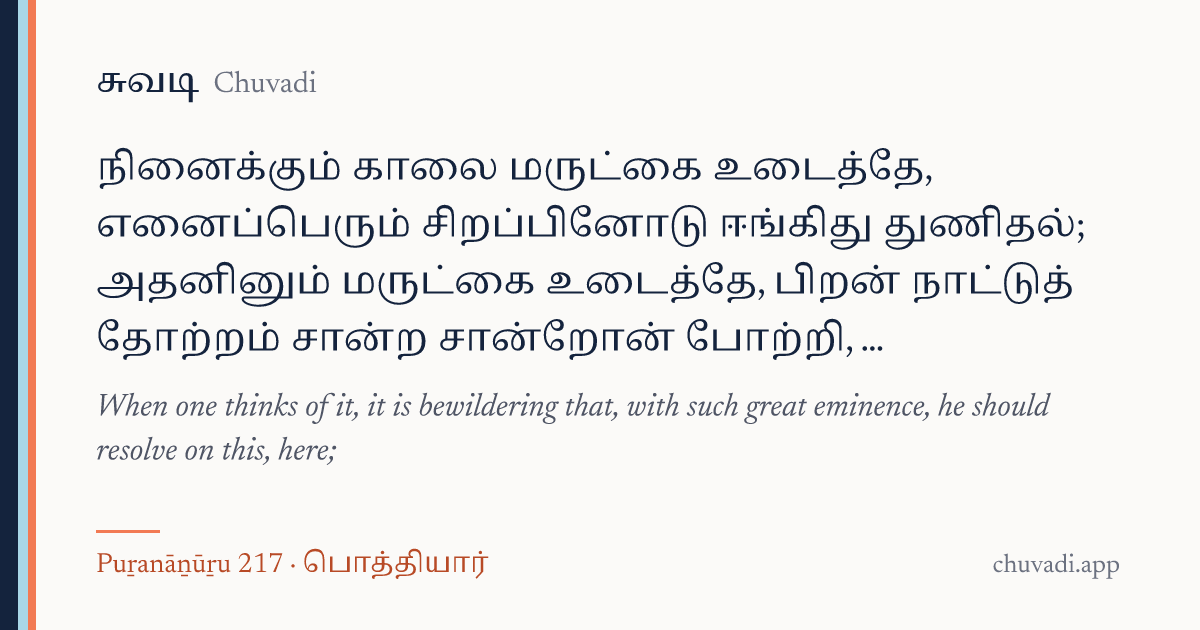
நினைத்துப் பார்க்கும்போது வியப்பாக இருக்கிறது, இவ்வளவு பெரிய சிறப்புடைய அவன் இங்கே இந்த முடிவை எடுத்தது. அதைவிட வியப்பானது, வேறொருவனுடைய நாட்டிலிருந்து தோற்றப் பொலிவுடைய சான்றோன் ஒருவன், அவனைப் போற்றி, புகழை நெறியாகவும் நட்பைத் தூணாகவும் கொண்டு, இப்படிப்பட்ட நேரத்தில் இங்கே வந்தது. ‘அவன் வருவான்’ என்று சொன்ன அரசனின் பெருமையும், அது தவறாமல் வந்தவனின் அறிவும் வியக்க வியக்க வியப்பின் எல்லையைக் கடந்துவிட்டன. ஆகவே, தன் செங்கோல் செல்லாத நாட்டில் வாழும் சான்றோனின் நெஞ்சத்தைக் கவர்ந்த பழம்புகழுடைய அத்தகையவனை இழந்த இந்த உலகம் என்ன ஆகுமோ? இது இரங்கத்தக்கது!
இது பொதுவியல் திணை; துறை கையறுநிலை, அதாவது தலைவனை இழந்தவர் செயலற்று வருந்துவது. பாடியவர் பொத்தியார். அரசன் கோப்பெருஞ்சோழன் உயிர் துறக்கத் துணிந்ததையும், அவன் நண்பர் தொலைநாட்டிலிருந்து வந்ததையும் பாடுகிறார்; அந்த நண்பர் பிசிராந்தையார் என்பது மரபு.
ஆங்கிலம் · English translationAI
Translation
- When one thinks of it, it is bewildering
- that, with such great eminence, he should resolve on this, here;
- more bewildering than that is that, from another's country,
- a noble man of distinguished bearing, cherishing him,
- with fame as the rule and friendship as the pillar,
- should come here at such a time;
- the greatness of the king who said, "He will come",
- and the wisdom of the one who came without fail:
- the more one marvels, the more it passes all marvel.
- So, the ancient fame that won the heart of a noble man
- who lived in a land where his sceptre does not run:
- this world that has lost such a one,
- what will become of it? It is pitiable indeed!
What the poem says
Pottiyār, named in puram.212 as the king's close companion, speaks after Kōpperuñ Cōḻaṉ has resolved on his death. The tiṇai is potuviyal, the general theme, and the turai kaiyaṟunilai, the helpless grief of those left behind.
He marvels at two things. The first is that a king of such greatness should resolve on "this", which, in context, is the king's decision to die; the poem does not say how. The second, even more astonishing, is that a noble man from another kingdom should come at such a moment, for the sake of friendship and good name. The king's confidence ("he will come") and the friend's faithfulness in coming go beyond all wonder.
The last lines turn from wonder to grief. The king's fame was such that it won the heart of a man living in a country his sceptre did not rule; now the world has lost him, and the poet can only ask what will become of it. The friend is not named, but tradition takes him to be Picirāntaiyār, as in puram.215 and 216.